
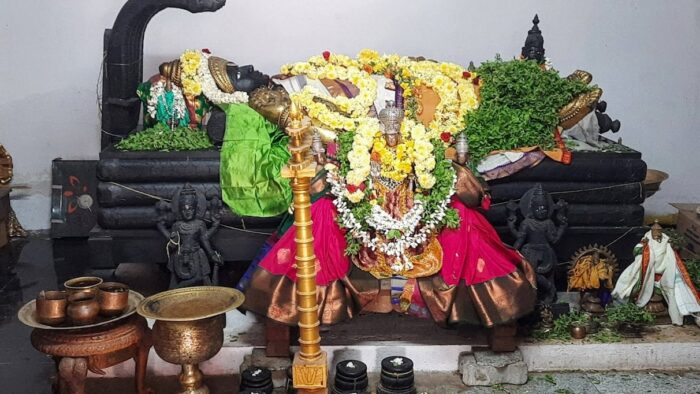
I have visited Mysuru several times. During each of these visits, I often heard about a well-known sacred site located nearby, Srirangapatna, which is home to the ancient and expansive Sri Adi Ranganathaswamy Temple. After taking darshan at the temple, I noticed an informational board within the environment explaining the significance of the three main Ranganatha swamy temples: the Adi Ranga Temple, the Madhya Ranga Temple, and the Antya Ranga Temple, the last of which is located in Srirangam. These temples are traditionally regarded as forming a sacred sequence along the course of the river, and it is believed that one should visit them in order, before proceeding to Srirangam.
Having completed my darshan at Adi Ranga, I decided to visit the next shrine in this sequence, the Madhya Ranga Temple. On a subsequent visit to Mysuru, I began my journey early in the morning by taking darshan at the Chamundeshwari Temple. Thereafter, I proceeded towards Śivanasamudra. From Mysuru, I boarded a bus to Kollegal, and from there, I took another bus to Śivanasamudra. I reached the destination at approximately 11:00 a.m.
Madhya Ranga and the Hidden Temple Nearby
After reaching the place, I enquired with local residents along the way to understand what could be seen in the area. They mentioned the well-known Gaganachukki and Bharachukki waterfalls, which are among the major natural attractions of Śivanasamudra.
I then proceeded to visit the Madhya Ranga Temple, formally known as the Sri Ranganathaswamy Temple at Śivanasamudra. This temple is one of the three sacred Ranganatha shrines situated on the islands of the river Kaveri, forming part of the traditional “Tri-Ranga” pilgrimage sequence—Adi Ranga at Srirangapatna, Madhya Ranga here, and Antya Ranga at Srirangam. The deity worshipped here is Lord Ranganatha, a reclining form of Vishnu, and is believed to represent the youthful manifestation of the divine, often referred to as “Mohana Ranga.”
Upon seeing the temple, I was struck by the contrast between this shrine and the Sri Ranganathaswamy Temple at Srirangapatna, which is significantly larger in scale. In comparison, the Madhya Ranga Temple appeared relatively small. However, I later learned that the main temple structure was undergoing renovation and repair work at the time of my visit. Due to structural concerns, the principal sanctum was not accessible, and the main deity had been temporarily relocated. The idol available for darshan was placed outside, and it appeared to be made of wood, likely arranged to facilitate worship during the renovation period. Despite its modest presentation, the temple retains its antiquity, with origins believed to date back to early South Indian dynasties and built in the traditional Dravidian architectural style. After taking darshan of the deity, a local person informed me that there was another ancient temple located just a few feet away. Curious, I went in search of this shrine. I soon came across the Sri Chakrankita Meenakshi Sameta Sri Someshwara Swamy Temple, which, from its external appearance, seemed to be very ancient.
Chakrankita Meenakshi Sameta Someshwara Temple
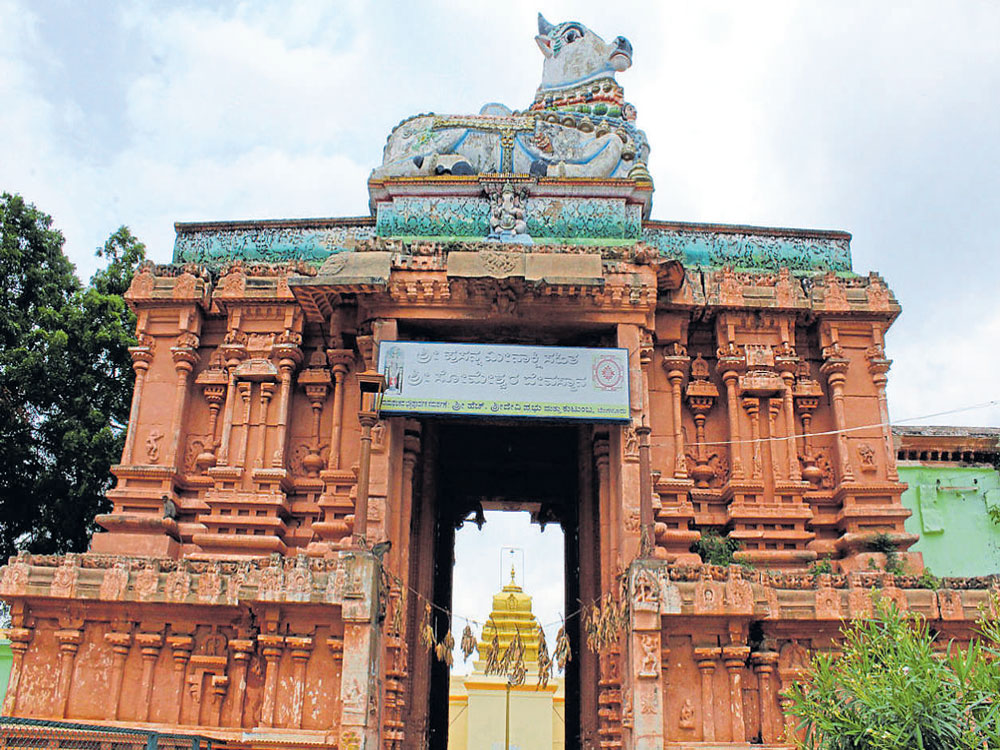
(Figure 1: Where Nandi stands guard, the sacred begins)
The courtyard of the temple features a sun-facing idol of Nandi. Spread across approximately one and a half acres, the temple stands as a fine example of traditional South Indian architecture. The well-carved eight-pillared mantapa and the sanctum sanctorum ceiling, adorned with various mandala patterns, reflect a high degree of artistic craftsmanship. The five-tiered gopuram is particularly striking, adding to the temple’s visual grandeur. As a symbol of royal patronage by Kshatriya rulers, the lion emblem carved on the Soma Sutra is especially noteworthy. The temple is constructed on a rectangular platform in the Dravidian architectural style. It is believed to have been renovated in the twelfth century by the Chola-Pallava ruler Thiru Veera Ratnam. Earlier, the temple was known by the names Ulaga Mandishwara and Thiruvai Alwareshwara, as recorded in Volume 4, page 412 of the Karnataka Gazette. A nineteen-line inscription engraved on the foundation stone, in Pali and Tamil, indicates that the temple was gifted to a Deva Kannika during the twelfth to thirteenth century.
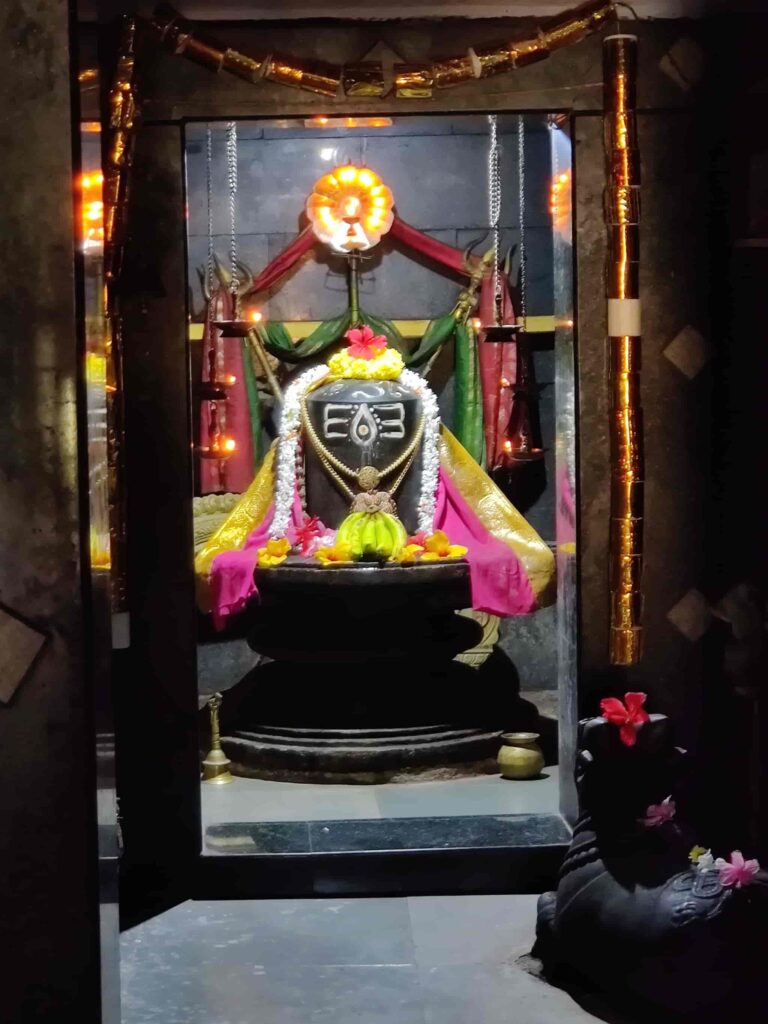
(Figure 3: Śiva abides in still radiance)
According to the Sthala Purana and local traditions, a palace belonging to the Commander-in-Chief and a fort once existed to the east of the temple. The temple is constructed in accordance with the principles of Shaiva Shastra. The layout includes a kitchen in the southeast, a Yagashala (ritual hall) in the northeast, and five lingas in the southwest. The premises also houses shrines and icons of Dakshinamurthy, Chandikeshwara, Subramanya, and a finely carved image of Ganapati, along with the Kalyana Stambha (flag post), Nandi, the sacrificial altar, guardian deities, and representations of the Sun and the Moon.
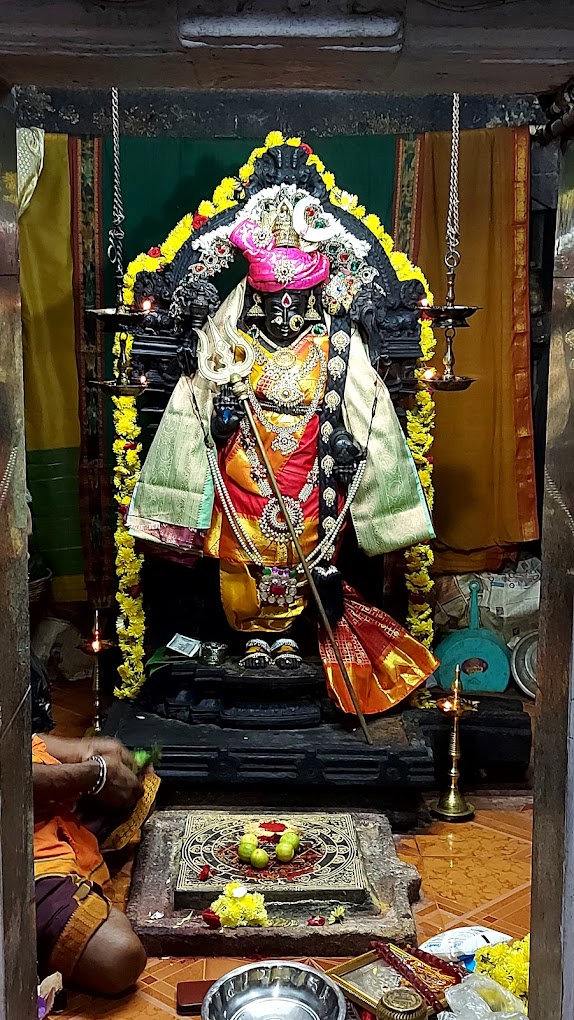
(Figure 2: Chakrankita Meenakshi — fierce grace in sacred stillness)
One striking feature of this Shri Chakrankita Meenakshi Someshwara Temple is that the sanctum sanctorum faces east, while the main entrance is located on the west. This may be due to the intention that the village should face the temple, in accordance with the principles of Vastu Shastra. The main entrance, rising to a height of 32 feet, is an architectural marvel, featuring intricately carved designs. As one enters the temple, the gopuram and the idol of Chandikeshwara immediately come into view.
There is a peculiar reason why this place came to be known as Śivanasamudra. As per the Śaiva Purana, there are sixty-four prominent devotees of Lord Śiva. One such devotee, Tiru Nilakanta, was a favorite of Lord Śiva. He was a potter by profession and was known to be reliable, truthful and deeply devoted. He attained liberation merely by chanting the name of Lord Śiva. Wishing to make an offering to his beloved deity, he crafted a magnificent mirror out of mud and presented it to Lord Śiva. Pleased with the offering, Lord Śiva accepted the gift and was delighted by the devotee’s sincerity, and was about to bless him. At that moment, an argument arose between Lord Śiva and Goddess Parvati regarding her beauty. She mocked the mirror and questioned how a mirror made of mud could measure her beauty. Despite the Lord’s appeal, she continued to ridicule both the mirror and the devotee. Enraged by the disrespect shown to his devotee, Śiva cursed Parvati to take birth on earth as a “man-eater,” and thus she was born as Kalika. She roamed the area at night, preying on animals and troubling the villagers.
In due course of time, Parvati realized her mistake and prayed to Lord Śiva to free her from the curse. The Lord assured her that he would take birth on earth as Śankaracharya and liberate her. When Shankaracharya arrived at the place, it was evening, and the villagers requested him not to venture out in the dark, warning him that he would be troubled by Kalika. However, Śankaracharya reassured them and stated that he had come for the darshan of Kalika. When Kalika saw Śankaracharya resting in a mantapa, she approached him. Upon seeing her, Śankaracharya began reciting sacred hymns in praise of the goddess and bound all her cruel attributes within a Shri Chakra known as Bhuvrastara. The Shri Chakra, drawn with intricate lines and containing all the letters from Aa to Ksha, symbolically held all the fierce attributes of Kali and ultimately liberated her from the curse. Since this place has a Shri Chakra established by Lord Śiva and contains the goddess in her Śakti form, it came to be known as Śivanasamudra.
There is another legend in which Lord Śiva summons Trusta Brahma, the provider of beauty, to decide who is more beautiful between him and Parvati. A mirror was brought, and they were asked to judge for themselves. This again led to an argument between Śiva and Parvati, resulting in the curse by Lord Śiva and the subsequent liberation, as described in the earlier account.
About the Idol of Goddess Prasanna Meenakshi
The idol is sculpted from black stone in accordance with the Agama Shastra and is complete in its architectural beauty. Its height is approximately 4½ feet, and it has four shoulders. The right hands hold the Abhaya and Ankusha, while the left hands hold the Pasha and display the Varada Hasta. The hair is plaited and knotted like a serpent. The idol is adorned with bracelets on the hands, a crown on the head, and beautiful rings on all the fingers. A flame-like corona surrounds the deity, and her gaze is concentrated on the Shri Chakra placed before her, which is a special feature of this temple. This idol closely resembles the image of Meenakshi at Madurai.
Significance of Shri Chakra
Both Indian and Western traditions acknowledge the worship of yantras or talismans. The Shri Chakra is considered a representation of the universe at both micro and macro levels. Its worship bestows upon human beings mental, physical, and spiritual knowledge. It purifies the individual and leads towards salvation. It has been widely revered since its establishment by Shri Shankaracharya. It can be found at Kanchi Kamakshi, Akilandeshwari in Trichy (as ear ornaments), and at Chidambaram as a combination of Śiva Chakra and Shri Chakra. Apart from these, in Karnataka, it is found only in Kollur and Śivanasamudra.
- The Shri Chakra at Śivanasamudra is 18 inches in diameter and contains letters in Tamil, Old Kannada, and Pali alphabets. It also features representations of Lord Ganapathi, the Navagrahas (nine planets), stars, and zodiac signs.
- Its petals, lines, and angles represent the conceptual form of Ganapathi.
- The seven chakras, the three latitudinal lines, and the fourteen angles represent the twenty-seven stars and the twelve zodiac signs. It also symbolizes three different forms of creation and destruction, known as Bhoo Prastara, Meru Prastara, and Kailasa Prastara, expressed through a triangular form.
Reflections from a Sacred and Scenic Pilgrimage
After having the beautiful darshan of Devi and Lord Someshwara, I proceeded towards the Bharachukki Falls, located approximately 5–7 kilometers from the temple. The cascading waters, set amidst lush greenery, offered a serene and refreshing contrast to the spiritual intensity of the temple visit. After spending some time at the falls, I returned to the Ranganathaswamy Temple, where I partook of prasadam before beginning my journey back to Mysuru.
Śivanasamudra thus emerges not merely as a geographical destination, but as a deeply layered sacred landscape where nature, history, and spirituality converge. From the presence of Madhya Ranga in the sacred Tri-Ranga tradition to the rare confluence of Śiva, Śakti, and Hari within close proximity, the site holds immense religious and cultural significance. The experience is further enriched by its architectural heritage, local traditions, and the surrounding natural beauty.
This journey was not only fulfilling but also intellectually and spiritually enriching, leaving behind a lasting impression of Śivanasamudra as a place where the Śiva-Śakti and Sri Hari himself resides.
Disclaimer: The opinions expressed in this article belong to the author. Indic Today is neither responsible nor liable for the accuracy, completeness, suitability, or validity of any information in the article.