
“గురువుపదేశంబాయె గదా…
సద్గురువుపదేశంబాయె గదా…”
Guruvupadeśambāye gadā…
Sadguruvupadeśambāye gadā…
“Is it not the teaching of the Guru? Is it not indeed the teaching of the Sadguru?” The concept of upadeśa, or spiritual instruction, often manifests in unexpected forms. It may commence subtly, through a few words overheard, a serendipitous visit to a location, or an unanticipated book acquisition. Retrospectively, these seemingly minor events often guide us towards insights previously unrecognized. Reflecting on my own experience, I perceive that my journey to Kaivara unfolded in a similar manner.
Residing in Devanahalli, I am in proximity to a modest temple dedicated to Tātayya. My visits there were infrequent and uncomplicated: entering the temple, offering namaskāra, spending brief moments before the mūrti, and departing. I recognized him as Kaivara Nārāyaṇa Tātayya, a venerated yōgi held in high regard. However, my knowledge of his personal history, life, or sādhanā was limited.
This changed in an unremarkable manner. While perusing a bookshop in Devanahalli, I encountered a book titled “Sadguru Śrī Yōginārāyaṇa Tātayya’s Jīvanacharitre.” I picked it up almost nonchalantly and began to peruse its contents. Until that moment, Tātayya was primarily associated in my mind with the small temple I occasionally visited. Now, for the first time, I possessed a detailed account of his life. I purchased the book and took it home.
As I delved into the text, the familiar name gradually acquired profound significance. The narrative introduced me to the life of a yōgi devoted to Amara Nārāyaṇa and a kavi whose vāṇī was expressed in both Kannada and Telugu. I encountered references to works such as the Amara Nārāyaṇa Śataka, Kālajñāna, and Brahmānandapuri Śataka. What had previously been merely a name associated with a nearby temple now emerged as the life of a spiritual figure whose sādhanā and vāṇī were intrinsically linked to Kaivara.
The more I read, the more I felt compelled to visit the place itself. Kaivara is approximately 43 kilometres from Devanahalli, a journey of about an hour and a half by cab. Given the longer duration by bus, I opted for a cab to ensure a comfortable journey.
One morning, with the Jīvanacharitre in my hands, I departed from Devanahalli towards Kshetra. As the familiar roads receded, I contemplated the unexpected evolution of this journey—from a few visits to a small temple, to a book discovered in a Devanahalli bookshop, culminating in the road leading to the place I had been reading about.
I was not in pursuit of anything extraordinary. My intention was simply to reach the kṣetra, offer my namaskāra, and spend time there. Having read about Tātayya, I sought to experience Kaivara not solely through written words, but through direct observation.
At the Maṭha: In the Presence of the Sadguru
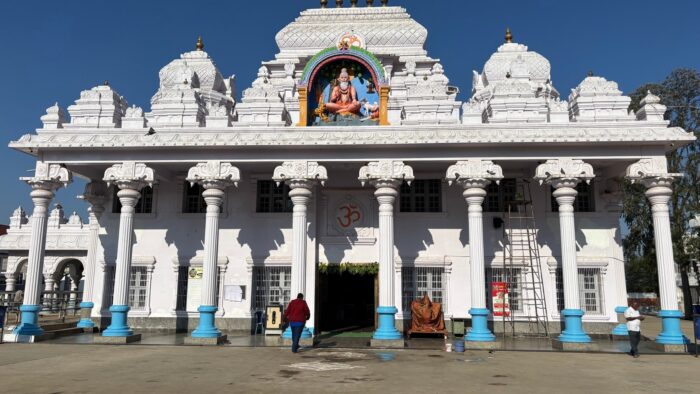
(Figure 1: Śrī Yōgi Nārāyaṇa Maṭha)
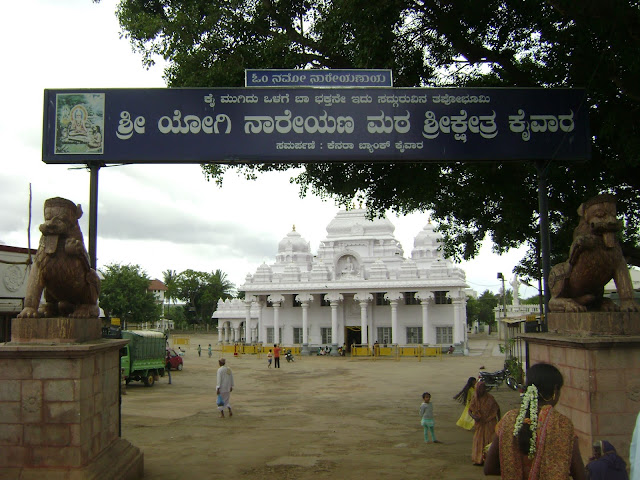
Upon arriving at the Śrī Yōgi Nārāyaṇa Maṭha, I carried a tulasī-mālā purchased from a flower shop en route. Upon entry, the sound of bhajana immediately captured my attention. The kīrtanas of Tātayya resonated throughout the Maṭha, imbuing it with a devotional tranquility distinct from the external commotion.
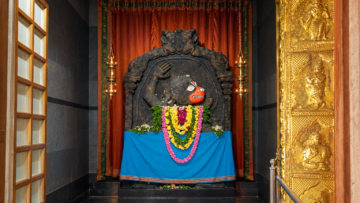
I advanced slowly towards the sanctum, where the mūrti of Yōgi Nārāyaṇa Tātayya was seated in a serene posture, embodying the stillness of a yōgi absorbed in dhyāna—calm, composed, and introspective. Behind the mūrti lies the sacred jīva samādhi associated with Tātayya. According to Maṭha tradition, Tātayya entered jīva samādhi at this location, rendering the sanctum not merely a site of worship but a deeply venerated place linked to his physical departure from the world.
In front of the mūrti, I offered my namaskāra and placed the tulasī-mālā at Tātayya’s pāda (feet). The bhajana continued softly as devotees moved in and out of the sanctum, yet a pervasive quietude seemed intrinsic to the place. I lingered for a few moments, contemplating the serene posture of the mūrti, listening to Tātayya’s kīrtanas, and absorbing the atmosphere of the kṣetra.
Following the darśana, I performed pradakṣiṇā around the sanctum. As I traversed the surrounding area, I observed devotees sitting quietly post-darśana. The diversity of languages—Kannada, Telugu, and Hindi—was notable, indicating the presence of individuals from various regions, all congregating before Tātayya.
Conversations with attendees revealed that the spiritual influence of the Maṭha extends beyond Kaivara, with affiliated śākhā-maṭhas and centers in parts of Karnataka and towards the Andhra region. This insight altered my perception of Kaivara, recognizing it not merely as a destination for darśana but as a hub from which a living tradition has proliferated into different regions.
After pradakṣiṇā, I proceeded to the annadāna hall, where devotees who had completed their darśana gathered, sitting together irrespective of their origins. I joined them and partook of the prasāda. The simplicity of this act—sitting among fellow devotees and receiving annadāna—was a quiet expression of the kṣetra’s hospitality and seva.
The darśana, the sound of Tātayya’s kīrtanas, the tulasī-mālā at his pāda, and the sight of devotees from diverse places had already imparted an unexpected depth to my visit. Yet, Kaivara had more to reveal.
Amara Nārāyaṇa: Tracing the Roots of Tātayya
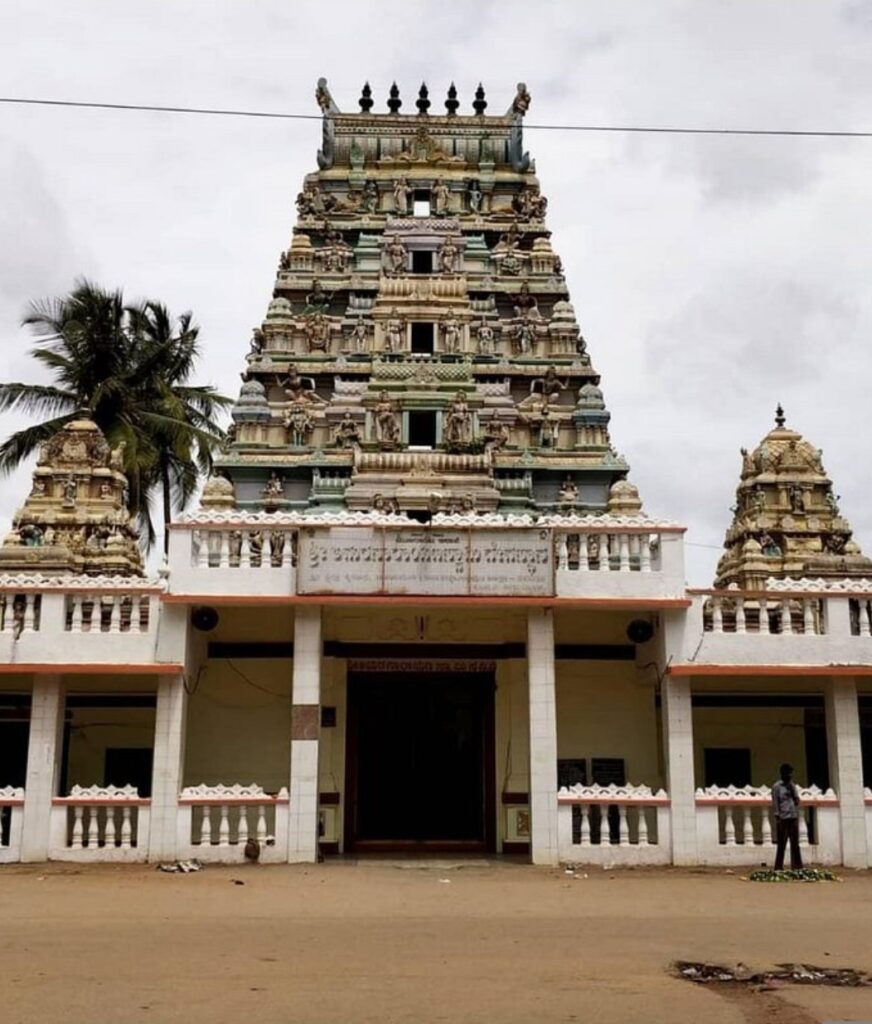
(Figure 2: Shri Amara Nārāyaṇa Swami Temple)
Adjacent to the Maṭha, I observed another temple and approached it to identify the presiding deity. It was revealed to me that this was the temple of Śrī Amara Nārāyaṇa. Upon hearing the name, I recalled a passage from Tātayya’s Jīvanacharitre, which recounts that his parents, Kondappa and Muddamma, were devout worshippers of Amara Nārāyaṇa. Before departing for their traditional occupation as balegāras, (bangle sellers), they would offer flowers to the deity and pray for a child, as they were childless. Their prayers were believed to have been answered with the birth of Nārāyaṇa Tātayya. The Jīvanacharitre also provides an insightful perspective on the balegāra tradition, describing the balegāra not merely as a vendor of bangles but as an individual of trust and dignity. According to the account, a pativratā woman traditionally allowed her hand to be touched by only three men: her father, her husband, and the balegāra who placed bangles on her wrist. Consequently, the balegāra was expected to perceive every woman as Jaganmātā-svarūpa, recognizing the Divine Mother in her. This custom imposed an ethical obligation on the practitioner of the vṛtti: women were to be regarded with the reverence due to the Mātṛ-svarūpa, not merely as customers. Standing before Amara Nārāyaṇa, I envisioned those earlier times—the couple arriving with flowers, offering their seva, and presenting their wish to the deity. The connection became more profound when I recalled the significance of Amara Nārāyaṇa in Tātayya’s life, as the deity was considered his iṣṭa-devatā and a source of divine kṛpā-kaṭākṣa throughout his life. Subsequently, I noticed an unexpected occurrence: bangles were being sold within the temple premises. It was explained that kanyās experiencing obstacles or delays in marriage wore these bangles as an act of śraddhā, believing that such impediments would be alleviated. I speculated whether there might be a link between this practice and Tātayya’s family tradition of balegāra, particularly given his parents’ association with the bangle trade. However, I found no evidence to substantiate such a connection, leaving it as an open question rather than an assumption. Nonetheless, the presence of those bangles in the temple associated with Tātayya’s parents’ prayers seemed to be a detail that rendered the experience memorable.
The Tapobhūmi of Tātayya
From the Maṭha, my subsequent destination was the Vaikuṇṭha hillock, located approximately two kilometres away, where the Yōga Narasiṃha Svāmī cave temple is situated. This temple enshrines a svayambhū mūrti of Narasiṃha. However, the site’s greater significance for me lay in its association with Tātayya’s sādhanā. According to traditional accounts of his life, it was within this cave that he commenced the rigorous spiritual practice that would ultimately lead him to a life of a yōgi. As I proceeded towards the hillock, I recalled an episode from the Jīvanacharitre that had particularly resonated with me. Tātayya, who was married and led a household life, was profoundly inclined towards adhyātma, whereas his wife is depicted as being concerned with the family’s material needs. On one occasion, he returned home without having earned any money, prompting his wife, in anger, to expel him from the house. What seemed to be a moment of distress in an ordinary saṃsāric life, in the traditional narrative of his story, became the pivotal moment of his spiritual journey.
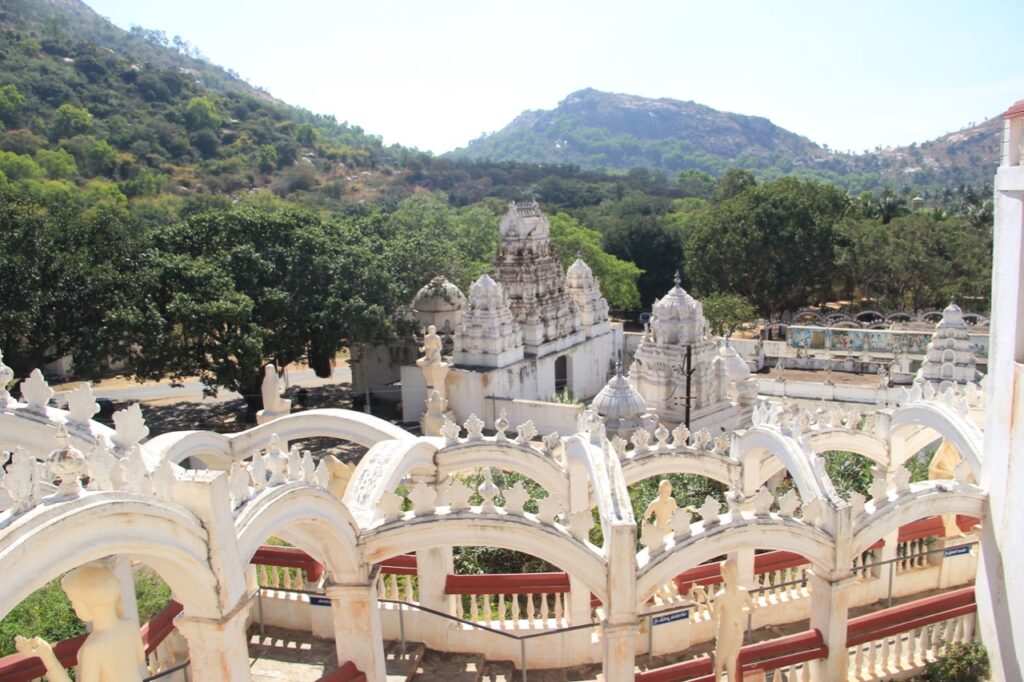
(Figure 3: Kaivara Tātayya cave)
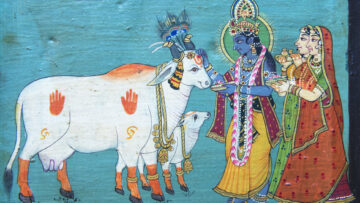
He eventually arrived at the hillock and sat near the Narasiṃha cave, immersed in sorrow and contemplation. It was then, according to the account, that Amara Nārāyaṇa appeared before him in the form of a gōpāla—a cowherd—and guided him towards the path of dhyāna. Tātayya entered the cave and commenced his tapas, engaging in prolonged sādhanā with the aṣṭākṣarī mantra. Traditional accounts suggest that this period of intense tapas in the cave spanned several years. Standing before the cave, I could not help but envision that transformation: a man once entangled in the concerns of household life gradually turning inward, relinquishing the attachments of saṃsāra, and pursuing the path of ātma-jñāna. Consequently, the cave felt distinct from the temples I had visited earlier that day. Here, the focus appeared to shift from darśana to sādhanā—from observing the deity to introspection.
It was also during the subsequent years that Tātayya came to be recognized not only as a yōgi but also as a kavi and kīrtanakāra. His compositions were produced in both Telugu and Kannada. The Maṭha records 149 Telugu and 19 Kannada devotional hymns in the Amara Nārāyaṇa Vedānta Sārāvali Kīrtana. His other works include the Amara Nārāyaṇa Śataka, Brahmānanda Puri Śataka, and Tāraka Brahmānanda Dvekāṇḍa Śataka, while Kālajñāna remains his most widely known work.
The narrative of Kālajñāna particularly captivated my interest. As per the Maṭha’s account, Tātayya authored this work in 1813, composing its prophetic verses under divine inspiration. The Jīvanacharitre I carried detailed the traditional date and circumstances of its inception—at the age of eighty-seven, on Śrāvaṇa Śuddha Pañcamī in the Śrīmukha-nāma-saṃvatsara. Engaging with these details while standing in the landscape associated with his sādhanā rendered the life depicted in those pages more tangible. The cave before me remained silent. According to the tradition surrounding Tātayya’s life, it was within this darkness that a bangle-seller turned inward, embarking on the path to becoming a yōgi. I lingered there, contemplating how such a modest location could encapsulate the memory of a significant transformation.
Where Tātayya Still Lives
Upon my return to the Maṭha, I reflected on the various memories of Tātayya: as the devotee at Amara Nārāyaṇa, the sādhaka of the cave, the kavi whose vāṇī traversed Kannada and Telugu, and the yōgi whose life inspired others towards jñāna and bhakti. I found myself once more before the sanctum preserving his Jīva Samādhi. The narrative of his final days echoes the themes prevalent in his teachings. According to the Maṭha’s records, Tātayya selected the time of his departure, entering Jīva Samādhi at midnight on Jyeṣṭha Śuddha Tritīyā in Śrī Durmukhi-nāma-saṃvatsara, corresponding to 1836–37. Prior to this, he addressed the devotees on the purpose of human existence, the futility of material illusions, and the significance of Brahma-jñāna, guru-sevā, and meditation in the quest for mokṣa. The traditional account maintained by the Maṭha describes how he assumed padmāsana and entered yōga-nidrā while devotees engaged in bhajana and chanted the aṣṭākṣarī mantra, Om Namo Nārāyaṇāya. At midnight, he is believed to have consciously departed from his mortal body, attaining Jīva Samādhi. The inner sanctum of the Maṭha now commemorates this sacred site.
What resonated with me most was not the notion of an ending, but the ensuing continuity. Tātayya’s association with Amara Nārāyaṇa is preserved in Kaivara as a guru–śiṣya paramparā. The Maṭha observes the Amara Nārāyaṇa Rathotsava, followed by the Yōgi Nārāyaṇa Rathotsava, explicitly celebrating their Guru–Śiṣya Paramparā. My understanding of Tātayya deepened as I realized that his concept of the Guru extended beyond a mere teacher imparting knowledge. The Guru was a guide leading the way to mokṣa. The Maṭha’s account of his teachings underscores that enlightenment necessitates the guidance of a true Guru, supported by bhakti, dhyāna, and Brahma-jñāna.
This may explain why the Jīva Samādhi does not merely serve as a memorial to a long-departed individual. The kīrtanas continue to be sung, Guru Pūjā is observed, and the annual Jīva Samādhi observance unites devotees in remembrance and seva. His teachings persist through the Maṭha’s activities, including annadāna, pravachana, saṅkīrtana, and the preservation of temples associated with Kaivara.
When I finally stood before the Jīva Samādhi, I thought about how unexpectedly this journey had begun—with a small temple, a book, and a name I knew only vaguely. What began as curiosity had taken me through the Maṭha, Amara Nārāyaṇa, the cave of sādhanā, and finally back to the samādhi of the yōgi whose life connected all these places.
I had come to Kaivara in search of Tātayya. By the end of the journey, I felt that perhaps the search was not really about finding a person in a particular place. It was about following the traces he had left behind—in a deity, a cave, a vāṇī, a guru-paramparā, a samādhi, and in the lives of those who still come here with śraddhā.
And perhaps that is the quiet lesson of Kaivara: a yōgi may leave the physical world, but when his sādhanā becomes a living tradition, his journey does not end with the Jīva Samādhi. It continues in those who remember, sing, serve and seek.
Disclaimer: The opinions expressed in this article belong to the author. Indic Today is neither responsible nor liable for the accuracy, completeness, suitability, or validity of any information in the article.