
The Call of the Eternal Flame
Some journeys commence with meticulous planning, while others are driven by an innate longing. My pilgrimage to Arunachala Kshetra was initiated by neither. Until a few months prior to my visit, I had no conscious awareness of Tiruvannamalai. My knowledge of Giripradakshina was minimal, and I was unfamiliar with the sacred hill of Arunachala and the teachings of Bhagavan Ramana Maharshi. In retrospect, pinpointing the precise moment when Arunachala entered my life proves challenging.
The journey began with a series of seemingly trivial incidents. I began to notice vehicles bearing the names “Annamalai” and “Tiruvannamalai.” During an unrelated internet search, I inadvertently clicked on a link that led to a WhatsApp group displaying the image of Annamalaiyar. At that juncture, I had not actively searched for the kshetra, watched videos about it, or exhibited any particular interest. There was no algorithm directing me towards Arunachala. Yet, its name continued to appear with unusual persistence. Whether one attributes this to coincidence, destiny, or daiva iccha—the will of the Divine—remains a matter of personal belief. For me, it felt like a gentle summons whose significance I would comprehend only later.
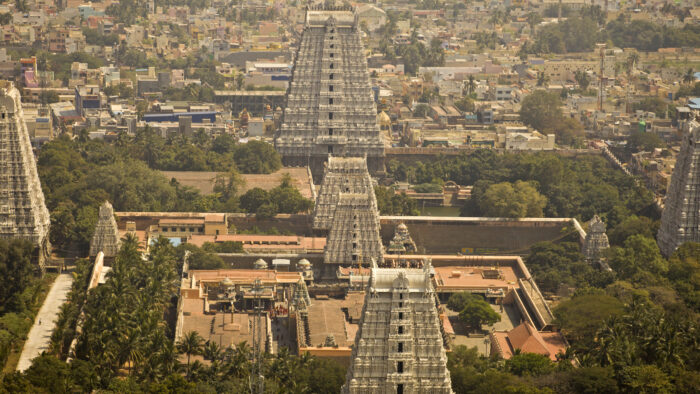
Curiosity eventually prompted me to explore Arunachala Kshetra, and the discoveries were captivating. At the base of the sacred Arunachala Hill stands the magnificent Arunachaleswarar Temple, one of the most revered Shiva temples in Bharat. This temple is among the Pancha Bhuta Sthalams, the five great temples where Shiva is venerated as the embodiment of the five primordial elements. While Ekambareswarar at Kanchipuram represents Prithvi (Earth), Jambukeswarar represents Water, Kalahasti represents Air, Chidambaram represents Space, and Arunachala represents Agni—the element of Fire. Here, Shiva is worshipped as Annamalaiyar, and uniquely, the entire hill itself is regarded as His visible form. For devotees, Arunachala is not merely a mountain; it is Shiva manifesting before humanity in stone.
The sanctity of Arunachala is rooted in a profound narrative from the Shiva Purana. According to tradition, a dispute arose between Brahma and Vishnu regarding supremacy. To resolve the argument, Shiva manifested as an infinite column of fire extending beyond heaven and earth. Vishnu assumed the form of a boar to search for its base, while Brahma transformed into a swan to seek its summit. Neither could find the beginning nor the end. Vishnu returned and admitted his inability, while Brahma falsely claimed success. Angered by this dishonesty, Shiva cursed Brahma and blessed Vishnu for his humility. It is believed that this infinite Jyoti later manifested as Arunachala, allowing devotees to worship what was once the boundless pillar of divine fire. Even today, the sacred hill is revered as the embodiment of that original Jyotirlinga.
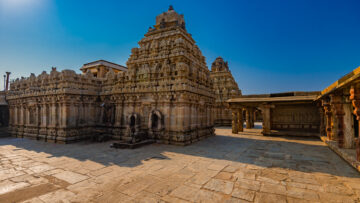
The kshetra holds a prominent position within the Tamil Shaiva tradition, being one of the esteemed Paadal Petra Sthalams, the 276 Shiva temples extolled in the sacred hymns of the Nayanmars. Saints such as Appar and Sambandar lauded Annamalaiyar in the Tevaram, while Manikkavachakar honored the deity in the Tiruvempavai. Centuries later, Arunagirinathar immortalized the kshetra in his Tiruppugazh hymns. The temple itself stands as a testament to over a millennium of devotion and royal patronage. Although the current masonry predominantly dates to the Chola period, the sacred site predates it by several centuries. Contributions to its expansion were made by the Pallavas, Cholas, Hoysalas, Vijayanagara rulers, and Nayakas. Spanning nearly twenty-five acres, the temple remains one of the largest and most magnificent temple complexes in India, crowned by the majestic Rajagopuram, which rises over two hundred feet above the town.
Among the many rulers associated with Arunachala, King Vira Vallala III of the Hoysala dynasty holds a particularly special place for devotees from Karnataka. During a period when much of South India faced repeated invasions from the Delhi Sultanate, Vallala Maharaja emerged as one of the last great Hindu rulers defending the region. Historical inscriptions indicate that after the destruction of the Hoysala capital of Dwarasamudra, now Halebidu, he established Tiruvannamalai as his southern capital, naming it Aruna Samudra. From this sacred town, he administered his territories, led military campaigns, and patronized the Arunachaleswarar Temple through generous endowments. His devotion to Annamalaiyar became so deeply embedded in local tradition that he is remembered not merely as a king but as a devotee whose name remains inseparable from the history of the kshetra. Even today, sculptures and inscriptions within the temple preserve the memory of Vallala Maharaja’s devotion.
The significance of Arunachala extends beyond mythology and history. Over the centuries, the kshetra became a magnet for sages, siddhas, ascetics, and seekers. Among them, Bhagavan Ramana Maharshi occupies a unique place. Arriving in Arunachala Kshetra as a sixteen-year-old boy following a profound spiritual awakening, he spent the remainder of his life at the feet of Arunachala. For Ramana, Arunachala was not merely a sacred hill—it was Shiva Himself, the silent Guru. His years of intense meditation in the caves of Arunachala, particularly Virupaksha Cave and later Skandashram, transformed the kshetra into a global center of spiritual seeking. Eventually, Sri Ramanasramam was established at the foothills of Arunachala, from where his teachings spread worldwide. Even today, pilgrims undertaking Giripradakshina pause to visit Ramanasramam, Virupaksha Cave, and Skandashram, experiencing firsthand the spiritual atmosphere that shaped one of India’s greatest sages.
My interest in Arunachala intensified upon discovering Giripradakshina, the sacred circumambulation of the hill. This path, approximately fourteen kilometres in length, encircles Arunachala and is esteemed as a significant act of devotion within the Shaiva tradition. As the hill is considered an embodiment of Shiva, circumambulating it is akin to directly circumambulating the deity. The route features the revered Ashta Lingas, associated with the guardians of the eight directions, numerous shrines, sacred tanks, samadhis of saints, and sites sanctified by centuries of worship. Devotees hold that Giripradakshina purifies the mind, burns accumulated karma, fulfils sincere prayers, and strengthens one’s connection with Arunachala.
The timing of my pilgrimage added further significance, coinciding with Karthika Masam, a sacred period in the Tamil spiritual calendar. Arunachala is particularly noted for the Karthigai Deepam festival, celebrated on the full moon day of Karthigai month. This festival commemorates Shiva’s manifestation as an infinite column of fire. On this day, a large beacon fueled by ghee is lit atop Arunachala Hill, visible for miles. For devotees, this flame symbolizes the original Jyoti, which neither Brahma nor Vishnu could comprehend. Millions gather to witness this sacred event and perform Giripradakshina around the hill. Although my visit was not specifically for Karthigai Deepam, traveling during Karthika Masam imbued the pilgrimage with special meaning.
My initial plans, however, took an unexpected turn. Traveling from Bengaluru, approximately 210 kilometres away, I first visited Kanchipuram. In retrospect, the blessings of Kanchi and Arunachala seem inseparable. Wherever Shiva resides, Shakti is nearby. Before reaching Arunachala, I received darshan at Kanchi Kamakshi Amman Temple, Varadaraja Perumal Temple, and Ekambareswarar Temple. Symbolically, before receiving darshan of the Agni Tattva at Arunachala, I first stood before Ekambareswarar, the Prithvi Tattva among the Pancha Bhuta Sthalams.
After a day in Kanchipuram, I boarded a government bus to Arunachala Kshetra. The journey typically takes three to four hours. However, nature intervened. It was December, and Tamil Nadu was experiencing relentless rains and severe flooding. While Kanchipuram remained relatively unaffected during my stay, conditions worsened as I approached Arunachala. Upon arrival, I was met not with the anticipated serenity but with roads submerged under floodwaters. The rain continued unabated. Reports indicated landslides near the sacred hill, with several fatalities, damaged homes, and local families struggling with the devastation. My aspirations of performing Giripradakshina seemed unattainable in light of the flooded roads.
The sense of disappointment was profound. My family, having observed the flood coverage on television, persistently contacted me, urging an immediate return. Reluctantly, I initiated discussions regarding transportation back to Bengaluru with the proprietor of the hotel where I was staying. Observing my distress, he recommended that before making a definitive decision, I should at least visit the temple and receive darshan of Annamalaiyar. With a heavy heart, I proceeded towards the temple amidst the rain. Entering through the North Gopuram, the entrance nearest to my accommodation, I encountered a scene that defied my expectations. Rainwater had accumulated in parts of the temple complex, and broken branches were scattered from the storm. There were scarcely any devotees—perhaps five or ten in total. The juxtaposition of the temple’s vastness with its nearly empty corridors was surreal.
As I approached the sanctum of Annamalaiyar, an unusual thought occurred to me. Outside, the town was contending with floods, and the rains showed no sign of abating. Yet, the worship of Annamalaiyar persisted uninterrupted. When I finally stood before the Agni Lingam, the disappointment I had been harboring dissipated. The sanctum exuded a warmth that felt almost maternal, akin to a mother’s embrace welcoming her child home. Tears came involuntarily. I stood there gazing at Him, unable to proceed further. When I eventually moved away, I felt unsatisfied, compelled to see Him again.
Returning for a second and then a third darshan, I communicated with Him as one might with a father. I questioned, argued, and pleaded with Him. Silently, I conveyed, “I came because You summoned me. If it is Your will that brought me here, why this trial? I ask only one thing—permit me to perform Giripradakshina. I have made a sankalpam. I cannot depart without fulfilling it.” I exited the temple still in tears. At that moment, the hotel owner informed me that a cab had been arranged to transport me back to Bengaluru before the roads became completely impassable. As I grappled with the decision, an unexpected event occurred. An elderly couple approached me. To this day, their identity remains unknown. They spoke gently, assuring me that the rains would subside by morning and the roads would clear. “You have come here with faith,” they stated. “Annamalaiyar will guide you. Do not worry. Chant His name and rest.”
Their assurance starkly contrasted with the weather forecasts, local residents’ accounts, and news reports. Yet, something about their words brought solace to my troubled mind. Trusting them, I canceled the cab, returned to my room, and went to sleep chanting the name of Annamalaiyar. The subsequent morning would leave me pondering whether Arunachala had indeed responded.
Around Shiva Himself — The Sacred Giripradakshina of Arunachala
The following morning, I awoke before dawn and instinctively approached the window. The previous evening had concluded with uncertainty, as floodwaters had engulfed the roads, and relentless rain had battered the kshetra. Weather forecasts had predicted the cyclone’s persistence for several more days. However, the scene that greeted me that morning seemed almost surreal. The rain had ceased entirely, the skies had cleared, and the roads, submerged only hours earlier, were once again visible. Standing there in silence, I recalled the three occasions I had stood before Annamalaiyar the previous evening, each visit accompanied by the same prayer. I had not sought success, wealth, or comfort; rather, I had requested permission to perform Giripradakshina. Whether the events of that morning were coincidental, a manifestation of divine grace, or simply an unexpected turn of nature, I leave to the reader’s judgment. Yet, in my heart, I felt that Arunachala had responded.
With gratitude, excitement, and an anticipation that words can scarcely convey, I prepared for the sacred journey around the hill. Unlike many pilgrimages that prescribe a fixed time or sequence, Giripradakshina around Arunachala lacks a single prescribed hour. Some devotees commence shortly after midnight, while others prefer the sacred Amrita Muhurta before dawn. Many begin as early as two or three in the morning to complete the fourteen-kilometre circumambulation by sunrise and proceed directly for darshan of Annamalaiyar before the temple queues swell. What distinguishes Arunachala is that Giripradakshina never truly ceases. Whether in the middle of the night, the heat of the afternoon, or the coolness of dawn, devotees continuously walk around the sacred hill. Families carrying offerings, elderly pilgrims with walking sticks, saffron-clad ascetics chanting Shiva’s name, young students, local villagers, and seekers from distant countries all traverse the same path. In many respects, the crowd itself serves as a guide. Even without signboards, one can simply follow the river of devotion encircling the hill.
For those unfamiliar with the traditions of Arunachala Kshetra, Giripradakshina is not merely a physical walk around a mountain. According to the Skanda Purana and centuries of local tradition, Arunachala Hill is Lord Shiva. Circumambulating the hill is therefore considered equivalent to directly circumambulating Shiva. Saints, siddhas, and spiritual masters have consistently extolled its significance. Among them, Bhagavan Ramana Maharshi holds a special place. Ramana did not regard Arunachala as a mere geographical feature or a sacred symbol. He proclaimed that Arunachala itself was the Guru, the visible form of the Absolute, silently guiding seekers towards Self-realisation. For him, Giripradakshina was not merely an act of devotion but a profound spiritual practice capable of quieting the mind and drawing one inward. As I embarked on my own journey around the hill, I gradually comprehended why generations of seekers have revered this path as sacred.
The Giripradakshina route represents a unique spiritual landscape. Along this path, one encounters numerous shrines and temples, each serving as a testament to the centuries of devotion surrounding Arunachala. The route is adorned with temples dedicated to Shiva, shrines of Vinayaka, Nandi mandapas, local manifestations of Devi worshipped by generations of villagers, samadhis of saints, and numerous sacred spaces, each with its own narrative. It becomes evident that the fourteen-kilometre journey is insufficient to fully comprehend Arunachala. Every stone appears to hold a legend, every shrine a memory, and every temple a history. Among the most venerated landmarks on this route are the Ashta Lingas, the eight sacred Shiva Lingas associated with the guardians of the eight directions. Pilgrims traditionally pause at each of these shrines during Giripradakshina. Indra Linga is linked to Indra, the king of the Devas; Agni Linga to Agni, the deity of fire; Yama Linga to Yama, the lord of righteousness and death; Niruthi Linga to the guardian of the southwest; Varuna Linga to the lord of waters; Vayu Linga to the deity of wind; Kubera Linga to the lord of wealth; and Eesanya Linga to the sacred northeastern direction associated with Shiva’s grace and spiritual liberation. Tradition asserts that these celestial guardians themselves worshipped Arunachala and established these lingas around the hill. Even today, pilgrims offer prayers at each shrine, seeking protection, prosperity, health, spiritual progress, and divine blessings. Consequently, Giripradakshina transcends a mere circular walk, becoming a symbolic journey through the cosmic directions themselves.
The sacred geography of Arunachala extends beyond the Ashta Lingas. As one progresses along the path, another dimension of the kshetra gradually emerges. Arunachala has historically been more than a centre of temple worship; it has also been a significant centre of spiritual inquiry and tapas in India. Along the Giripradakshina route, numerous ashrams, meditation centres, mutts, hermitages, and samadhis associated with saints and spiritual masters are situated, individuals who chose to spend their lives in the shadow of the sacred hill. Among these, the Ramana Ashram holds a distinctive position. Located at the foot of Arunachala, it preserves the legacy of Bhagavan Ramana Maharshi, whose presence transformed the kshetra into a destination for spiritual seekers worldwide. Even today, visitors from various countries arrive not only to worship Annamalaiyar but also to traverse the same path once walked by Ramana Maharshi.
Beyond Ramana Ashram, one encounters ashrams and spiritual centres associated with other revered saints and teachers. Collectively, they create an atmosphere distinct from that of an ordinary pilgrimage town. Notably, while some pilgrims walk chanting “Om Namah Shivaya” with profound devotion, others walk in complete silence, immersed in meditation. Some seek blessings for family and prosperity, while others pursue answers to deeper spiritual questions. Arunachala appears vast enough to accommodate every path to the Divine. Temple worship, Advaitic contemplation, yogic practice, folk devotion, and personal prayer all coexist harmoniously around the sacred hill.
Among the traditions that captivated my interest was the belief that receiving darshan at three major Shiva temples within Arunachala Kshetra on the same day holds significant spiritual importance. The first temple, Adi Annamalai, is located on the western side of the hill and is considered by many to be more ancient than the main temple itself. Tradition identifies it as the mukha sthana, or face, of Shiva’s cosmic form, where it is believed that Lord Brahma worshipped the self-manifested linga. The second temple is the grand Arunachaleswarar Temple at the foot of the hill, representing the vaksha sthana or heart center of Shiva’s cosmic body, and embodying the Agni Tattva among the Pancha Bhoota Sthalams. The third temple, Arunagiri Nathar, is revered as the pada sthana, the sacred feet of Shiva. Collectively, these three temples are understood to represent the divine body of Arunachala. By the grace of Annamalaiyar, I was fortunate to receive darshan at all three temples on the same day after completing Giripradakshina and visiting the main temple.
As I traversed the kilometers, another reality became evident. Just a day prior, this region had experienced devastating floods and landslides. The physical signs of destruction were visible across the kshetra, but it was the emotional scars that left the deepest impression on me. Along the route, I encountered families who had lost their homes, elderly individuals searching for news of relatives, and devotees standing before shrines with tears streaming down their faces. Many called out to Annamalaiyar with a grief that words cannot adequately convey. Until then, my mind had been preoccupied with my own disappointment and fear that I might not complete Giripradakshina. Walking among those who had suffered genuine loss altered my perspective. My prayers gradually shifted. No longer was I praying solely for the fulfillment of my own sankalpam. I found myself praying for those who had lost loved ones, for those rebuilding shattered homes, and for those whose faith was being tested by tragedy.
Perhaps this is one of the greatest lessons Arunachala imparts. Pilgrimage is not merely about receiving blessings; it is also about witnessing the joys and sorrows of fellow devotees and recognizing our shared humanity before the Divine. The sacred hill stood silently above all of us, witnessing our hopes, fears, grief, and prayers.
By the time I completed the fourteen-kilometer Giripradakshina, I felt physically exhausted but spiritually renewed. The sankalpam that had seemed impossible only twenty-four hours earlier had been fulfilled. Yet Giripradakshina had provided me with something far greater than the satisfaction of completing a pilgrimage. It reminded me that faith is not measured by how loudly we pray when life unfolds according to our wishes, but by how steadfastly we continue walking when circumstances appear insurmountable.
In accordance with tradition, I concluded my Giripradakshina by lighting a deepam before the temple. Positioned near the North Gopuram—the entrance through which I had entered the previous evening with feelings of disappointment, confusion, and tears—I observed the small flame flickering in the morning air. This act, although simple and performed by numerous devotees daily, held profound personal significance for me. Less than twenty-four hours prior, I had stood before Annamalaiyar, questioning, arguing, and pleading for an opportunity to fulfill my sankalpam. With the completion of Giripradakshina and the receipt of darshan, what remained was a sense of gratitude. Arunachala had not only permitted me to circumambulate the sacred hill but also imparted lessons in patience, reinforced my faith, and reminded me that when the kshetra calls, it also provides guidance.
In the Warmth of Arunachala
Upon completing Giripradakshina and lighting a deepam before the North Gopuram, I paused momentarily, observing the flame flicker in the morning breeze. The preceding twenty-four hours seemed almost surreal. Merely a day prior, I had entered the temple, soaked by rain and disheartened by the floods, questioning Annamalaiyar and pondering the purpose of my journey to Arunachala Kshetra amidst such challenges. However, the sankalpam had been realized. The hill permitted my circumambulation, and my prayers were answered. The queries that had preoccupied my mind the previous evening had quietly dissipated, leaving only gratitude. It was now time to return to Annamalaiyar—not with requests or grievances, but simply with folded hands.
Similar to most major temples in South India, the Arunachaleswarar Temple provides both free darshan and special darshan options. I opted for the ₹50 special darshan ticket, anticipating expedited access to the sanctum. Yet, Arunachala imparted another lesson. The rains of the previous day had ceased, and thousands of devotees had converged upon the temple. The queue extended through the ancient stone corridors of the expansive complex, advancing incrementally. Hours elapsed as families patiently sat on the granite floors, elderly pilgrims leaned against the pillars, children slept in their parents’ arms, and groups of devotees chanted “Om Namah Shivaya” while awaiting their turn. The towering gopurams occasionally emerged through the passageways, reminding all present of their location within one of the most significant temple complexes of the Indic world. Nearly five hours later, I finally reached the sanctum.
The darshan itself was brief, as is customary in a temple that accommodates thousands of pilgrims daily. Yet, in those fleeting moments, I experienced the same warmth that had enveloped me the previous evening when I stood before Him amidst the storm. There was, however, a notable difference. This time, a crowd pressed from behind, temple officials urged devotees to proceed, and the inevitable rush of a major pilgrimage center was palpable. As I departed from the sanctum, an unexpected realization occurred. The previous evening, when the town was flooded and nearly deserted, I had felt disappointment due to my singular focus on Giripradakshina. Standing there after a five-hour wait, I suddenly recognized the extraordinariness of that earlier darshan. Amidst a cyclone, with scarcely anyone in the temple, I had received a calm and unhurried darshan of Annamalaiyar. What I had initially perceived as disappointment was, perhaps, another blessing in disguise.
After receiving the blessings of Arunachaleswarar, I proceeded to the shrine of Unnamulai Amman, the Divine Mother of Arunachala. A pilgrimage to this kshetra is considered incomplete without seeking Her grace. In Indian spiritual traditions, Shiva and Shakti are inseparable, a truth particularly evident in Arunachala. Standing before the Goddess, I was reminded of Meenakshi of Madurai. Perhaps it was Her posture or the elegance with which She was adorned, but Unnamulai Amman evoked a similar majestic presence. Yet, She possessed a distinct personality—a quiet maternal compassion that balanced the fiery grandeur of Arunachala. While Annamalaiyar embodied the blazing Agni Tattva defining the kshetra, Unnamulai Amman represented the gentle grace that made that fire approachable to devotees.
Upon emerging from the temple after darshan, I slowly proceeded to the rear side of the expansive temple complex. There, devotees were served and sold various forms of prasadam, including puliyogare, chitranna, kajjaya, sweet offerings, and other simple temple preparations. The prices were remarkably modest, often no more than ten or twenty rupees for a small bowl. It was only then that I realized my exhaustion. Since the early hours of the morning, I had completed a fourteen-kilometre Giripradakshina, visited multiple shrines, walked continuously, stood in queues for hours, and immersed myself entirely in the pilgrimage experience. During this time, I had scarcely thought about food or water. Hunger, strangely, had remained absent until that moment.
I purchased a bowl of puliyogare and sat in the temple courtyard. Subsequently, I bought another, and another. By the end, I had consumed several bowls with complete satisfaction. Before me rose the sacred silhouette of Arunachala Hill. Around me sat fellow pilgrims, each with their own stories, prayers, and experiences. Some had travelled hundreds of kilometres, while others were local devotees who had been visiting the temple since childhood. Yet, in that moment, distinctions disappeared. Everyone sat on the same ground, sharing the same prasadam beneath the gaze of the same sacred hill.
It was there, after completing the Giripradakshina, after the darshan of Annamalaiyar and Unnamulai Amman, and after the long hours of waiting and walking, that I finally took a proper sip of water. Even today, I find it challenging to articulate what I experienced in that simple act. The water was ordinary, and the puliyogare was simple temple food. There was no grand ritual, no mystical vision, no extraordinary event. Yet, after the physical exhaustion of the pilgrimage and the emotional turbulence of the previous day, that first sip of water and the humble meal of prasadam felt profoundly sacred. Sitting there with Arunachala before me, I experienced a contentment deeper than words could express.
Spiritual experiences are frequently perceived as manifesting through miracles, visions, or significant instances of divine intervention. While such occurrences may indeed transpire, my own experience in the temple courtyard, consuming prasadam after completing a sankalpam that had seemed unattainable just a day prior, revealed a more understated form of spirituality. The presence of Annamalaiyar was not discerned in the temple’s architectural magnificence, the throngs of devotees, or even within the sanctum itself, but rather in the quiet gratitude that permeated my heart. The floods had moved me to tears, the pilgrimage had tested my determination, and the darshan had fulfilled my prayer. However, it was the modest meal of prasadam in the shadow of Arunachala that ultimately provided me with a sense of peace. For the first time since arriving at the kshetra, I experienced a sense of completeness.
The Devotee’s Dilemma — Preserving the Sacredness of Arunachala
Since my initial visit to Arunachala Kshetra, I have returned four times within a period of one and a half years. Each visit has reinforced my belief that individuals do not come to Arunachala solely by personal choice. Devotees frequently assert that one reaches Arunachala only when Annamalaiyar grants permission, and once summoned, He continues to call repeatedly. Reflecting on my own experiences, I find it challenging to disagree.
Whenever life becomes overwhelming, or when I encounter joy worth sharing or burdens too heavy to bear alone, I am invariably drawn to Arunachala. The fourteen-kilometre Giripradakshina has transcended its status as a mere ritual; it has evolved into a dialogue. As I traverse the sacred hill, I converse with Him about my successes, failures, fears, hopes, and uncertainties. Unlike many temples where the deity remains concealed within the sanctum, at Arunachala, Shiva is visible throughout the pilgrimage. He accompanies the devotee in the form of the hill, with each turn in the path offering another view of Arunachala, silently witnessing every prayer.
However, with each subsequent visit, another realization has gradually emerged. Arunachala is not merely a sacred pilgrimage site; it is a national treasure, a civilizational heritage site, and a living archive of India’s spiritual and cultural history. The temple preserves inscriptions spanning centuries, memories of dynasties that shaped South India, the legacy of saints and siddhas, and a spiritual tradition that continues to attract seekers from around the world. Such a place warrants not only devotion but also preservation of the highest order.
Regrettably, certain aspects of the current condition of the kshetra are cause for concern among devotees. During my recent visit, I observed not only the sanctum but also the areas surrounding the temple. The large mandapam near the North Gopuram, one of the principal entrances used by devotees, appeared neglected in several areas. Portions of the surroundings lacked proper cleanliness and maintenance. For a temple of such national significance, the environment around the entrance should reflect the same sanctity that devotees experience within the shrine.
Concerns regarding preservation have also emerged in public discourse. In recent years, proposals involving commercial construction on temple-owned land near the Rajagopuram have generated widespread debate among devotees and heritage activists. The matter eventually reached the Madras High Court, where objections were raised concerning the impact of such projects on the heritage and aesthetic value of the temple precincts. Subsequently, the authorities informed the Court that the proposed shopping complex would not proceed. For many devotees, this was perceived as a positive step towards safeguarding the historic character of Arunachala Kshetra.
Concerns extend beyond the preservation of heritage structures to encompass the experiences of ordinary devotees, who often encounter challenges related to crowd management and accessibility. During peak periods, even individuals with special darshan tickets may endure prolonged waiting times. Elderly pilgrims, parents with infants, and devotees with health issues frequently find the process physically taxing. The focus sometimes appears to prioritize crowd movement efficiency over facilitating a spiritually meaningful experience. A particularly troubling aspect is the perception among many pilgrims that unofficial intermediaries and agents have become integrated into the temple ecosystem. Regardless of the accuracy of these perceptions, their existence undermines public trust. Devotees who have traveled extensive distances, completed Giripradakshina, and waited patiently for darshan should not feel that access to the Divine is contingent upon personal connections or unofficial arrangements. The temple should be a place where devotion alone dictates one’s experience.
Outside the temple complex, visitors unfamiliar with the local language often encounter challenges related to transportation charges, accommodation negotiations, and conflicting information. These issues are not unique to Arunachala but are common to many major pilgrimage centers across India. However, Arunachala’s prominence necessitates that it aspire to higher standards. These observations do not diminish the spiritual significance of the kshetra; rather, they arise from the profound reverence devotees hold for Arunachala. Each time I stand before Annamalaiyar, witness the sacred hill against the horizon, or walk the Giripradakshina path, I am reminded that the spiritual greatness of this place remains unaltered. The issue does not lie with Arunachala itself but in our collective inability to care for this invaluable heritage with the sensitivity it warrants.
Arunachala continues to transform lives, offering comfort to the grieving, inspiration to seekers, and humility to pilgrims. However, if future generations are to experience the same sacred atmosphere that countless saints, devotees, and seekers have encountered, preservation must be prioritized alongside worship. Devotion alone is insufficient; stewardship is equally sacred. As I departed Arunachala after my recent visit, this thought lingered with me. The hill remains unchanged, eternal, and compassionate, observing the passage of centuries in silence. The question remains whether we, as its devotees and custodians, are doing enough to protect what has been entrusted to us. Perhaps this warrants further discussion in another article.
Feature Image Credit: IStock.
Disclaimer: The opinions expressed in this article belong to the author. Indic Today is neither responsible nor liable for the accuracy, completeness, suitability, or validity of any information in the article.