Jñāna, Karma Yoga, and the One Movement Towards Freedom
Introduction: The Question We Ask When Life Feels Heavy
Clarity becomes real when it shows up inside your duties, and duty becomes light when it is held without ownership.
There is a moment many of us know. The day is full. The mind is tired. Duties keep coming. You still want to live with meaning. You also want relief. In that moment, a quiet question rises. Should I step away from action and seek peace through study and inwardness. Should I stay in action and try to purify my life through selfless effort. The question feels personal because life feels personal.
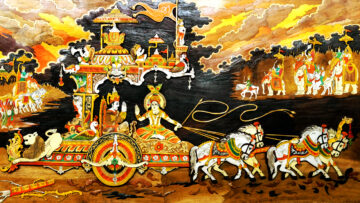
Arjuna stands in that same place. He is not asking a philosopher’s question. He is asking a seeker’s question. He has heard Śhrī Kṛiṣhṇa speak of renunciation. He has also heard praise of disciplined action. Now he wants one clear direction that he can live. So he asks plainly. You praise Sannyās (formal renunciation) and you also praise Karma Yog (Proper attitude in action). Tell me which one is better for me, and tell me decisively (BG 5.1).
अर्जुन उवाच —
संन्यासं कर्मणां कृष्ण पुनर्योगं च शंससि ।
यच्छ्रेय एतयोरेकं तन्मे ब्रूहि सुनिश्चितम् ॥ BG ५.१ ॥
Arjuna uvāca —
saṁnyāsaṁ karmaṇāṁ kr̥ṣṇa punaryōgaṁ ca śaṁsasi |
yacchrēya ētayōrēkaṁ tanmē brūhi suniścitam || BG 5.1 ||
(Arjuna said: O Kṛiṣhṇa, you have praised both renunciation of action (Sannyās) and the path of selfless action (Karm Yog). Please tell me definitively which of these two is superior and more beneficial for me.)
It is easy to read this as a comparison question. It can sound like a debate about methods. The Gītā is not doing that here. The verse is revealing something tender. A seeker wants certainty because uncertainty feels like inner strain. A seeker wants a single lane because the mind feels pulled. Arjuna is asking for a life-shape that can hold him.
This is also why the words matter. Sannyās (formal renunciation) can sound like dropping duties. Karma Yog (Proper attitude in action) can sound like accepting duties forever. When you are tired, both images can grip the mind. One image promises space. One image promises order. That is why the question returns in our own lives.
This article will not pick a winner and then ask you to follow it. Śhrī Kṛiṣhṇa does something subtler. He reshapes the question from inside. He takes Arjuna from outer form to inner placement. He takes the focus from identity to steadiness. He takes the mind from “which path is higher” to “what kind of inner freedom is actually forming.”
So we begin here, with a human question asked with sincerity in verse (BG 5.1). From this opening, the next step is to see why this question becomes sharp right at the transition from Chapter 4 to Chapter 5, and what Arjuna is carrying forward when he asks it.
Why Arjuna Asks This Now: The Carry-Forward From Chapter 4 to Chapter 5
Chapter 4 leaves an honest seeker with a powerful feeling. Something has been clarified. Something has also been unsettled. Śhrī Kṛiṣhṇa speaks of action that does not bind. He speaks of doing one’s work with a new inner stance. He speaks of yajña (sacrificial offering) as a spirit that can live inside many kinds of work (BG 4.24–4.33).
ब्रह्मार्पणं ब्रह्म हविर्ब्रह्माग्नौ ब्रह्मणा हुतम् ।
ब्रह्मैव तेन गन्तव्यं ब्रह्मकर्मसमाधिना ॥ BG ४.२४ ॥
brahmārpaṇaṁ brahma havirbrahmāgnau brahmaṇā hutam |
brahmaiva tēna gantavyaṁ brahmakarmasamādhinā || BG 4.24 ||
(The act of offering, the oblation itself, the one who offers, and the sacred fire; all are perceived as manifestations of the Divine by those who truly realize Brahman. Such individuals, absorbed in Brahman-consciousness, see every aspect of yajña (sacrifice) as an extension of the Supreme.)
He also speaks of knowledge as the purifier that burns the binding force of karma (results of action) into clarity (BG 4.37). Then He ends the chapter with a strong call. Rise up. Cut the doubt with knowledge. Stand in Yog (disciplined steadiness) and act (BG 4.42).
यथैधांसि समिद्धोऽग्निर्भस्मसात्कुरुतेऽर्जुन ।
ज्ञानाग्निः सर्वकर्माणि भस्मसात्कुरुते तथा ॥ BG ४.३७ ॥
yathaidhāṁsi samiddhō:’gnirbhasmasātkurutē:’rjuna |
jñānāgniḥ sarvakarmāṇi bhasmasātkurutē tathā || BG 4.37 ||
(Just as a blazing fire turns wood into ashes, the fire of self-knowledge burns all accumulated karmic reactions to ashes.)
तस्मादज्ञानसम्भूतं हृत्स्थं ज्ञानासिनात्मनः ।
छित्त्वैनं संशयं योगमातिष्ठोत्तिष्ठ भारत ॥ BG ४.४२ ॥
tasmādajñānasambhūtaṁ hr̥tsthaṁ jñānāsinātmanaḥ |
chittvainaṁ saṁśayaṁ yōgamātiṣṭhōttiṣṭha bhārata || BG 4.42 ||
(Therefore, using the sword of wisdom, cut apart the doubts that arise from ignorance and reside in your heart. Arise, take refuge in Yog, and act with clarity.)
An honest mind hears all of this and feels the pull of two messages. One message says that action can be spiritual when the inner stance is right. Another message says that knowledge is central, and that the older ritual mindset is not the final place to rest.
For a seeker who wants to live truthfully, this can raise a very practical confusion. If knowledge is the purifier, and if bondage is in doership and attachment, then why keep acting at all. Why not step away and pursue knowledge directly.
This is where praise of renunciation can be misheard. The mind can translate inner renunciation into outer withdrawal. It can take the teaching “renounce the binding attitude” and hear “renounce the field of action.” It can also take the idea of knowledge burning action and hear “stop acting so nothing needs to be burned.” These are common leaps in the seeker’s mind, especially when life already feels heavy.
Arjuna is carrying this exact tension into Chapter 5. He is not asking from laziness. He is asking from seriousness. He has to live with consequences. He has to choose a direction that will not fracture him. He has heard Śhrī Kṛiṣhṇa praise Sannyās (formal renunciation) and also praise Yog (disciplined path, here Karm Yog) again and again. He wants one settled instruction that he can trust (BG 5.1).
So the tone of Arjuna’s question matters. He is not trying to win an argument. He is asking for certainty because a divided mind cannot walk steadily. He wants one clear “this is better for you” because he wants to stop oscillating inside. He wants an instruction that will hold under pressure.
That is the setup Śhrī Kṛiṣhṇa answers. He does not just choose a side. He clarifies what renunciation truly means, and what makes a path safe for a mind still in training. To see that, we now need the larger frame the tradition uses for life choice, the two niṣṭhās (lifestyles) of Pravṛtti (engaged life) and Nivṛtti (turning inward).
Two Niṣṭhās (lifestyles): Pravṛtti (engaged life) and Nivṛtti (turning inward)
When the Gītā speaks about paths, it often speaks in a way that sounds like methods. It is also speaking about life orientation. That is where the idea of niṣṭhā (steady way of life) becomes useful. Niṣṭhā (steady way of life) is not a badge. It is not a label you carry. It is the stable direction of your energy. It is the way your days are arranged. It is the way your mind is trained. It is what you keep returning to when moods shift and pressure rises.
In the broader Vedic tradition, two niṣṭhās (steady ways of life) are often spoken of as two mature orientations. One is Pravṛtti (engaged life). The other is Nivṛtti (turning inward). These are not competing lifestyles. They are ways of shaping a human life toward Mokṣha (liberation). They are meant to serve inner freedom.
Śhrī Kṛiṣhṇa names this twofold niṣṭhā (steady way of life) framework in the Gītā as well when He speaks of a niṣṭhā of Jñāna (knowledge) and a niṣṭhā of Karm (action) (BG 3.3).
Pravṛtti (engaged life) is the orientation where you stay in the world of duties. You work. You care for family. You contribute to society. You take responsibility. The spiritual work happens inside the way you act. You learn to offer your effort. You learn to release obsession with results. You learn to do what is yours to do and let the rest belong to a larger order. In Pravṛtti (engaged life), the world is not the enemy. It becomes the training ground where the mind grows clean and steady.
Nivṛtti (turning inward) is the orientation where the whole life turns toward inquiry and realization. It is a life centered on study, contemplation, and steady inwardness. The outer duties reduce. The inner work becomes the main work. The seeker’s day is arranged to support Ātma-jñāna (Self-knowledge). This is the direction many associate with Sannyās (formal renunciation). Yet the deeper point is not external form. The deeper point is that the mind is ready to rest in inquiry as the central axis of life.
Readiness is the key. That is why these are called niṣṭhās (steady ways of life), not passing interests. What fits depends on maturity. A person may feel drawn to withdrawal because duties are tiring. That feeling is real. Still, the question remains. Is the mind prepared for inner steadiness without the mirror of daily life. A person may stay in action because life demands it. That is also real. Still, the question remains. Is action being used to avoid inner seeing.
The Gītā is gentle and realistic here. It does not treat Mokṣha (liberation) as belonging to only one life form. It treats Mokṣha (liberation) as the aim, and it treats life orientation as the means that must fit the seeker. That is why Śhrī Kṛiṣhṇa can speak of action and renunciation in the same breath. He can praise both, and then guide Arjuna toward what is safer for him at that moment (BG 5.2).
So before we ask, “Which is better,” we can ask, “What can I live steadily.” That is how niṣṭhā (steady way of life) functions. It asks for sincerity and steadiness. It asks for a life direction that can hold under strain. From here, Śhrī Kṛiṣhṇa’s answer in (BG 5.2) becomes clearer, because He is not only answering a theory. He is guiding a seeker toward a workable path that ripens freedom.
Śhrī Kṛiṣhṇa’s First Correction in (BG 5.2): Both Lead to Freedom, Yet One Is Safer

Śhrī Kṛiṣhṇa begins His answer in a way that steadies the mind. He does not reject Arjuna’s question. He also does not feed the mind’s need to turn spirituality into a contest. He says something simple. Sannyās (formal renunciation) and Karma Yog (Proper attitude in action) both lead to niḥśreyasa (highest good) (BG 5.2). That word niḥśreyasa (highest good) matters. It points to the aim that is not dependent on success, failure, praise, blame, gain, or loss. It points to Mokṣha (liberation). It points to a freedom that does not need the world to cooperate.
श्रीभगवानुवाच —
संन्यासः कर्मयोगश्च निःश्रेयसकरावुभौ ।
तयोस्तु कर्मसंन्यासात्कर्मयोगो विशिष्यते ॥ BG ५.२ ॥
śrībhagavānuvāca —
saṁnyāsaḥ karmayōgaśca niḥśrēyasakarāvubhau |
tayōstu karmasaṁnyāsātkarmayōgō viśiṣyatē || BG 5.2 ||
(Śhrī Kṛiṣhṇa said: Both renunciation of action (Sannyās) and the path of selfless action (Karm Yog) lead to liberation. However, of these two, the path of selfless action (Karm Yog) is superior.)
This first line already changes the shape of the question. The mind is looking for a winner. Śhrī Kṛiṣhṇa points to the destination. He says the destination is one. If you keep your eyes on the destination, the mind stops rushing to sort methods into higher and lower identities. It begins to ask a quieter question. What helps me move toward that freedom in a way I can live.
Then Śhrī Kṛiṣhṇa adds the second line. Of the two, Karma Yog (Proper attitude in action) is superior to karm-saṁnyāsa (renunciation of action) (BG 5.2). Many readers hear this as a judgment on the renunciate life. That is not the point He is making. He is giving guidance to a seeker who still stands inside duties and still carries inner waves. He is speaking about what is safer and more workable for a mind in training.
Śhrī Kṛiṣhṇa reinforces this in the same chapter when He says that saṁnyāsa (formal renunciation) without Yog (disciplined path) is difficult, and that the Yogī (disciplined seeker) reaches Brahman (supreme reality) sooner in verse (BG 5.6).
Here is what “better” means in this context. It means more stable. It means more sustainable. It means less likely to become a new form of escape. A mind that still carries strong likes and dislikes can take outer renunciation and continue the same inner patterns. The scenery changes. The reactions remain. The old hunger for control can continue in subtle forms. The same fear can continue, now hidden behind spiritual language. A seeker does not get free by changing the outer arrangement alone.
Karma Yog (Proper attitude in action) works differently. It keeps the seeker in the field where ego and desire are visible. Daily work brings friction. Relationships bring reactions. Outcomes bring craving. Failures bring discouragement. In that living field, you learn to practice tyāga (renunciation) as the release of clinging to results. You learn to offer effort while letting the fruit belong to a larger order (BG 2.47–2.48). You learn to act without feeding the sense of “I am the maker of everything.” The Gītā has already prepared this emphasis. It has already said that you have choice over action, not over the fruit (BG 2.47). It has already said that steadiness in gain and loss is Yog (disciplined steadiness) (BG 2.48). Now in Chapter 5, Śhrī Kṛiṣhṇa is applying that principle to Arjuna’s confusion.
Yet one is safer for most seekers because it trains the mind where the mind actually lives, in the midst of responsibility. It gives the seeker a daily place to purify intention and soften ego. It builds readiness for deeper knowledge without forcing a premature life change.
This prepares the next move. If Karma Yog (Proper attitude in action) is recommended, what does renunciation look like inside it. Śhrī Kṛiṣhṇa answers that through a definition that surprises many. He defines the real renunciate by inner freedom from hate and craving, and He calls that person nitya-sannyāsī (ever-renunciate) (BG 5.3).
True Renunciation Is an Inner State in (BG 5.3): Nitya-sannyāsī (ever-renunciate)
After saying that Karma Yog (Proper attitude in action) is the safer path for most seekers, Śhrī Kṛiṣhṇa immediately protects Arjuna from a common mistake. The mistake is to think that renunciation is mainly about outer withdrawal. So He defines renunciation in a way that lands inside the mind. He says the real nitya-sannyāsī (ever-renunciate) is the one who does not hate and does not crave (BG 5.3). This is a strong statement because it shifts the whole discussion. It moves renunciation from lifestyle to inner condition.
ज्ञेयः स नित्यसंन्यासी यो न द्वेष्टि न काङ्क्षति ।
निर्द्वन्द्वो हि महाबाहो सुखं बन्धात्प्रमुच्यते ॥ BG ५.३ ॥
jñēyaḥ sa nityasaṁnyāsī yō na dvēṣṭi na kāṅkṣati |
nirdvandvō hi mahābāhō sukhaṁ bandhātpramucyatē || BG 5.3 ||
(One who neither hates nor desires anything is always a renunciate (Sannyāsī). Such a person, free from attachment to opposites like pleasure and pain, is effortlessly liberated from all bondage.)
To “not hate” is simple to understand in daily life. It means you do not carry inner resistance toward what you meet. It means you do not keep rehearsing resentment. It means you do not keep feeding the story that someone should have been different, life should have been different, results should have been different. It also means you do not turn that resistance inward. You do not keep punishing yourself through harsh inner talk. You still see what is wrong. You still correct what you can. Yet the heart is not clenched.
To “not crave” is also simple to see. It means you do not keep reaching for a future moment to feel whole. It means you do not keep bargaining with life. If this happens, then I will finally be at peace. If I get that recognition, then I will feel settled. If I get that result, then I will relax. Craving can be loud. It can also be quiet. It can hide inside spiritual ambition. It can hide inside the need to be seen as wise or pure. Śhrī Kṛiṣhṇa is pointing to freedom from that inner thirst.
When these two soften, something else softens too. Bandha (bondage) is not mainly the outer fact of work. Bandha (bondage) is the inner entanglement that forms around work. It is the tightness around outcomes. It is the emotional stickiness around praise and blame. It is the way the mind gets pulled into loops of wanting and resisting. A person can sit in a forest and still be bound by craving and resentment. A person can live in a busy household and still grow inner release. That is why Śhrī Kṛiṣhṇa places the definition here. He wants the seeker to locate bondage where bondage actually lives.
This also explains the phrase in the verse about being free from pairs. The mind tends to swing. It likes some experiences and pushes away others. It calls one pleasant and calls another painful. It calls one success and calls another failure. The bondage forms as the mind builds identity around these movements. When you stop hating and stop craving, those swings lose strength. You still feel things. You still respond. You still act. Yet the inner grip reduces. Śhrī Kṛiṣhṇa says such a person is released from bondage with ease (BG 5.3). “With ease” does not mean without effort. It means without inner struggle created by resistance and grasping.
So renunciation becomes a daily inner practice. It is not a costume you wear. It is not a social role you adopt. It is a quiet training in how you meet what arises. You can begin it while living your present life. You can begin it in small moments. When irritation rises, you do not feed it. When desire rises, you do not hand it the steering wheel. When praise comes, you receive it without becoming it. When blame comes, you listen without collapsing into it. That is how the inner renunciate starts to form.
This prepares the next step in Śhrī Kṛiṣhṇa’s teaching. If renunciation is an inner state, then the separation between the path of knowledge and the path of action begins to look less solid. That is exactly where He goes next, when He says the wise do not divide Sānkhya (path of knowledge) and Yog (disciplined path, here Karm Yog), and He defines true seeing itself (BG 5.4–5.5).
In the Gītā, Sannyās (formal renunciation) and Sānkhya (path of knowledge) often move close in meaning. Sannyās (formal renunciation) points to renunciation as a way of life, and it also points to the inner dropping of clinging. Sānkhya (path of knowledge) points to clear discernment between Ātman (the Self) and Prakṛiti (nature), and that discernment naturally carries renunciation as an inner result. So the text does not always treat them as separate compartments. It treats both as ways of expressing the same inner release that leads toward Mokṣha (liberation), and that is why Śhrī Kṛiṣhṇa can speak in a way that keeps the aim central (BG 5.4–5.5)
The Heart of the Teaching in (BG 5.4–5.5): “The Wise Do Not Divide” and “Yaḥ Paśyati Sa Paśyati”
In verse (BG 5.4), Śhrī Kṛiṣhṇa says something that can feel like a gentle shock. He says that only bālāḥ (the inexperienced) speak of Sānkhya (path of knowledge) and Yog (disciplined path, here Karm Yog) as separate, and that paṇḍitāḥ (the wise) do not speak that way (BG 5.4). This line is not aimed at winning a debate. It is aimed at removing a confusion that keeps returning in the seeker’s mind. The confusion is the belief that spiritual life must be divided into two clean lanes, with two different destinations.
साङ्ख्ययोगौ पृथग्बालाः प्रवदन्ति न पण्डिताः ।
एकमप्यास्थितः सम्यगुभयोर्विन्दते फलम् ॥ BG ५.४ ॥
sāṅkhyayogau pṛthag bālāḥ pravadanti na paṇḍitāḥ
ekam apy āsthitaḥ samyag ubhayor vindate phalam || BG 5.4 ||
(Only the unwise speak of Sānkhya (the path of knowledge) and Karm Yog (the path of selfless action) as separate. The wise do not. One who is rightly established in even one of them gains the fruit of both.)
The mind likes clean lanes because clean lanes reduce anxiety. A seeker thinks, “If I choose the knowledge path, my life should look one way.” A seeker thinks, “If I choose the action path, my life should look another way.” In that framing, the outer form becomes the proof of progress. Śhrī Kṛiṣhṇa shifts the proof inward. He gives a different measure. He says the one who is samyag āsthitaḥ (rightly established) in even one of these gains the fruit of both (BG 5.4). Samyag āsthitaḥ (rightly established) is the hinge of the verse. It points to inner placement. Here, ‘not dividing’ means you stop treating outer form as proof, and you start looking for the same inner release taking shape in either life. It points to a mind that has settled into the practice in a true way.
Samyag āsthitaḥ (rightly established) also quietly points to antaḥkaraṇa-śuddhi (inner instrument purity). When the inner instrument becomes cleaner, the teaching does not slide off under pressure. It stays near you when praise arrives. It stays near you when blame lands. It stays near you when fear rises. This is one reason Karma Yog (Proper attitude in action) is recommended as the safer course. It keeps cleaning motive through daily contact with real life, so that Jñāna (knowledge) can become steady and lived, not only understood.
This is why the wise do not divide the paths. A wise person watches what the path is doing to the person. A wise person watches whether the mind is becoming freer from grasping. A wise person watches whether the sense of identity is loosening. A wise person watches whether clarity is growing in daily pressure. That is why Śhrī Kṛiṣhṇa does not let Arjuna hold the paths as two separate identities. He wants Arjuna to hold them as two disciplines serving one release.
Then verse (BG 5.5) takes the thought even deeper. Śhrī Kṛiṣhṇa says the goal reached by Sānkhya (path of knowledge) is also reached by Yog (disciplined path, here Karm Yog) (BG 5.5). He names a single sthāna (goal) that both reach. That sthāna (goal) is Mokṣha (liberation). Mokṣha (liberation) here is freedom from bandha (bondage). It is freedom from the inner compulsion that keeps pulling the mind into unrest. It is freedom that holds steady even when the outer day is active.
यत्साङ्ख्यैः प्राप्यते स्थानं तद्योगैरपि गम्यते ।
एकं साङ्ख्यं च योगं च यः पश्यति स पश्यति ॥ BG ५.५ ॥
yat sāṅkhyaiḥ prāpyate sthānaṁ tad yogair api gamyate
ekaṁ sāṅkhyaṁ ca yogaṁ ca yaḥ paśyati sa paśyati || BG 5.5 ||
(The goal attained through the path of renunciation is also reached by those following the path of action (Karm Yog). One who sees both as one truly perceives reality.)
Now comes the sentence that sounds almost like a mirror. “Yaḥ paśyati sa paśyati” (the one who sees, truly sees) (BG 5.5). This is not praise for cleverness. It is praise for right seeing. Right seeing is the ability to see through a mistaken way of looking. The mistaken way of looking is the assumption that knowledge belongs only to withdrawal and action belongs only to engagement. The mistaken way of looking is the assumption that one path gives freedom and the other gives worldly life.
Śhrī Kṛiṣhṇa is asking for a different kind of seeing. He is asking you to see the inner relationship between clarity and discipline. Sānkhya (path of knowledge) brings viveka (discernment between the eternal and the changing). It shows what binds and what frees. Yog (disciplined path, here Karm Yog) trains the mind so that this discernment becomes steady in life. It gives daily situations where the mind learns to release cling. When you see that both serve one inner freedom, you see in the way Śhrī Kṛiṣhṇa calls real seeing (BG 5.5).
This also explains the phrase in (BG 5.4) about gaining the fruit of both. A seeker who stays rightly established in Karma Yog (Proper attitude in action) begins to gain the inner conditions that support knowledge. A seeker who stays rightly established in Sānkhya (path of knowledge) begins to act with a cleaner inner stance. The result converges in lived freedom. The convergence is the fruit.
This section also quietly dissolves pride. A mind that divides paths often wants to defend its identity. It wants to prove that it is on the higher road. “Yaḥ paśyati sa paśyati” (the one who sees, truly sees) turns the attention away from proving and toward seeing (BG 5.5). The real sign becomes simple. Is your mind becoming clearer. Is it becoming freer. Is your day becoming less driven by inner compulsion. That is what the wise watch.
From here, the question “Which is better” starts to soften. A new question begins to rise. Where does Jñāna (knowledge) actually live in me. Where does it touch my ordinary moments. That is the next step, because Śhrī Kṛiṣhṇa’s teaching now moves from naming unity to showing how knowledge becomes inner placement, right where life is happening.
Where Knowledge Lives and Where Action Lands: The Shift From Ideas to Inner Placement
When we say Jñāna (knowledge), the mind often reaches for a thought. It reaches for a concept. It reaches for a line that sounds true. Yet in the Gītā’s voice, knowledge is not meant to stay as a statement floating above life. It is meant to settle into the way you stand inside your day. That is why the earlier phrase samyag āsthitaḥ (rightly established) matters so much (BG 5.4). It suggests that understanding has become placement. It has become a ground you return to, even when the mind is pulled.
This is where a subtle shift happens. The question is no longer, “Do I know the teaching.” The question becomes, “Does the teaching know me.” Does it meet me when the day turns sharp. Does it meet me when the mind becomes reactive. Does it meet me when I feel small. Does it meet me when I feel inflated. If knowledge remains only in words, it can live comfortably in calm moments. Life tests it in ordinary moments.
That test often arrives through praise and blame. Praise comes and the mind wants to drink it. It wants to build a home inside it. It wants to become the praised self. Blame comes and the mind wants to shrink. It wants to defend. It wants to attack. It wants to rewrite the story. These are simple movements, yet they show where identity is still resting. When Jñāna (knowledge) is settling, you notice these movements without getting swallowed by them. You still listen. You still correct. You still respond. Yet you do not hand your inner seat to the reaction.
Fear is another test. Fear rises in the body. The mind begins to scan. It begins to imagine futures. It begins to protect itself through control. In that moment, Jñāna (knowledge) is not a sentence. It is the ability to pause and see, “Fear is here.” It is the ability to let fear be present without letting it become your whole identity. That is a form of inner maturity. It is also the beginning of freedom from bandha (bondage) because bondage is often the inability to stay present when the mind is pulled.
Craving is also a daily test. It can be about results. It can be about recognition. It can be about comfort. It can be about certainty. The mind tells itself, “If I get this, I will finally be settled.” This is where Viveka (discernment between the eternal and the changing) becomes lived. Viveka is not only about big philosophy. It is about seeing what is passing in the very moment it appears. Praise is passing. Blame is passing. Fear is passing. Craving is passing. Their passing nature does not mean they are irrelevant. It means they are not a stable seat for the self.
This is also where action lands. Action is the place where the mind reveals its attachments. You do something and you want it to land a certain way. You want the world to respond a certain way. You want yourself to be seen a certain way. Then reality arrives with its own movement. In that friction, you can see how much of your inner peace is tied to outcomes. That seeing is already part of Jñāna (knowledge). It is the knowledge of your own clinging. It is the knowledge of where you lose yourself.
So the shift from ideas to inner placement is intimate. It is almost quiet. It is the moment you notice a reaction and do not feed it. It is the moment you notice pride and do not build a throne for it. It is the moment you notice shame and do not make it your home. It is the moment you do your work and you let the fruit belong to a larger order, even while you care about doing well.
This section prepares the next one naturally. If knowledge must settle into life, then practice becomes the bridge that helps it settle. That is why the tradition speaks of Śhravaṇa (listening to truth with openness) and Manana (reflective contemplation), and why Sākṣhi-bhāva (abidance as the witness) begins to appear as a steady inner capacity, not as a sudden event.
Why Practice Makes Knowledge Real: Śhravaṇa, Manana, and the Growth of Sākṣhi-bhāva
It is natural to love the idea of Jñāna (knowledge). It feels clean. It feels direct. It feels like it should solve things quickly. Yet most of us have seen a simple truth. You can agree with something deeply, and still live from older patterns the next morning. That does not mean the teaching is weak. It means the teaching needs a place to land. It needs the inner ground to hold it. That is why practice matters. Practice is how knowledge becomes real inside a living human mind.
The first movement is Śhravaṇa (listening to truth with openness). Listening here is not passive hearing. It is a shift in how the mind receives. A mind can listen while already deciding. A mind can listen while looking for confirmation. A mind can listen while hunting for a weakness to argue with. Śhravaṇa (listening to truth with openness) is a different posture. It is a willingness to let the teaching speak before the ego speaks. It is a willingness to be corrected without feeling diminished. In the Gītā, this openness is already valued. Śhrī Kṛiṣhṇa asks Arjuna to cut doubt and stand in steadiness (BG 4.42). That instruction assumes listening that is ready to be changed.
When Śhravaṇa (listening to truth with openness) is steady, the mind begins to notice something subtle. It begins to notice how often it protects an image of itself. It begins to notice how often it listens in order to stay the same. This noticing is already purification. It softens the grip of pride. It softens the grip of fear. It creates room for the teaching to work.
Then comes Manana (reflective contemplation). Manana is not repeating a line. It is turning the truth over until it becomes clear in your own seeing. The mind asks, “Do I actually understand what this means for my day.” The mind asks, “Where do I still resist this.” The mind asks, “Where do I secretly want exceptions for myself.” This is why Manana (reflective contemplation) takes patience. It takes time because the mind has old grooves. It has old habits of interpretation. It has old stories. Manana (reflective contemplation) is the slow work of letting the teaching meet those grooves.
This is also where the line samyag āsthitaḥ (rightly established) becomes practical (BG 5.4). Right establishment is not about intensity. A simple sign is how fast you return after a reaction. You notice the pull to justify yourself. You notice it without feeding it. You come back to the next right action
Over time, this steady return begins to produce a new inner capacity. Sākṣhi-bhāva (abidance as the witness) begins to appear. This is not a mystical event. It is a quiet ability to watch what is happening in you without becoming it. Anger rises. You see it rising. You feel its heat. You do not hand it your tongue. Anxiety rises. You see it rising. You feel the body tighten. You do not let it write the future for you. Pride rises. You see it rising. You do not build a throne for it. Shame rises. You see it rising. You do not collapse into it. This is Sākṣhi-bhāva (abidance as the witness) as lived clarity.
This is why practice makes knowledge real. Without practice, the mind keeps using knowledge as decoration. It can talk well and still react the same way. With practice, the same mind begins to change its footing. It begins to move from reaction to response. It begins to hold steadiness under pressure. It begins to loosen bandha (bondage) from the inside. This is the kind of change Śhrī Kṛiṣhṇa is pointing toward when He speaks of the wise who truly see (BG 5.5). True seeing is not correct speaking. True seeing is the inner freedom that appears in daily moments.
Practice also keeps the seeker humble. It shows that freedom grows through sincerity and repetition. It does not arrive through one conversation with truth. It arrives through living with truth until it becomes the way you stand.
This naturally carries us into the next section. If Sākṣhi-bhāva (abidance as the witness) is growing, then renunciation starts to look less like outer withdrawal and more like inner release. That is where Karm Sannyās (renunciation of action) comes into focus, as release from doership while action continues (BG 5.2).
What “Renunciation of Action” Means Here: Karm Sannyās as Release From Doership
When Śhrī Kṛiṣhṇa speaks about renunciation in this passage, He is not mainly talking about dropping work. He is talking about dropping inner ownership. That is why the phrase karm-saṁnyāsa (renunciation of action) can mislead the mind. The mind hears “renounce action” and imagines a life without duties. The teaching here is pointing to something happening inside action. The safety is not in the outer shape. The safety is in learning inner release while life is still moving.
The inner knot that binds most people is kartṛitva-bhāva (sense of doership). It is the feeling, “I am the one making everything happen.” It is also the feeling, “I alone must control how this lands.” It can hide inside noble responsibility. It can hide inside caring deeply. It can hide inside competence. It shows itself most clearly when outcomes shake you. When a result goes your way, the mind says, “I did it.” When a result does not go your way, the mind says, “I failed.” This is not only about pride or shame. It is about the mind gripping the entire field as “my making.” That grip becomes bandha (bondage) because the world never fully obeys personal control.
Karm Sannyās (renunciation of action) in this context means loosening that grip. It means letting action happen without claiming total authorship. It means letting effort be yours while letting the fruit belong to a larger order. The Gītā has already prepared this by teaching release from fixation on karmaphala (result of action) and steadiness in action. Now Chapter 5 brings those ideas into the conversation about renunciation. Renunciation is becoming an inner discipline of ownership.
Akartritva-bhāva (non-doership attitude) is a simple inner shift. You still do your work. You still take responsibility. You still care about doing it well. You still learn. You still fix what needs fixing.
The shift is only this. You stop believing that everything is only because of you. You start seeing that many forces are always involved. Your body plays a role. Your mind plays a role. Your svabhāva (one’s nature) plays a role. Your past training plays a role. The timing of events plays a role. Other people’s choices play a role. The larger lawful order, Īśhvara (cosmic order), also plays a role.
So you act fully, and you also drop the inner strain of trying to be the total controller. You stop carrying the idea that you must make every outcome match your plan. You do what is yours to do, and you let the rest belong to the larger order.
That is why this is called renunciation in a practical form. It is not leaving work. It is leaving the inner burden of control and ownership.
When this begins to grow, the texture of work changes. You bring effort with more calm. You plan well, then you release the inner demand that life must match the plan. You handle success with less inner inflation. You handle failure with less inner collapse. You become more willing to learn because the ego is not busy defending an image. You also become more consistent because your energy is not constantly spent on protecting outcomes.
Relationships change too. Kartṛitva-bhāva (sense of doership) often enters relationships as control. “I must fix them.” “I must make them understand.” “I must make this bond feel safe.” Akartritva-bhāva (non-doership attitude) softens that. You still show up. You still speak honestly. You still set boundaries. You stop believing that another person’s inner state is your private project. You stop treating their reactions as a verdict on your worth. That brings more patience into conversations. It brings more listening. It brings more respect for the other person’s agency.
Responsibility also becomes cleaner. Many people fear that releasing doership will reduce responsibility. What often happens is a different kind of responsibility appears. You become responsible for intention, effort, clarity, and ethics. You stop trying to be responsible for the entire universe of results. That is a relief. It is also a maturation. It supports what Śhrī Kṛiṣhṇa calls samyag āsthitaḥ (rightly established), because you can stay steady in your role without being consumed by it (BG 5.4).
So Karm Sannyās (renunciation of action) here is not a life exit. It is an inner release that can happen in the middle of life. It is the loosening of kartṛitva-bhāva (sense of doership) into akartritva-bhāva (non-doership attitude). It is the shift from owning the whole field to offering your part with steadiness. This is one way the unity of Sānkhya (path of knowledge) and Yog (disciplined path, here Karm Yog) becomes real (BG 5.4–5.5).
This leads naturally into the next section. Once action becomes a place where doership is seen and softened, the whole field of work starts to act like a mirror. Karma Yog (Proper attitude in action) begins to teach in real time, shaping maturity through daily contact with motive, fear, and ego.
How Karm Yog Supports Ripening: Action as Mirror, Action as Teacher
Many people speak of Karma Yog (Proper attitude in action) as if it is a compromise. They speak as if it is for people who cannot do the “real work” of knowledge. They imagine that the real spiritual life begins only when duties reduce. This is not how the Gītā frames it. Śhrī Kṛiṣhṇa speaks of Karma Yog (Proper attitude in action) as a direct way toward niḥśreyasa (highest good) for a seeker who still stands in the field of life (BG 5.2). That safety is not about convenience. It is about inner training.
Karma Yog (Proper attitude in action) is powerful because it refuses to let the seeker hide. A seeker can sit alone and still carry a subtle pride. A seeker can study and still carry fear. A seeker can speak of the Self and still protect an image. Daily action reveals these things quickly. Work brings deadlines. Relationships bring friction. Responsibility brings pressure. Outcomes bring uncertainty. These moments expose what is still binding.
One place this exposure happens is in bargaining. The mind bargains in quiet ways. “If I do this, I should get that.” “If I behave well, life should reward me.” “If I serve, people should appreciate me.” These bargains can be hidden under good intentions. Karma Yog (Proper attitude in action) brings them into the light because outcomes keep arriving in their own way. When the bargain is broken, you feel it. The hurt shows you the attachment. That seeing is already purification.
Control is another place. Many of us carry a deep urge to control because control feels like safety. We plan, we track, we manage, we push. Planning is not the problem. The problem is inner dependence on control. Karma Yog (Proper attitude in action) challenges this dependence because life keeps reminding you that the field is larger than your will. When you begin to offer action and release the claim over karmaphala (result of action), the inner pressure eases. You still act with skill. You still prepare. Yet you stop demanding that reality must match your plan. This is a real shift in the nervous system of a person.
Fear also becomes visible in action. Fear often hides as overwork, overthinking, or perfectionism. It also hides as avoidance. Karma Yog (Proper attitude in action) gives fear a place to be met honestly. You do what is needed even when fear is present. You learn that fear does not need to be eliminated before you act. You learn to act with fear present, while staying rooted in steadiness. That steadiness is the inner training Śhrī Kṛiṣhṇa is pointing toward when He speaks of Yog as steadiness of mind (BG 2.48).
Ego becomes visible too. Ego shows up as the need to be the hero. It shows up as the need to be right. It shows up as the need to be seen. It also shows up as the need to be indispensable. In Karma Yog (Proper attitude in action), ego is not fought with aggression. It is seen. You notice the urge to claim credit. You notice the urge to control the narrative. You notice the urge to shrink others so you can feel safe. Seeing is the beginning of loosening. Over time, the same work becomes lighter because the ego is no longer carrying the whole scene as “my story.”
This is where action becomes a mirror. It reflects what you still cling to. It reflects what you still resist. It reflects what still shapes your mood. When the mirror is used with honesty, purification happens. Purification here is not moral. It is functional. It is the cleaning of motive. It is the reduction of inner noise. It is the weakening of the push and pull that drives the day. This is how Karma Yog (Proper attitude in action) supports the growth of samyag āsthitaḥ (rightly established), because the mind becomes stable in the midst of activity (BG 5.4).
Purification also happens through offering. Offering does not have to be dramatic. It can be a simple inner movement. “May this effort be clean.” “May this action serve what is right.” “May the result be accepted with steadiness.” When you keep offering in this way, action stops being a private project for ego. It becomes a practice field. It becomes a way of loosening kartṛitva-bhāva (sense of doership) and growing akartritva-bhāva (non-doership attitude) (BG 5.2). It becomes a way of learning that you can care deeply without clutching.
This is why Karma Yog (Proper attitude in action) supports ripening. It trains the mind where the mind lives. It trains it under pressure. It trains it in relationships. It trains it in uncertainty. That training makes Jñāna (knowledge) usable. It makes Viveka (discernment between the eternal and the changing) steady. It supports the growth of Sākṣhi-bhāva (abidance as the witness) in real time because you keep watching reactions as you keep acting.
So action becomes a teacher. It teaches humility. It teaches patience. It teaches steadiness. It teaches release. It teaches the mind to stay present without being owned by what arises. That is the kind of maturity that makes the unity of Sānkhya (path of knowledge) and Yog (disciplined path, here Karm Yog) not only an idea, but a lived fact (BG 5.4–5.5).
This naturally leads into the next section. Even with this clarity, the mind often falls into labels. “I am action oriented.” “I am knowledge oriented.” These labels can feel helpful. They can also become shelters. The next section looks at that quiet trap and how it keeps the seeker from honest growth.
The Quiet Trap of Labels: “Action Oriented” and “Knowledge Oriented”
Labels can feel like relief. They simplify a complex inner life into a sentence you can hold. “I am action oriented.” “I am knowledge oriented.” The mind likes this because it creates a sense of belonging. It also creates a sense of certainty. Yet these labels can quietly become shelters for the ego. They can become ways to feel settled without doing the deeper work that the Gītā is asking for.
When a person calls themselves “action oriented,” it can hide a subtle avoidance. The person stays busy. They stay useful. They keep solving problems. They keep showing up for everyone. This can be good. It can also become a way to avoid silence. It can become a way to avoid looking at fear. It can become a way to avoid meeting the ache that rises when the day slows down. Action then becomes a shield. The person may even say, “My spirituality is in my work.” That can be true in Karma Yog (Proper attitude in action). It can also be a way to keep the inner enquiry postponed.
When a person calls themselves “knowledge oriented,” a different avoidance can appear. The person reads. The person reflects. The person speaks in refined language. The person feels close to truth. Yet responsibility can get delayed. Relationships can get neglected. Ordinary duties can get treated as distractions. The mind can hide behind ideas. It can use concepts to stay untouched by the messy parts of life. The ego can enjoy being the one who understands, while the heart remains untrained in patience, humility, and steadiness.
Śhrī Kṛiṣhṇa is gently cutting through this in (BG 5.4–5.5). He says the wise do not divide Sānkhya (path of knowledge) and Yog (disciplined path, here Karm Yog) (BG 5.4). He says the one who sees them as one truly sees (BG 5.5). These verses ask you to drop the need to use a path as identity. They bring you back to fruit. They bring you back to what is actually changing inside you.
A simple measure begins to matter more than any label. Are motives becoming steadier. Is the need to control reducing. Is the need for applause reducing. Is the fear behind perfectionism becoming visible. Is there more honesty when you fail. Is there more humility when you succeed. Does it stay with you when someone challenges you. Does it stay with you when life does not cooperate. These are the questions that reveal samyag āsthitaḥ (rightly established) (BG 5.4). They reveal whether the teaching is landing.
This is why labels are a trap. They can let you feel spiritually placed while the inner work remains untouched. The Gītā keeps inviting a more honest stance. Let action be a field of purification. Let knowledge be a light that reshapes how you act. Let both serve one movement toward Mokṣha (liberation) (BG 5.5). When the label drops, growth becomes simpler. You stop protecting an identity. You start meeting your actual inner state.
This leads into the next section naturally. Once labels lose their grip, the seeker can also see common misunderstandings with more clarity. These misunderstandings keep the original confusion alive, even after reading the verses. So this brings us naturally to the conclusion.
Conclusion: The Better Path Is the One That Makes You Steady and Free
Arjuna begins with a question that many of us carry. He wants to know whether Sannyās (formal renunciation) or Karma Yog (Proper attitude in action) is better (BG 5.1). Śhrī Kṛiṣhṇa answers by shifting the center of the question. He says both can lead to niḥśreyasa (highest good), and then He guides the seeker toward what is safer and more workable for most minds, Karma Yog (Proper attitude in action) (BG 5.2). He defines real renunciation as an inner state, seen in freedom from hate and craving, and He calls that person nitya-sannyāsī (ever-renunciate) (BG 5.3). He then gives the heart of the teaching. The wise do not divide Sānkhya (path of knowledge) and Yog (disciplined path, here Karm Yog). One sincere path, lived rightly, gives the fruit of both. The one who sees this truly sees (BG 5.4–5.5).
The shared aim is Mokṣha (liberation). It is inner freedom from bandha (bondage), not a change of outer scene (BG 5.5). A calm lived takeaway follows. Let your action become clean through offering. Let your understanding become steady through practice.
Let the label drop. Let samyag āsthitaḥ (rightly established) become your measure.
Key Terms
Here are the key terms glossary in alphabetical order
- Akartritva-bhāva (non-doership attitude): A lived recognition that actions occur through a lawful field, while inner ownership softens and the mind stays steady.
- Bandha (bondage): Inner entanglement driven by craving and resistance, felt as emotional sticking, not as the outer presence of duties.
- Dveṣha (aversion): The inner push against what is present, often felt as resentment, irritation, or refusal that tightens the mind.
- Kartritva-bhāva (sense of doership): The feeling “I am the sole maker,” which intensifies control, pride, and collapse when outcomes shift.
- Karm (action): Action through body, speech, or mind, which becomes a discipline when performed with steadiness and ethical clarity.
- Karma Yog (proper attitude in action): The disciplined offering of action where effort is sincere and outcomes are released to a larger order (BG 5.2).
- Karm Sannyās (renunciation of action): Renunciation of inner ownership and clinging within action, rather than abandoning responsibilities (BG 5.2).
- Mokṣha (liberation): Freedom from inner bondage, marked by steadiness and release from compulsive craving and resistance (BG 5.5).
- Niḥśreyasa (highest good): The highest aim of inner freedom that both Sannyās (formal renunciation) and Karma Yog (Proper attitude in action) can lead to (BG 5.2).
- Niṣṭhā (steady way of life): A stable life orientation that shapes daily priorities and practice, held as lived direction rather than identity.
- Nitya-sannyāsī (ever-renunciate): A person who lives with reduced hate and reduced craving, showing inner renunciation in daily life (BG 5.3).
- Nivṛtti (turning inward): The life orientation where inquiry and realization become central, supported by reduced outer involvement.
- Pravṛtti (engaged life): The life orientation of responsibility and duty, lived with offering, steadiness, and inner discipline.
- Sākṣhi-bhāva (abidance as the witness): Quiet inner watching where reactions are seen clearly without becoming the self’s identity.
- Sānkhya (path of knowledge): The discipline of discernment and understanding that aims at Self-knowledge, named here as one way to the same goal (BG 5.4–5.5).
- Samyag āsthitaḥ (rightly established): Inner placement and steadiness where practice becomes stable and the fruits of the path mature (BG 5.4).
- Śhravaṇa (listening to truth with openness): Receiving the teaching with readiness to be corrected, without defending a fixed self-image.
- Sannyās (formal renunciation): A life form centered on withdrawal and inquiry, valued as a path to niḥśreyasa (highest good) when inner renunciation is present (BG 5.2).
- Vairāgya (inner detachment from identification): A steady loosening from clinging and resistance that supports freedom in action and reflection.
- Viveka (discernment between the eternal and the changing): The lived capacity to see what is lasting and what is passing, especially in daily reactions.
- Yaḥ paśyati sa paśyati (the one who sees truly sees): The Gītā’s marker of right seeing, where the seeker recognizes one aim served through both paths (BG 5.5).
Further Reading
For deeper insight into the themes explored in “The Wise Do Not Divide”
- Swami Dayananda Saraswati. (2008). Bhagavad Gita: Home Study Course (Vol. 1–2). Arsha Vidya Research and Publication Trust.
Strong for understanding niṣṭhā (steady way of life), viveka (discernment between the eternal and the changing), and why steadiness matters more than labels.
- Swami Chinmayananda. (1996). The Holy Geeta. Chinmaya Mission Trust.
Useful for a clean, verse-by-verse flow that keeps Karma Yog (Proper attitude in action) grounded in daily responsibility and inner discipline.
Note on Sources: This article draws primarily on the Bhagavad Gītā, with its focus anchored in (BG 5.1–5.5). These verses hold Arjuna’s request for a single clear direction, Śhrī Kṛiṣhṇa’s statement that both Sannyās (formal renunciation) and Karma Yog (Proper attitude in action) lead to niḥśreyasa (highest good), the inner definition of the nitya-sannyāsī (ever-renunciate), and the teaching that the wise do not divide Sānkhya (path of knowledge) and Yog (disciplined path, here Karm Yog) (BG 5.1–5.5). Supporting references include (BG 2.47–2.48) on steadiness in action and release from fixation on results, and (BG 4.42) on cutting doubt and standing in Yog (disciplined steadiness), which help clarify why inner establishment matters more than outer form.
The reflections are situated within the broader Vedāntic tradition that reads the Bhagavad Gītā alongside the Upanishads and the Brahma Sūtras as a coherent teaching stream. The practices of śhravaṇa (listening to truth with openness), manana (reflective contemplation), and nididhyāsana (steady contemplation) form the background lens for how understanding becomes lived steadiness. Standard English translations and classical commentarial sensibilities were consulted to keep verse meanings consistent while maintaining a simple, reflective voice for modern readers.
Disclaimer: The opinions expressed in this article belong to the author. Indic Today is neither responsible nor liable for the accuracy, completeness, suitability, or validity of any information in the article.