
The Heart’s Search for a Final Word
Prologue
The heart keeps asking, Who is judging me.
Most of us carry an unseen question through ordinary days. It comes up in small choices. It comes up after a sharp word. It comes up when life turns and the mind does not know how to read the turn. The question is simple. Who is keeping the account?
When you sit with that question for a minute, you can feel how human it is. The mind wants a clean story. It wants a final voice that can say, “This is settled.” It wants to know where guilt belongs. It wants to know where fear belongs. It wants to know if the world is watching and judging in the way the mind judges itself.
Arjun’s crisis opens this question in full light. His grief is personal. His doubt is also universal. The Bhagavad Gītā keeps meeting that doubt with calm clarity. It asks us to see what we are doing inwardly, even before we try to solve the world outside. (BG 1.28–1.30)
The Human Need for a Verdict
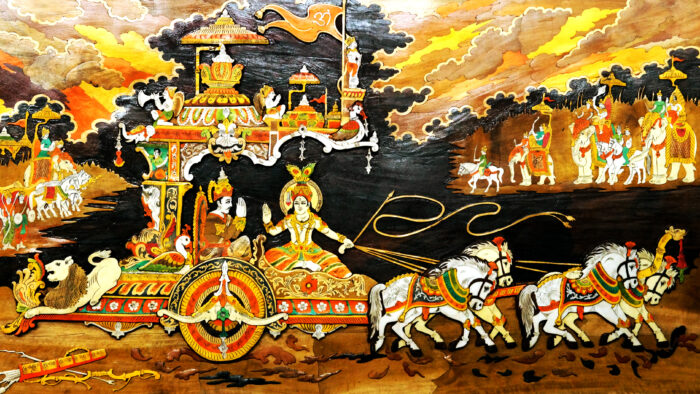
Picture Arjun on the battlefield. He is surrounded by faces that carry history. He is surrounded by duties that carry weight. His body reacts. His mind shakes. He wants one thing that can steady him. A final word. A verdict.
By ‘cosmic judge,’ it is meant the mind’s picture of an external authority, and the inner scorekeeper that keeps replaying the verdict inside.
This urge is not strange. It is the mind’s attempt to reduce inner noise. When fear rises, the mind looks for authority. When guilt rises, the mind looks for a courtroom. It wants someone to say, “You are forgiven,” or “You are condemned.” It wants the moral uncertainty to end. It wants the ache of choice to stop pressing on the chest.
Over time, this craving for a verdict becomes a habit of the heart. You begin to check your own life like a file. You replay. You justify. You accuse yourself. You wait for signs. A good day feels like approval. A hard day feels like a sentence. The mind starts living in the mood of “How am I being evaluated.”
Arjun is standing inside that storm. The Bhagavad Gītā will not shame this need. It will refine it. It will move the question from “Who will judge me” to “What is really happening in me.” That shift begins with one verse that changes the ground under the feet.
The Verse That Shifts the Ground
Now the Bhagavad Gītā places one sentence in front of Arjun that feels steady and clear. It comes in (BG 5.15). This sits right after verse (BG 5.14), which says doership, action, and the link with results are not created by the Lord, and they arise from svabhāva (one’s nature). svabhāva means the conditioning that shapes how the mind and body tend to act. Verse (BG 5.15) says that the vibhuḥ (all-pervasive Self) does not take anyone’s pāpa (sin) or sukṛta (merit). It also says that people are deluded because ajñāna (ignorance) covers jñāna (knowledge).
नादत्ते कस्यचित्पापं न चैव सुकृतं विभुः ।
अज्ञानेनावृतं ज्ञानं तेन मुह्यन्ति जन्तवः ॥ BG ५.१५ ॥
nādattē kasyacitpāpaṁ na caiva sukr̥taṁ vibhuḥ |
ajñānēnāvr̥taṁ jñānaṁ tēna muhyanti jantavaḥ || BG 5.15 ||
(The all-pervasive Self does not take on anyone’s sins or merits. However, due to ignorance, true knowledge is veiled, causing living beings to fall into delusion.)
Chapter 5 is spoken in the middle of a very practical concern. Arjun wants to know how a person can live in action and still be free inside. This chapter keeps returning to the same theme. Inner freedom does not come from running away from work. It comes from seeing clearly while acting. That is why verse (BG 5.15) appears here. It removes the hidden fear that action makes the deepest Self dirty or guilty. It shifts the reader from the idea of a cosmic judge to the real cause of confusion, ajñāna (ignorance) covering jñāna (knowledge).
Let’s put it in plain language, as if we are sitting across and speaking softly. The deepest Self is not holding your moral record in its hands. The deepest Self is not carrying your wrongs. The deepest Self is not carrying your rights. The verse points to something else that explains why we feel burdened. It points to covered seeing. It points to the way inner clarity gets veiled, and the mind starts reading life through confusion.
When you hear this, something subtle happens. The whole frame of the question changes. The mind that wants a cosmic judge is trying to locate blame and safety. The verse is asking the seeker to notice where the confusion lives. It lives in the way “I” is understood. It lives in the way the inner sense of self gets mixed with thoughts, memories, and emotions. When the light of knowing is covered, the mind treats its own stories as final. It treats fear as evidence. It treats guilt as identity. It treats every outcome as a moral comment on the person.
The verse is not removing moral responsibility. It is placing it correctly. Moral consequences belong to the level of action and mind, where choices and results play out. The deepest Self, vibhuḥ (all-pervasive Self), is the awareness that knows these movements. It does not store pāpa (sin) or sukṛta (merit) as a permanent stain. This lets you admit a mistake, repair harm, and learn, without turning guilt into your core identity.
This is where the teaching begins to touch Arjun inwardly. The next step is to see what he is carrying in his own chest at that moment, and why his mind wants a judge so badly.
What Arjun Is Carrying Inside?
If you stay close to Arjun as a living seeker, you can sense what he is carrying even before he names it clearly. His eyes are seeing relatives, teachers, friends, and elders. His mind is seeing consequences that feel too large to hold. His body is already responding with trembling and weakness. This is not only a strategic crisis. It is a moral and emotional flood.
Inside that flood, Arjun is trying to place fear somewhere. If fear has a place, it feels manageable. If fear can be assigned to an authority, it feels explainable. He is also trying to place guilt somewhere. If guilt has a place, it feels contained. He does not want to feel careless. He does not want to feel cruel. He does not want to feel like someone who can destroy what should be honoured. So the mind tries a familiar move. It imagines a cosmic judge. It imagines a final moral voice. It imagines a verdict that can tell him what he is.
This is how the mind tries to hold itself together. When inner conflict becomes intense, the mind looks for a single decisive sentence. It wants to stop the inner debate. It wants to stop the shaking of identity. It wants a clean label, even if the label hurts. A label feels safer than uncertainty. This is why the idea of judgement can feel oddly comforting. It gives shape to chaos. It gives a script to pain.
Arjun’s questions also carry a deeper longing. He wants to remain a person of dharm (right order). He wants to know that his inner compass is not broken. He wants to know that life is not random. When he cannot find that steadiness inside himself, he looks outward for a higher court. He looks upward for a sentence that can end the trembling.
Now verse (BG 5.15) enters as a kind of inner medicine. It does not attack Arjun’s sincerity. It redirects his search. It asks him to see where the burden is arising, and what part of him is truly untouched by the burden. From here, we can turn to the meaning of vibhuḥ (all-pervasive Self) and what it implies for moral accounting.
Vibhuḥ and the Question of Moral Accounting
When the verse uses the word vibhuḥ (all-pervasive Self), it is pointing to something that is already present in your experience, even if you have not named it. There is a sense of being that is steady. It is present when the mind is calm or noisy. It is present when pride rises or shame rises. It does not come and go the way moods come and go. It is the simple fact that you are aware.
Now the verse says that this vibhuḥ (all-pervasive Self) does not take pāpa (sin) or sukṛta (merit). This is the ground shift. Moral accounting belongs to lived life. It belongs to choices, tendencies, and consequences. It belongs to the field in which action and results appear. It does not belong to the pure Self in the way the frightened mind imagines. The Self is not a moral container that gets stained by wrong action or polished by good action. The Self is the light by which all of that is known.
So where does the feeling of stain come from? The verse answers that too. It says ajñāna (ignorance) covers jñāna (knowledge). When clear knowing is covered, the mind mixes levels. It takes the changing inner story and treats it as the deepest “I.” It takes guilt, regret, pride, and fear, and it pushes them into identity. A person then feels, “I am guilty,” not “Guilt is arising in me.” A person then feels, “I am unworthy,” not “A painful thought is present.”
Sometimes a memory comes up. Along with it, a harsh thought comes up too. It might say, “I did something wrong,” or “I am not good enough.” When that happens, your body reacts. You feel tightness in the chest or stomach. Your mind then makes a big conclusion about you as a person. It feels final in that moment. It feels like a full truth about who you are.
Later, when you are calmer, you look back and you can see it differently. You can see that it was a temporary wave in the mind. The memory came. The harsh voice came. The tension came. Then it passed.
The key point is this. Even while that wave was happening, there was something in you that was simply aware of it. That awareness noticed the memory. It noticed the harsh voice. It noticed the body tightening. That awareness stayed the same through the whole episode. The wave changed. The awareness that knew the wave did not change.
So the “Self” here means that steady awareness, the one that knows the mind’s waves without becoming the wave.
This is what moral accounting looks like when placed correctly. You remain responsible in the field of action. You learn. You repair. You choose with care. Yet your deepest being is not held hostage by a mental verdict. Vibhuḥ (all-pervasive Self) is unstained presence. Pāpa (sin) and sukṛta (merit) belong to the story of the actor, not to the nature of awareness itself.
From here, the teaching naturally moves into the personal world of the jīva (individual self) living inside prakṛiti (nature). This is where moral weight is felt most sharply, and where the idea of a cosmic judge becomes emotionally compelling.
The Jīva Inside Prakṛiti and the Weight of Saṁsāra
Let us bring this down from a high idea into the place where you actually feel life. The jīva (individual self) lives inside prakṛiti (nature). It lives through a body. It lives through a mind. It lives through relationships and roles. It lives through the daily pressure of time. When you say “I,” you usually mean this lived bundle of experience. You mean your memories. You mean your temperament. You mean your history. You mean your hopes. This is where moral weight is felt, because this is where choices are made and consequences are met.
प्रकृतेः क्रियमाणानि गुणैः कर्माणि सर्वशः ।
अहङ्कारविमूढात्मा कर्ताहमिति मन्यते ॥ BG ३.२७ ॥
prakr̥tēḥ kriyamāṇāni guṇaiḥ karmāṇi sarvaśaḥ |
ahaṅkāravimūḍhātmā kartāhamiti manyatē || BG 3.27 ||
(All actions are performed by the qualities (guṇas) of material nature (prakṛiti), but a person who is deluded by ego considers themselves to be the sole doer of their actions, unaware of the deeper forces at play.)
Guṇas (qualities) refers to the basic forces in prakṛiti (nature) that shape how the mind and body tend to act.
The jīva (individual self) carries impressions. It carries habits that repeat. It carries unfinished emotions. It carries a memory of what it has done and what it has failed to do. Some of this memory is clear. Some of it is only a felt tone. You may not remember the moment you learned to fear disapproval, yet the fear shows up in your chest when you speak to a senior. You may not remember the moment you learned to hide, yet hiding becomes a reflex when you are questioned. This carried momentum is part of prakṛiti (nature) working through you.
This is also where the idea of a cosmic judge grows. A person feels, “My history is following me.” They feel, “Life is keeping score.” They feel, “Something outside me knows what I did.” When that feeling becomes strong, the mind tries to make it concrete. It imagines a courtroom in the sky. It imagines a judge who must be pleased. It imagines punishment that must be deserved. It imagines reward that must be earned. This turns life into moral surveillance.
Now bring in action. Action is what you choose, say, do, and sustain. Action leaves grooves in the mind. Action also shapes relationships. Action creates consequences that return in lived time. Then bring in Karma (results of action). Karma (results of action) is the stream of outcomes that come back through the world. Some results come fast. Some results come slow. Many results come through other people and through the wider order of life. This is why the jīva (individual self) feels that life has memory. Life does have continuity. (BG 4.17)
कर्मणो ह्यपि बोद्धव्यं बोद्धव्यं च विकर्मणः ।
अकर्मणश्च बोद्धव्यं गहना कर्मणो गतिः ॥ BG ४.१७ ॥
karmaṇō hyapi bōddhavyaṁ bōddhavyaṁ ca vikarmaṇaḥ |
akarmaṇaśca bōddhavyaṁ gahanā karmaṇō gatiḥ || BG 4.17 ||
(The nature of action is difficult to understand. One must know what right action is, what is forbidden action, and what is inaction. The complexity of how action works is deep and mysterious.)
When this is not understood with clarity, the mind turns it into a moral court. It starts assuming that life is mainly a punishment and reward system. Then every setback feels like condemnation. Every success feels like temporary pardon. A person becomes anxious even on good days. They keep waiting for the other shoe to drop. They feel watched by fate. They feel watched by time. They begin to live with an inner flinch.
Now bring in saṁsāra (repeated worldly becoming). Saṁsāra (repeated worldly becoming) is this ongoing cycle of taking roles, chasing security, losing security, and starting again. It includes pleasure and pain, gain and loss, praise and blame. It also includes the repeated attempt to secure the self through moral scoring. The jīva (individual self) keeps trying to become safe through a stable identity. “I am good.” “I am bad.” “I am worthy.” “I am unworthy.” The mind grabs these labels because labels feel like ground.
This is why a verdict feels so tempting. A verdict seems like it could end uncertainty. It seems like it could tell you what you are, once and for all. Yet the verse (BG 5.15) points elsewhere. It points to ajñāna (ignorance) as the veil that creates this painful confusion. It does not point to a cosmic judge as the source of fear. The release begins when the jīva (individual self) starts seeing the difference between the field of prakṛiti (nature), where action and Karma (results of action) operate, and the deeper Self that remains untouched.
This does something tender inside. You stop reading every event as a moral commentary on your being. You start reading events as part of an order where choices matter, learning happens, and consequences unfold. You still own your action. You still repair harm. You still grow. Yet you do not have to live as a frightened defendant. You can live as a sincere learner. That sincerity has more strength than fear.
मयि सर्वाणि कर्माणि संन्यस्याध्यात्मचेतसा ।
निराशीर्निर्ममो भूत्वा युध्यस्व विगतज्वरः ॥ BG ३.३० ॥
mayi sarvāṇi karmāṇi saṁnyasyādhyātmacētasā |
nirāśīrnirmamō bhūtvā yudhyasva vigatajvaraḥ || BG 3.30 ||
(Surrender all actions to the Divine with a focused mind, free from desire and ego. Perform duties without attachment, with clarity, and without agitation or anxiety.)
As this settles, a new question comes up naturally. What exactly is this ajñāna (ignorance) that covers jñāna (knowledge). How does covered seeing create the inner courtroom. Let us turn there next, because that is where the teaching becomes very practical.
Ajñāna as the Real Veil
Ajñāna (ignorance) sounds like a big word, so let us keep it simple. Ajñāna (ignorance) is covered seeing. It is not a lack of information. It is a confusion about what “I” really is. It is the habit of taking the moving parts of experience and calling them the Self. When that habit is running, the mind cannot rest. It keeps trying to fix identity through outcomes.
You can notice ajñāna (ignorance) in a very ordinary way. A thought arises and it feels personal at once. “I failed.” “I am unsafe.” “I am not worthy.” The mind does not treat it as a thought. It treats it as truth about being. Then emotion rises to match the thought. Then the body tightens to match the emotion. A loop forms. The loop feels like reality. This is covered seeing. The light of awareness is present, yet the mind is not using that light to see clearly. (BG 2.62–2.63)
ध्यायतो विषयान्पुंसः सङ्गस्तेषूपजायते ।
सङ्गात्सञ्जायते कामः कामात्क्रोधोऽभिजायते ॥ BG २.६२ ॥
dhyāyatō viṣayānpuṁsaḥ saṅgastēṣūpajāyatē |
saṅgātsañjāyatē kāmaḥ kāmātkrōdhō:’bhijāyatē || BG 2.62 ||
(Contemplating objects of the senses leads to attachment; from attachment arises desire, and from desire comes anger.)
क्रोधाद्भवति संमोहः संमोहात्स्मृतिविभ्रमः ।
स्मृतिभ्रंशाद्बुद्धिनाशो बुद्धिनाशात्प्रणश्यति ॥ BG २.६३ ॥
krōdhādbhavati saṁmōhaḥ saṁmōhātsmr̥tivibhramaḥ |
smr̥tibhraṁśādbuddhināśō buddhināśātpraṇaśyati || BG 2.63 ||
(From anger arises delusion; delusion leads to the loss of memory; loss of memory weakens discrimination; and when discrimination is lost, one perishes.)
This is also where fear and guilt grow. Fear becomes a constant interpreter of life. It starts reading every silence as judgement. It starts reading every delay as rejection. Guilt becomes a constant identity manager. It starts demanding self-punishment as proof of sincerity. It starts demanding perfection as proof of goodness. Then the cosmic judge idea finds a home. It gives a face to the inner pressure. It turns inner confusion into an outer authority.
Now jñāna (knowledge) is the medicine named by the verse. Jñāna (knowledge) is clear seeing. It is the recognition that the Self is the knower of the mind, not the moods of the mind. It is the recognition that awareness is present before every thought and remains after every thought. It is the recognition that moral life happens in experience, yet the deepest “I” is not a moral object that can be stained or scrubbed.
This clarity does not make a person careless. It makes them steadier. When you know what you are, you stop begging events to define you. When you know what you are, you can look at a mistake without collapsing into shame. You can repair without self-hatred. You can learn without inner violence. You can act with responsibility while keeping the heart quiet. (BG 2.50)
बुद्धियुक्तो जहातीह उभे सुकृतदुष्कृते ।
तस्माद्योगाय युज्यस्व योगः कर्मसु कौशलम् ॥ BG २.५० ॥
buddhiyuktō jahātīha ubhē sukr̥taduṣkr̥tē |
tasmādyōgāya yujyasva yōgaḥ karmasu kauśalam || BG 2.50 ||
(A person who is endowed with wisdom discards both good and bad consequences of their actions in this life itself. Therefore, strive to engage in Yog, for Yog is the art of skillful action.)
As this veil begins to lift, something starts changing in Arjun too. The need for a dramatic verdict starts losing its grip. A softer kind of release begins to open. That lived shift is the next movement to watch.
The Inner Release That Begins in Arjun
Once verse (BG 5.15) is heard with some honesty, a small release can begin. It does not look like a sudden burst of courage. It looks like the mind becoming less hungry for a verdict. Arjun has been holding his fear as if it must be proven true by some final authority. He has been holding his guilt as if it must be carried forever to prove that he is sincere. The teaching begins to loosen that tight logic inside him.
You can sense Arjun’s inner pressure in the earlier chapter. His words show a mind trying to protect itself from moral injury. He is not only afraid of loss. He is afraid of being wrong in a way that cannot be repaired. He is afraid of becoming a person he cannot respect. He is afraid that action will permanently stain him. This fear pushes him toward one solution. “If there is a judge, then at least I will know where I stand.”
Now the verse places a different possibility in front of him. It says the vibhuḥ (all-pervasive Self) is untouched by pāpa (sin) and sukṛta (merit). The problem is not a cosmic court stamping him guilty. The problem is ajñāna (ignorance) covering jñāna (knowledge). This is a very personal message. It tells Arjun that the suffering he is feeling is not proof that he is condemned. It is proof that he is confused about the deepest “I.”
So the inner release begins as a shift in ownership. Arjun begins to see that fear is an experience. It is not a final verdict. He begins to see that guilt is an experience. It is not an identity. He begins to see that moral seriousness does not require self-punishment. It requires clarity. It requires steadiness. It requires the willingness to do what is right without drowning in mental stories.
कर्मण्येवाधिकारस्ते मा फलेषु कदाचन ।
मा कर्मफलहेतुर्भूर्मा ते सङ्गोऽस्त्वकर्मणि ॥ BG २.४७ ॥
karmaṇyēvādhikārastē mā phalēṣu kadācana |
mā karmaphalahēturbhūrmā tē saṅgō:’stvakarmaṇi || BG 2.47 ||
(You have the right to perform your prescribed duty, but never to the fruits of your actions. Do not act with the desire for rewards, nor be attached to inaction.)
This release is also a release from drama. The mind likes drama because drama creates intensity. Intensity feels like certainty. Yet certainty built from intensity is fragile. Arjun begins to let that go. He begins to accept that the right movement will come from clear seeing, not from panic. He begins to loosen the belief that the heart must keep hurting to stay honest. Pain is not the proof of truth. Clarity is the proof of truth.
This is still early in his arc. The teaching is not rushing him. It is training his attention. It is giving him a place to stand inside his own mind. Once that place is found, the next layer becomes visible. The mind’s habit of scorekeeping starts to show itself, because scorekeeping is what keeps the need for a judge alive. That is what we will look at next.
The Mind as a Scorekeeper
When a person carries a fixed “guilt credit score” mindset, the mind starts behaving like a scorekeeper. It does not announce itself loudly. It works quietly in the background. You can feel it as a mild tension in the chest. You can feel it as a constant need to check how you are coming across. You can feel it as a restlessness that does not fully leave, even on calm days.
This scorekeeping changes how attention works. Attention starts acting like a surveillance camera. It keeps scanning for evidence all day. The mind then projects this inner scoring outward and calls it cosmic judgement. Did I do something wrong? Did I earn points? Did I lose points? How will I be seen? What will they think? This scanning becomes a habit. A simple habit loop forms here. A trigger appears, like a memory, a look, or a message. The mind starts scanning for moral danger. The body tightens. The tightening feels like proof, so the mind scans even more. The loop then repeats through the day, even when nothing new is happening. It consumes mental energy. A part of the mind stays busy scoring, so the work in front of you receives less clean attention. You might sit in a meeting and miss key details because half your attention is still measuring how you sounded five minutes ago. You might be with family and still be scoring your own tone, your own patience, your own worth.
You can also see the signs in ordinary life. People replay conversations in their head. They rewrite sentences. They imagine replies that never happened. They over explain in simple messages. They add extra apologies. They become quick to defend because the mind is trying to protect the score. Some people become very careful with language. They try to sound perfect. Some people shut down because constant scoring becomes exhausting. The outer style changes, yet the inner driver stays the same. It is self-protection through moral bookkeeping.
Decision making also begins to follow the ledger. Choices become less about what is right in the situation and more about what will protect the image of being right. A person may avoid a hard conversation because it risks looking like the bad one. A person may say yes to a request because no feels like moral failure. A person may do “good” acts to feel relief, not to honour dharm (right order). A person may become perfectionistic. A person may procrastinate because any imperfect step feels like moral danger. The scorekeeper keeps moving the goalpost, so the person never feels finished inside.
This inner system also shapes relationships. When you are scoring yourself, you often score others too. You may not say it aloud. Still, the mind starts keeping records. Who appreciated me. Who ignored me. Who owed me thanks. Who did not acknowledge my effort. This record-keeping makes closeness harder. It makes listening harder. It makes forgiveness feel like a loss of points. The heart becomes guarded. People then feel lonely even in company, because the mind is busy managing the account.
This is where verse (BG 5.15) lands with quiet force. The verse says vibhuḥ (all-pervasive Self) does not take pāpa (sin) or sukṛta (merit). The deepest being is not a scoreboard. It is not stained in the way fear imagines. It is not improved in the way pride imagines. The scorekeeper is a function of the mind under ajñāna (ignorance). Ajñāna (ignorance) is the cover that makes you believe your worth rises and falls with the ledger. When this is seen, attention can shift from scoring to seeing. The mind can return to the present act, and the act can be done with a cleaner heart.
This does not remove responsibility. You still own your choices. You still repair harm. You still learn. The change is that guilt stops becoming identity, and merit stops becoming a badge. The energy that was trapped in self-audit becomes available for clear action. Decisions become simpler because they are no longer built around protecting a score. They become built around doing what is right, and seeing what is true.
When this section settles, a natural question arises. If the Self is not a cosmic judge, what remains of responsibility. The Gītā does not dissolve responsibility. It refines it. Let us move into that sober clarity next.
Responsibility Still Remains
Even when the Self is not a judge, responsibility still remains in lived life. Moral consequence is what follows from an action in life. It may require repair. It may require learning. Moral identity is the story the mind builds about who you are because of that action. The teaching keeps consequence in view, and it asks you to drop the identity story that turns a mistake into a lifelong label.
The Gītā keeps this clear. Your choices shape your inner tendencies. Your choices shape your relationships. Your choices shape the kind of mind you live with each day. This is part of the lawful order in which action and Karma (results of action) unfold.
So the teaching is not saying, “Nothing matters.” It is saying, “Place things in the right place.” The vibhuḥ (all-pervasive Self) is untouched by pāpa (sin) and sukṛta (merit). That truth frees you from carrying a permanent moral stain as identity. Yet it does not free you from the need to act with care. In the field of prakṛiti (nature), actions have consequences. Harm has to be repaired. Carelessness has to be corrected. Learning has to be owned.
Dharm (right order) then becomes simpler. It stops being a performance to protect a score. It becomes an inner alignment with what supports life. You speak truth because it is clean. You restrain impulse because it reduces harm. You show up for duty because it steadies the mind. You apologise when you have hurt someone because repair matters. This is sober and human. It does not need fear to fuel it. That is the same spirit as (BG 2.47), where you are asked to stay with action while letting go of inner ownership of outcomes, so responsibility stays clean without turning into a verdict on your being.
Once responsibility is placed this way, the heart becomes ready for small inward experiments. These are not big rituals. They are simple movements that help you see the urge for a verdict and step back into clear seeing. That is where we go next.
A Practice Section for the Reader
Let us keep this practice section simple and real. These are small inward experiments. They do not demand a special mood. They do not demand long time. They only ask for sincerity. You are not trying to force certainty. You are learning to see what is already happening inside.
A short pause where one names the urge for a verdict
Choose one moment each day when you feel a moral pinch. It can be after a mistake. It can be after a blunt message. It can be when someone looks disappointed. It can be when you remember something old. When you notice that pinch, stop for ten seconds. Let your body stay still. Then name the urge softly inside. “I want a verdict.” Say it once. Say it slowly.
Now notice what follows. You may feel a demand to be punished. You may feel a demand to be praised. You may feel a demand to explain yourself. You may feel a demand to fix your image. You are not arguing with these movements. You are only seeing them. This is how the scorekeeper becomes visible. This is also how the heart starts trusting observation more than panic. You can remind yourself with one simple line from the teaching. Vibhuḥ (all-pervasive Self) does not take pāpa (sin) or sukṛta (merit). This return to steadiness is what (BG 2.50) points to when it speaks of Yog (discipline) as skill in action, because the mind acts best when it is not trapped in scorekeeping.
End the pause with one grounded action. Take one breath. Relax the jaw. Feel the feet on the floor. Then return to what needs to be done, without carrying the verdict story into the next minute.
A quiet inquiry into ajñāna as a cover over jñāna
Once a day, take two minutes. Sit where you are. Let the eyes be open or softly lowered. Ask one question. “What is being covered right now.” You are pointing to ajñāna (ignorance) as covered seeing. Then look at your present inner state. Maybe there is guilt. Maybe there is fear. Maybe there is pride. Maybe there is irritation. Choose only one.
Now ask, “Am I this state, or am I the one who knows this state.” Do not answer fast. Let the question do its work. You may notice a small space. That space is jñāna (knowledge) beginning to show itself as clear seeing. It is not a theory. It is the simple fact that you can observe the mind. The observer is present even when the mind changes. Stay with that observation for three breaths.
When you end, do not try to hold the space. Just carry one quiet recognition into the next hour. “I can see my mind.” This reduces the grip of the inner courtroom.
A return to the question, “What am I, really,” without forcing an answer
This one is best done when you feel pulled into self-judgement. The mind says, “I am bad,” or “I am good,” or “I am not enough.” When you hear that, return to the deeper question. “What am I, really.” Say it gently. Do not use it to escape responsibility. Use it to place identity in the right place.
Then do one small check. Notice that thoughts are coming and going. Notice that feelings are coming and going. Notice that the sense of “me” in the story is also changing. In the middle of all that change, there is a simple awareness that remains. That awareness is what the verse points to when it names vibhuḥ (all-pervasive Self).
After this, take one responsible step in the world. If you harmed someone, plan repair. If you were careless, plan correction. If you were afraid, plan one honest action. This keeps the practice grounded in dharm (right order), and keeps it free from spiritual performance.
These experiments are small. Yet they create a new rhythm. The heart stops begging for a cosmic verdict. It starts valuing clear seeing. That is the doorway into a calmer closing reflection.
Closing Reflection
Think again of Arjun standing in that moral storm. He is not looking for entertainment. He is looking for ground. Many of us know that feeling. We want a final voice that can settle the inner shaking. We want to know if we are condemned or pardoned. We want life to speak in a sentence that ends all doubt.
The verse (BG 5.15) turns the search inward in a gentle way. It says the vibhuḥ (all-pervasive Self) does not take pāpa (sin) or sukṛta (merit). It says the real problem is ajñāna (ignorance) covering jñāna (knowledge). When you sit with this, the heart can begin to rest in a new place. It stops treating fear as evidence. It stops treating guilt as identity. It starts seeing these as experiences that arise in the field of prakṛiti (nature).
This does not remove your duty to act with care. It gives you a steadier way to carry it. You can own your action. You can receive your Karma (results of action). You can repair what you have harmed. You can learn what you did not know. You can still do all that without living as a defendant inside your own mind.
In the end, the heart does not need a cosmic judge to become sincere. It needs clear seeing. It needs a quiet return to what is true. Sit with that for a moment. Let it be simple. Let it be enough.
Epilogue
As the page closes, the question “Is there a cosmic judge” can soften into a quieter form. It can become, “Where does my inner courtroom come from.” It can become, “What part of me is truly free of stain.” This softer question feels more human. It also feels more workable in daily life.
You still live inside prakṛiti (nature). You still meet consequences. You still learn through time. You still carry relationships that ask for care. Yet you do not need to carry the extra burden of being your own prosecutor all day. You can let dharm (right order) be simple. You can let responsibility be clean. You can let repair be honest.
When the mind asks for a verdict, you can pause and recognise the urge. You can see it as a habit shaped by fear. You can return to jñāna (knowledge) as clear seeing. You can remember vibhuḥ (all-pervasive Self) as the unstained presence in which the whole story appears.
If you sit with this for a few quiet breaths, something settles. The heart stops searching for condemnation. It stops searching for pardon. It begins to value clarity more than drama. It begins to trust truth more than judgement.
That is a gentle ending. It also feels like a beginning.
Key Terms
Here are the key terms glossary in alphabetical order
- Ajñāna (ignorance): Covered seeing that confuses the deepest “I” with changing thoughts and emotions. It feeds fear, guilt, and the need for a verdict.
- Dharm (right order): The guiding sense of what supports harmony in action and relationship. It refines responsibility without turning life into a courtroom.
- Guilt identity: The habit of treating guilt as “who I am” rather than an experience that arose after an action, memory, or interpretation.
- action: What one chooses through body, speech, and mind in the present. It shapes inner tendencies through repetition and intention.
- Karma (results of action): The stream of outcomes that return through the world in lived time. It supports learning and consequence without requiring a cosmic verdict fantasy.
- Moral scorekeeping: The mental habit of keeping an inner ledger of merit and fault, leading to constant scanning, self-audit, and image protection.
- Prakṛiti (nature): The field of mind, body, and circumstance through which experience unfolds. It is where tendencies and consequences operate.
- Responsibility: The sober ownership of one’s choices and their effects. It includes repair, learning, and restraint without turning guilt into identity.
- Rumination: Repetitive replay of events, often in a self-judging loop. It keeps attention trapped in the inner ledger and reduces present focus.
- Saṁsāra (repeated worldly becoming): The ongoing cycle of roles, pursuits, reactions, and repeated seeking for safety through outcomes and identity.
- Sukṛta (merit): Beneficial moral credit felt in the mind after wholesome action. It supports confidence, yet becomes a badge when the scorekeeper takes over.
- Pāpa (sin): Moral fault felt in the mind after harmful action or intention. It can support correction, yet becomes a stain when mixed with identity.
- Vibhuḥ (all-pervasive Self): The unstained presence that knows all experiences. It is not a moral container for pāpa (sin) or sukṛta (merit).
- Jīva (individual self): The lived sense of “me” functioning through body, mind, memory, and roles. It feels the weight of consequence inside prakṛiti (nature).
- Jñāna (knowledge): Clear seeing that restores the right placement of Self and experience. It loosens the inner courtroom by revealing what remains untouched.
- Hypervigilance: A heightened scanning state where the mind searches for threat, error, or judgement. It often shows up as over-explaining, apologizing, and defending.
Further Reading
For deeper insight into the themes explored in “Is There a Cosmic Judge?”
1. Dayananda Saraswati, S. (2007). Bhagavad Gita Home Study Course (Vol. 5). Arsha Vidya Research and Publication Trust.
Helpful for placing responsibility in daily life without turning it into inner prosecution, and for understanding karm (action) and results with calm realism.
2. Radhakrishnan, S. (1948/2008). The Bhagavadgita. HarperCollins.
A philosophical translation and commentary that supports reflective reading of moral agency, duty, and the inner ground of the Self.
3. Greene, J. D. (2013). Moral Tribes: Emotion, Reason, and the Gap Between Us and Them. Penguin Press.
A modern psychology and cognitive science view of how moral judgement forms, and why the mind looks for certainty when it feels threatened.
4. LeDoux, J. (2015). Anxious: Using the Brain to Understand and Treat Fear and Anxiety. Viking.
A neuroscience-grounded look at fear systems and threat processing, useful for understanding the inner “alarm” that fuels scorekeeping and verdict-seeking
(Note on Sources: This article draws primarily on the Bhagavad Gītā. Key references include 1.28–30 on Arjun’s bodily overwhelm in the face of moral conflict, 1.31–39 on his inner struggle and the mind’s attempt to find certainty, 2.47 on steady action without inner possession, 2.50 on the quiet clarity of Yog (discipline), 3.27 on action arising within prakṛiti (nature), 4.17 on the subtlety of action and Karma (results of action), 15.8 on the jīva (individual self) carrying inner tendencies across experience, and 5.15 on vibhuḥ (all-pervasive Self) remaining untouched by pāpa (sin) and sukṛta (merit), with delusion arising when ajñāna (ignorance) covers jñāna (knowledge). These verses together support the inquiry into why the mind seeks a cosmic verdict, and how the teaching redirects the seeker toward clearer seeing.
The reflections are situated within a Vedāntic (knowledge tradition) orientation that treats the Bhagavad Gītā as a living teaching in dialogue with the wider scriptural vision of the Prasthāna-Traya (threefold canon). The background method of śravaṇa (listening), manana (reflection), and nididhyāsana (steady contemplation) is used implicitly as the rhythm of the enquiry, moving from hearing the verse, to reflecting on its psychological grip, to returning to a steadier sense of Self. Standard English translations and traditional commentarial viewpoints were consulted to keep verse meanings consistent and faithful to the textual voice.)
Feature Image Credit: IStock
Disclaimer: The opinions expressed in this article belong to the author. Indic Today is neither responsible nor liable for the accuracy, completeness, suitability, or validity of any information in the article.