

Introduction
India encompasses a diverse array of traditions, texts, rituals, temples, architecture, stories, and various philosophies that come together to form a unique whole, which may seem disjointed at first glance. However, on a deeper examination, all these converge under the umbrella of Sanatana (or eternal) Dharma. Tradition acknowledges the Rishis (sages) as the founders of this civilisation because they were the first to articulate the teachings of the Vedas. These Rishis did not “create” the mantras; rather, they perceived them in their deepest states of meditation.
Sri Aurobindo posits that the Vedas are the pinnacle of Indian civilisation. He intriguingly characterises the subsequent eras as a “degeneration” compared to the original, unblemished age. Nevertheless, the Smritis, Puranas, Itihasas, and Darshanas have come to epitomise the later phases of Indian culture. The Vedic vision persisted throughout, albeit diminished in intensity. Remarkably, a profound oral tradition, supported by exceptional social organisations, ensured that the Vedic corpus never vanished from Indian culture.
This Eternal Dharma was never distinctly named. The term “Hinduism” was applied to encompass all the practices experienced by the colonials as they began to govern and assert their military, economic, political, and narrative dominance. Dr Balagangadhara illustrates how the colonials, influenced by their own religious backgrounds, perceived “religions” wherever they ventured. Although the Indian experience did not conform to a prototypical religion like Christianity or Islam, there was an unwavering inclination to label Indian phenomena as “religions” that included Hinduism, Buddhism, Jainism, Sikhism, Animism, and so forth. These phenomena did not look, swim, or quack like ducks and yet were ducks.
The colonials attempted to mould Eternal Dharma into the concepts of One God (Brahman) or One Book (Vedas), disregarding the contradictions in the process. The deities, rituals, mantras, stories, and numerous texts that include multiple creation narratives were dismissed as superstitions, magic, Brahmanical manipulations, and exploitations. This remarkable culture, which inherently encourages diversity and multiplicity without fear, has faced relentless attacks—first from Islam, then the Christian-dominated European rule, followed by the post-independence Marxist academia, and finally by a pervasive colonial mindset still looking to the West for solutions to our problems.
Meanwhile, Indians have largely forgotten what it means to be Dharmic. Similarly, there is a lack of awareness regarding the forces undermining Sanatana Dharma. In the uncritical application of secularism, which essentially translates to appeasement, there is an urgent need for Svayambodha (self-awareness) and Shatrubodha (awareness of adversaries). If we do not maintain clarity on these principles, our culture faces a grave risk of obliteration. This important book by Pankaj Saxena articulates these concerns clearly.
Svayambodha
The Svayambodha section crystallises all that a Hindu needs to know for self-identity. Dharma is not religion, as the author repeatedly stresses. The many Vedic and non-Vedic traditions of the land come under the rubric of Sanatana Dharma. The Indian Constitution is yet to clearly define the word ‘Hindu.’ Acts, such as the Hindu Marriage Act (1955), indirectly define its scope. Today, the constitutional definition of a Hindu is a neti-neti (someone who is not a Muslim, not a Christian, not a Jew, and not a Parsi). Buddhists, Sikhs, and Jains are considered Hindus, demonstrating that, despite inadequate definitions, intuitively, we understand who a Hindu is.
Dr. Balagangadhara shows that the Indian phenomenon best fits into the category of “traditions,” which differs from the category called “religion” represented by Christianity, Islam, and Judaism. Fundamentally, traditions have an “indifference to the differences.” This attitude is more powerful than the acceptances and mutual respects proposed for multiculturalism in modern times. This Indian configuration has been responsible for the integration, without loss of identity, of any alien elements (Judaism, Zoroastrianism, Christianity, or Islam) into its culture.
Indian traditions have an independent yet dependent relationship with each other. The tree is a useful metaphor. Sikhism, Jainism, Buddhism, and others represent the branches of the tree called Sanatana Dharma. The trunk of the tree represents Hinduism. Thus, the trunk and the many branches grow together in a symbiotic fashion. Indologists and colonial intellectuals were able to “crystallise” the religions of Buddhism and Jainism, as well as theorise conflicts between Hinduism and Buddhism, similar to the Catholic-Protestant encounters. However, they persistently failed to identify what Hinduism is.
Hinduism best represents Sanatana Dharma, and at the core is the Vedic culture, which binds the country into one civilisational and cultural unity. This all-embracing culture has Vedanta as its pinnacle philosophy, and it is from this perspective that the author addresses the Svayambodha section in the book.
Eternal or Sanatana Dharma
The author eloquently elucidates that Rta embodies the eternal cycles of nature, while Satya represents a manifestation of Rta, akin to how a tree emerges from a potential seed. Additionally, dharma upholds both Rta and Satya, together forming the fundamental axiomatic principles of Sanatana Dharma. What is the relation of dharma to traditions, stable and strict and yet dynamic and flexible? Sri Adi Shankara answers brilliantly in Prasnottarra Ratna-Malika:
Ko dharmo? Abhimato; Yah sistanam nija-kulinanam
What is Dharma? The traditions that one’s respected ancestors have observed.
‘Dharma’ carries contextual meanings. For an individual, dharma signifies duties and righteous actions; for society, it embodies social harmony; for governance, it represents justice; and in a cosmic context, it denotes order. However, at the core, dharma acts as a “law of being that upholds” all entities. Dharma is the foundation for all human activities in the worldly and non-worldly realms ultimately representing a dynamic balance of opposites without slipping into extremist positions.
Sri Aurobindo called three “quartets” the backbone of Sanatana Dharma: the four varnas, the four ashramas, and the four purusharthas. All these link inextricably to the highest metaphysical ideas of karma (actions), karmaphala (fruits of actions), punarjanma (or reincarnation), and moksha. The study of only one (like Varna) without involving the rest leads to a severe distortion.
The lived social reality and the tremendous diversity of Indian culture come from the innumerable Jatis and Kulas, which represent the various “biocultural formations” in the country. Establishing a one-to-one correlation between the currently recognised 4000 Jatis and the four Varnas has been one of the most challenging tasks from colonial times to the present. These evolving biocultural formations constantly move up, down, disappear, or merge on social, political, and economic scales.
The author’s exposition of the fundamental aspects of Sanatana Dharma (Varna, Jati, ashramas, Purusharthas, Atman, Brahman, the Self, Consciousness, Moksa, dharmasastras, and so on) is a complete guide for a beginner and a ready reckoner for an advanced student. Duty (and not rights) based ideas, meditation, and yoga for realisation of all spiritual truths bind all the dharmic traditions of the land. Almost all Indian traditions share these principles (except Charvaks, or materialists) with some subtle differences. For example, liberation means a void in Buddhism, Brahman in Vedanta, Sachkand in Sikhism, and Jina in Jainism.
The civilizational-cultural unity emerges from the sacred geography of the country, based on temples, rivers, mountains, and pilgrimages. The Vedas take a central place in Indian culture, which is the umbrella under which all others, including non-Vedic traditions, flourish too. The language of most enlightened masters across time and space has been undoubtedly Vedantic. The latter worldview places the Self (Consciousness, Sacchidananda, Highest Bliss, or Brahman) as both the source and destination of all diversity. Diversity in unity is the key to understanding Sanatana Dharma.
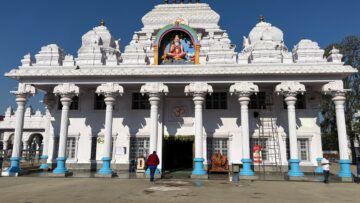
It is the duty of human society to seek a balance of cosmic order. Customs, practices, traditions, stories, the individual, and society all help maintain this order. The author explains how Rna, or debts, forms an important idea of kartavyabodha, or duties. These are debts owed to Devas (deities), Rishis (sages), Pitrus (ancestors), Nru (humans), and Bhuta (nature). These are repaid by rituals, studying texts, begetting children, doing service, and protecting nature, respectively. The explanation of temple architecture in terms of Indian metaphysics is another fascinating part of the book.
Shatrubodha
The author stresses that “Shatru,” or enemy, does not refer to an individual but rather to ideologies that are inimical to Sanatana Dharma. The book provides not only unique individual insights but also a synthesis of the works of many scholars. The author asserts, “For a Hindu, an enemy is an ideological and institutional force that aims to destroy Hindu dharma, society, and civilisation.” The author emphatically lists the adversaries of Sanatana Dharma: Islam, Christianity, Communism-Marxism-socialism, a colonised mentality, and, most potent of all, secularism.
Dharmic traditions state, “I am true, but you are not false,” whereas religions declare, “I am true, and you are false.” The entire history of religions, characterised by proselytisation and intolerance towards non-believers, revolves around this distinction. The existence of a hierarchical pyramid, beginning with nature, animals, and “non-believers”, serves purely for the exploitation and domination by “believers” at the apex.
The author outlines the fundamentals of prophetic-monotheistic religions, primarily focusing on Christianity and Islam. Both share notions of One True God, a last prophet, a single life metaphysics, and a Day of Judgement when belief alone, rather than actions, determines one’s fate in hell or heaven. Non-believers are condemned to eternal damnation. The author explains that, for these religions, time is perceived as having a linear flow from the world’s beginning, through the birth of the last prophet, to the Day of Judgement. Consequently, the event of the prophet or “The Book” neatly divides history into a prior Age of Ignorance and a subsequent Age of Knowledge or Light.
The conversion dynamic is particularly aggressive in Islam, where any form of Jihad is invoked to convert a Dar-Ul-Harb (land of war) into a Dar-Ul-Islam (land of Islam). This includes the destruction of idols (iconoclasm), the burning of books in favour of the One True Book, and warfare rules that permit attacks on women and children even post-victory. In contrast to dharmic traditions, beliefs are prioritised over actions. “A fallen Mussalman is better than Mahatma Gandhi,” Mohammed Ali once said of Gandhiji.
The author notes that the Shatrubodha lesson, from pagan Greece and Rome (which later became Christian) to contemporary pagan India, is that tolerance can only exist with a tolerant sect or group. Jihad, Jizyah (taxation imposed on non-Muslims in an Islamic world), and blasphemy are ultimately mechanisms to establish an Islamic world through the permanent conversion of peoples and lands.
Hindu View Of Prophetic Monotheism
Surprisingly, the gaze reversal of Abrahamic religions through indigenous lenses has rarely been an endeavour in Indian culture, despite a huge corpus of knowledge production in almost all domains. The author assesses the prophetic monotheistic religions, building further upon the seminal work of Ram Swarup (Hindu View of Christianity and Islam). The author uses the lens of Pancha Rnas (or the debts to gods, sages, ancestors, fellow humans, and ecology) as a duty-oriented dharma to view monotheistic religions. They fail on all the counts.
The history of monotheistic religions has involved iconoclasm, the destruction of temples and libraries, harm to ecology, and disrespect for ancestors and fellow humans who do not share their beliefs. In fact, today’s ecological crisis stems from a distinctly Judeo-Christian view that prioritises nature as a resource for human use. Ram Swarup looked at Islam and Christianity through the lens of yogic and non-yogic chitta bhumis to understand Hindu dharma and the monotheistic religions, respectively. Fundamentally, to be a Hindu is to ascribe to the notions of karma-phala-punarjanma (actions-fruits of actions-reincarnation) and sadhana under a guru to reach a state of samadhi. Notions like heresy, blasphemy, or conversion do not exist. In the monotheistic religions, gods arise from a non-yogic chitta bhumi who are jealous, cruel, and filled with anger. Simultaneously, non-yogic samadhi leads to “desire” gods who force humans to indulge in cruel acts.
Shatrubodha was not an eager initiative undertaken by the Hindus who were confronting the initial onslaughts of a physically violent Islam. Perhaps there wasn’t a real Islamic philosophy that needed to be debated. Sufi philosophy reflected dimly some Vedantic thoughts and was never popular. Also, the Hindu scholars shifted from a focus on producing knowledge to one of protecting it. Before recovery was possible, the European colonials occupied the land and the minds of the Indians. However, most Hindu intellectuals, not impressed with Abrahamic philosophy, failed to comprehend how a single book or person could be the sole guiding force. However, Shatrubodha had its strong voices. The author lists a long lineage of people past and present. However, we need to make these discourses more popular and pervasive.
Long Arc Of Christianity And Islam
Christianity and Islam are civilisational snipers, says the author. Monotheism of any kind (Christianity, Islam, Communism) can never be a model for inclusivism or multiculturalism. Once given adequate freedom and power, they tend to weaponise the state, charity, welfare, education, healthcare, relationships (like marriage), and even death to achieve expansionism. Christian missionaries and Islamists, crying perpetual victimhood, and with the double dynamic of proselytisation and intolerance, seek to destroy a dharmic society by changing demography. Both groups adopt a long-term strategy to achieve their goals.
The 3rd- and 4th-century Roman Empire has frightening parallels to the India of today. Christianity tends to target rulers and influential government officials in order to weaponise the state itself. The author details the conversion of the pagan Roman Empire to Christianity. Catherine Nixey (The Darkening Age) also documents the events chillingly. Communism destroyed North Korea. However, Christianity waited for 1000 years for an ancient South Korean civilisation to go through multiple crises and eventually convert into a Christian-majority country from the original Sendo Dharma.
In India, this phenomenon has been dramatic in the Northeast, coastal AP, and Tamil Nadu. The process of “indigenisation” of Christianity, which has been occurring since the days of Robert de Nobili, includes long-term strategies such as Christian “mantras,” Christian Vedanta, and Christian Yoga. Arun Shourie (Harvesting Our Souls) explains how missionaries work to change religious demography. The Christian highs consist of control of the Indian state and institutions through secular forms of Christianity. The Constitution and judiciary are prime examples of the secularisation of Christian theology.
Islam, with only temporary setbacks, never loses. An irreversible conversion to Islam implies that “Islam needs to win only once, while non-Muslims need to keep winning forever,” as the author writes. Islam achieves changes of demography by various means: conversions by direct and indirect methods, increased fecundity, multiple wives, and crying victimhood when questioned. Even if Islam is a local minority, the pervasive ideas of being a global majority and pan-Islamism ensure that demographic change is always an ongoing process.
The author documents the long fall of Constantinople to Islam as a prototypical example. The diminishing minorities in Pakistan, Bangladesh, Lebanon, Kashmir, Kerala, and parts of Bengal are examples of the Islamic strategy of mostly violent intolerance. The so-called secular Turkey is no better at treating its non-Muslim minorities. The Armenian genocide took away the lives of 1.5 million Armenian Christians.
Secularism
Secularism intensely damages Sanatana Dharma. In Indian culture, the idea of separating the “secular” from the “sacred” does not make sense and is almost an assault because every activity is seen as a route to the divine Self. The author traces the roots of secularism to a specific point in European history when the various Christian denominations were fighting each other. Secularism was a solution that separated the Church from the State, but everyone knew in the background what Christ, Christianity, or secular occupations meant.
This fairly successful model for a non-plural world was never meant to be a solution for all kinds of multiculturalism across time and space. A fascination for the prosperous West prompted our leaders to look at their solutions for our harmony. As a policy, secularism prevented access for growing Indian generations to their fundamental national ideals in the form of their philosophies, itihasas, puranas, and other scriptures. The curriculum simply excluded them.
Secularism turns Indians away from their culture and prevents them from viewing other cultures from their perspective. A colonised attitude, which took to English as a medium of education, permanently alienated the growing Indians from their culture. The flaw in secularism is evident in Europe, where significant challenges arise from managing the influx of Islam. In India too, the polarisation between Hindus and Muslims seems to be ever increasing despite secularism being the sole mantra across all parties.
Liberal secularism and modernity are progressive outcomes of European intellectual movements, and we have transposed those ideas to Indian society. From the perspective of the Pancha Rnas, the author shows how these ideas fail in terms of kartavyabodha. Human anthropocentricism and intense individualism lead to many consequences, notably the breakdown of family structures and rampant destruction of ecology.
Svayambodha-Shatrubodha Scale
The author formulates a Svayambodha-Shatrubodha scale for the prominent intellectuals of the country. The rating is intriguing but open to debate; however, it provides clarity regarding the ideas presented in the book. The author ranks Gandhi highly on Svayambodha but poorly on Shatrubodha. In contrast, Dr. Ambedkar receives a high rating on Shatrubodha but a low one on Svayambodha. The author suggests that India would have benefited from embracing Gandhiji’s Svayambodha alongside Dr. Ambedkar’s Shatrubodha. We chose in reverse. Nehru’s low scores in both Svayambodha and Shatrubodha have hindered India’s ability to reclaim its cultural and traditional roots.
According to the author, Sita Ram Goel and Ram Swarup achieve the highest scores in both categories. One could reasonably include Sri Aurobindo, Ananda Coomaraswamy, and Dr. Balagangadhara among the top scorers in both Svayambodha and Shatrubodha. Coomaraswamy and Sri Aurobindo have unfortunately gone unnoticed in India. Sita Ram Goel and Ram Swarup faced significant challenges in making their voices heard. Hopefully, the country will turn to these intellectuals with a near-perfect grasp of Indian culture for its growing social and cultural issues.
Concluding Remarks
This book is both bold and powerful, written with remarkable clarity. Sanatana Dharma faces relentless attacks, even as Indians become increasingly disconnected from their roots. The future seems poised for a more intense confrontation between dharmic traditions and prophetic-monotheistic religions. The rising intolerance and fundamentalism indicate that we require a framework beyond secularism to effectively address Indian multiculturalism.
The moderates have been failing. Hindu moderates, mostly guilt-tripped about past injustices, remain entrenched in a “defence and reform” mentality. Meanwhile, Muslim moderates tend to act as apologists for Islam, striving to persuade non-Muslims, while internal reforms are frequently viewed as challenging or perilous. As Kaushik Gangopadhyay (The Majoritarian Myth) suggests, it is not majoritarianism that fosters intolerance; rather, it is the presence of an idea known as LTSE (Linear Theory of Social Evolution) within a group, even if a minority, that engenders intolerance and the ongoing claims of victimhood.
The Ghent School of Belgium offers profound insights regarding this matter. In his seminal work, The Heathen in His Blindness, Dr. Balagangadhara articulates the thesis that India is primarily a land of traditions, not religions. Scholars rise in disagreement but have not yet refuted this. The Indian phenomena—Hinduism, Buddhism, Sikhism, and Jainism—are more appropriately classified as “traditions” for want of a better term. These traditions are distinctly different from the category known as “religions,” which is best exemplified by Christianity and Islam.
Traditions are founded on rituals that unite people and are “indifferent to differences.” Although debates may arise, the underlying attitude is “I am true, but you are not false.” Conversely, religions based on doctrine inherently possess proselytisation and intolerance as central dynamics that perpetually divide individuals between believers and non-believers. The prevailing attitude is, “I am true, and you are false.” While a religious culture may ostensibly agree on tolerance and mutual respect to maintain harmony, such arrangements are often artificial and unstable.
India has historically engaged with pluralism and multiculturalism more effectively than any other culture. The Indian approach to religions emerging in foreign lands has been to “traditionalise” them. Over time, these religions increasingly resemble traditions, particularly at the social and cultural levels, fostering genuine syncretism. This process, however, is fiercely opposed by evangelists and Islamic madrasas.
Instead of continuing this trajectory, intellectuals have been redefining our traditions as formal religions of the prophetic-monotheistic type, which has resulted in the emergence of intolerance, fundamentalism, and violence where none previously existed. Indian culture, which is rooted in Vedic traditions, accommodates new traditions and even religions as long as they adhere to a traditional framework. There is an urgent necessity to reverse the process of religionising our traditions and continue the process of traditionalising our religions.
Conversions adversely affect Sanatana traditions. Christians and Muslims regard the freedom to convert as a constitutional right and a crucial element of the Freedom of Religion Act (Article 25). For Indian traditions, this freedom signifies the ability to practice one’s beliefs without external interference. Proselytisation and conversion are perceived as threats to the social fabric of the community. Religions typically view propagation and conversion as a transition from the “false” doctrine to the “true” one, which involves a complete rejection of previous beliefs.
In contrast, traditions approach propagation by discussing the merits and drawbacks of each belief system, seldom necessitating the outright rejection of prior convictions. By permitting conversions that imply notions of true and false, the state demonstrates bias towards religions. A thorough examination of the provisions of Article 25 is essential. Jakob de Roover observes that, interestingly, Indian religions have somehow diverted their focus away from proselytisation, while Hindus have responded rather passively to anti-conversion laws across the country. These matters warrant further investigation.
Hope remains if moderates from all sides cultivate an understanding of Indian culture that is indigenous and free from Western influences. We can help not only India but also the world by developing this understanding. The traditional culture of India holds valuable insights for addressing contemporary global challenges, particularly as multiculturalism increasingly concentrates in smaller geographical regions. This significant book by Pankaj Saxena serves as an excellent starting point.
Disclaimer: The opinions expressed in this article belong to the author. Indic Today is neither responsible nor liable for the accuracy, completeness, suitability, or validity of any information in the article.