
Introduction: Raja Dharma – Moral Architecture of Indian Statecraft
Indian political thought approaches governance in a holistic manner. It is at once a technocratic arrangement as well as moral, civilisational, and cosmological responsibility. The Mahābhārata, particularly the Śānti Parva, presents the most mature articulation of this worldview through the discourse on Rāja Dharma. Delivered by Bhīṣma to Yudhiṣṭhira in the aftermath of the Kurukṣetra war, this dialogue operates at multiple layers – advisory literature for kingship, comprehensive framework (if not a theory) of leadership, power, restraint, justice, and even an exposition of time. It grounds political theory in a lived moral crisis without abdicating the peak of abstract idealism.
The Rāja Dharma Parva (in particular the Adhyāyas 56– 6) occupies a unique position within Indic political philosophy. Unlike later juridical or administrative texts, like Arthashastra or Nitisara, it brings together metaphysics (darśana), ethics (dharma), political economy (artha), and human aspiration (puruṣārtha) within a single exposition. It is tempting to describe it as normative in the modern sense but it is more philosophical and principles-framework which enables us to create normative layers as needed. Governance here is inseparable from the pursuit of truth, social harmony, and cosmic order (ṛta). The chapters articulate the responsibilities, virtues, and obligations of kingship. This section of the Mahābhārata emerges in a liminal moment – after the catastrophic Kurukshetra war. The dialogue between Bhīṣma and Yudhiṣṭhira represents a pedagogical model unique to Indic traditions: knowledge transmitted from a life-long practitioner of dharma to an unwilling ruler burdened by some Tamas – at times an ethical doubt. The text systematically addresses multiple dimensions of kingship – protection of dharma, maintenance of social order, regulation of economic life, restraint of power, and cultivation of personal virtue.
Central to this framework is Daṇḍanīti which is not merely punishment, but disciplined authority exercised with wisdom, restraint, and ethical clarity. The text advances a striking thesis: the King, through the correct or incorrect application of Daṇḍanīti, becomes the creator of time (kāla) itself, generating the consequent moral quality of the age – Kṛta, Tretā, Dvāpāra, or Kali Yuga.
The Structure of the Study
The overall study presents an exposition of Raja Dharma as presented in two Adhyāyas of Raja Dharma Parva – the 56th and the 69th, expanding each conceptual unit into an appropriately rigorous analysis. By grounding every section in specific Mahābhārata ślokas, the study demonstrates how ancient Indian statecraft offers a precise framework of leadership – one that remains deeply relevant to contemporary policy making, governance, and ethical decision-making in modern institutions. The study is presented as a 4 part series of which this is the first article.
A defining feature of Raja Dharma is its holistic view of governance. The King is simultaneously:
- Pillar of the Saptāṅga state
- Custodian of Trivargas and Moksha Dharma
- Guardian of Swadharma across varṇas
- Executor of Daṇḍanīti
- Moral exemplar for society
This integrated approach contains within an unstated suspicion, if not rejection, of the fragmentation of political authority into purely legal or coercive domains. Instead, it frames kingship as a sacred trust (adhikāra) exercised for the collective good (lokasaṅgraha).
Importantly, the Rāja Dharma Parva does not romanticise power. It repeatedly warns that unchecked authority, sensory excess, and ethical blindness lead directly to social decay. Thus, political power is legitimate only when aligned with self-mastery, knowledge, and service. Thus, for Bharateeyas, Raja Dharma is not historical nostalgia. It is a coherent political philosophy – one that evaluates leadership by its capacity to sustain moral order, enable human flourishing, and harmonise power with restraint.
We shall see an elaboration of this over the 4-part article series. One can instantly see the resonance with Arthashastra. However, Mahabharata brings a philosophical exposition that is lost in the detail that Arthashastra exclusively brings to the table. This article series seeks to bring out the philosophical exposition. However, Saptāṅga is significantly elaborated in Arthashastra and hence this study leaves out an exposition of the same. It focuses on the remaining and presents each in an exclusive article.
The Shlokas under focus in the current article
This article, the first in the series of four, studies the first 18 Shlokas of the 56th Chapter of Rajadharma Parva of Mahabharata, with a strong focus on the following 5 Shlokas 12.56.4, 12.56.12, 12.56.14, 12.56.15 and 12.56.17. Other Shlokas are referred to as needed within the study of these Shlokas. The said Shlokas are presented here for reference.
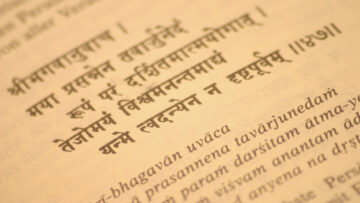
त्रिवर्गो हि समासक्तो राजधर्मेषु कौरव।
मोक्षधर्मश्च विस्पष्ट: सकलोऽत्र समाहित:॥ राजधर्म पर्व ५६.४ ॥
trivargo hi samāsakto rājadharmeṣu kaurava।
mokṣadharmaśca vispaṣṭaḥ sakalo’tra samāhitaḥ ॥ Raja Dharma Parva 56.4 ॥
आदावेव कुरुश्रेष्ठ राजा रञ्जनकाम्यया ।
देवतानां द्विजातीनां च वर्तितव्यं यथाविधि ॥ राजधर्म पर्व ५६.१२ ॥
ādāveva kuruśreṣṭha rājā rañjanakāmyayā |
devatānāṃ dvijātīnāṃ ca vartitavyaṃ yathāvidhi ॥ Rajadharma Parva 56.12 ॥
उत्थानेन सदा पुत्र प्रयतेथा युधिष्ठिर ।
न ह्युत्थानमृते देवं राज्ञामर्थं प्रसाधयेत् ॥ राजधर्म पर्व ५६.१४ ॥
utthānena sadā putra prayatethā yudhiṣṭhira |
na hyutthānamṛte devaṃ rājñām arthaṃ prasādhayet ॥ Rajadharma Parva 56.14 ॥
साधारणं द्वयं ह्येतद् दैवमुत्थानमेव च ।
पौरुषं हि परं मन्ये दैवं निश्चितमुच्यते ॥ राजधर्म पर्व ५६.१५ ॥
sādhāraṇaṃ dvayaṃ hyetad daivam utthānam eva ca |
pauruṣaṃ hi paraṃ manye daivaṃ niścitam ucyate ॥ Rajadharma Parva 56.15 ॥
न हि सत्यादृते किंचिद् राज्ञां वै सिद्धिकारकम् ।
सत्ये हि राजा निरतः प्रेत्य चेह च नन्दति ॥ राजधर्म पर्व ५६.१७ ॥
na hi satyād ṛte kiñcid rājñāṃ vai siddhikārakam |
satye hi rājā nirataḥ pretya ceha ca nandati ॥ Rajadharma Parva 56.17 ॥
Raja Dharma and Puruṣārtha
Yudhiṣṭhira’s first question at the start of the 56th chapter anchors at the philosophical core of Indian political thought. Seeking an exposition of Raja dharma, Yudhisthira refers to the prevalent view that Raja Dharma is not merely one domain of dharma but the very foundation upon which all puruṣārthas rest. In the 2nd shloka, he refers to a prevailing view (इति धर्मविदो विदुः) that describes Raja dharma as a righteous-burden (भार bhāra) and the greatest of all dharma (परमो धर्मः paramo dharmaḥ). Further, In the 3rd shloka, he describes Raja dharma as the ultimate shelter of all jivaloka ie., life (सर्वस्य जीवलोकस्य राजधर्मः परायणम्, sarvasya jīvalokasya rājadharmaḥ parāyaṇam). In the 4th, shloka the nature of this shelter is precisely specified as the container of all Purusharthas.
त्रिवर्गो हि समासक्तो राजधर्मेषु कौरव।
मोक्षधर्मश्च विस्पष्ट: सकलोऽत्र समाहित:॥ राजधर्म पर्व ५६.४ ॥
trivargo hi samāsakto rājadharmeṣu kaurava।
mokṣadharmaśca vispaṣṭaḥ sakalo’tra samāhitaḥ ॥
॥ Raja Dharma Parva 56.4 ॥
Consolidated Meaning:
This verse elevates Rajadharma above all other individual pursuits by showing it as the umbrella under which all life functions.
- Trivargo (त्रिवर्गो): The three goals of human life—Dharma (Duty), Artha (Prosperity), and Kama (Pleasure). The text says these are “firmly attached” (samāsakto) to Rajadharma.
- Mokshadharmaśca (मोक्षधर्मश्च): Even the path to spiritual liberation (Moksha), which is usually seen as a solitary or renunciate pursuit, is said to be “entirely contained” (sakalo’tra samāhitaḥ) within the duties of a king.
Together, Trivarga and Mokṣa are together referred to as puruṣārtha in the traditional literature.
(The next shloka (56.5) introduces a famous comparison: Just as reins (raśmayo) control a horse or an elephant-goad (aṅkuśo) controls an elephant, Rajadharma acts as the guiding force that keeps the world from descending into chaos. This indirectly says that the decay of the Purushartha pursuit eventually ends in the world descending into chaos).
Explanation
This verse makes a significant claim: Dharma, Artha, and Kāma, often referred to in the tradition as Trivarga, exist purposefully only within the framework of just governance ie., rājadharma. Even Mokṣa, often treated as transcending material life (hence beyond political life), is shown to be indirectly dependent on order maintained by the King. Yudhiṣṭhira therefore implores Bhīṣma to expound rājadharma in its entirety, recognising that kingship is the enabling condition for both material well-being (ihaloka – represented by Artha and Kāma) and spiritual aspiration (paraloka – represented by Mokṣa) through Dharma.
Essentially, Yudhisthira has been already told by the past that rājadharma is the supreme shelter for all living beings. Because the king’s governance creates the security and order necessary for people to practice their own faith, earn wealth, enjoy life, and seek enlightenment, the king effectively “holds” all these paths. If the king fails in his duty, all four goals of human life (Purusharthas) become impossible for the subjects to achieve.
The implications are profound.
- This conception is subtly discouraging any collapse into fatalism by the King which only flows into the Rashtra (which is made more explicit in later verses). Raja Dharma demands conscious effort (puruṣārtha), ethical vigilance, and responsibility. The King cannot abdicate moral agency by invoking destiny or circumstance. Instead, he stands as the pivot through which collective destiny is shaped.
- This also makes Purushartha and Dharma very fractal. On the one hand Rājadharma is a part of Dharma which is part of Purushartha. At the same time, rājadharma also contains Purushartha within. In other words, rājadharma sustains Purushartha which in turn upholds rājadharma. There is an infinite upholding of each other. This also indicates that the dynamic is set forever; there is only a journey and the destination is at infinity – only when everybody attains Moksha. Thus, the bar for success for rājadharma is way too high, a near impossible one.
- Political breakdown could start as administrative failure but end in civilisational collapse. By making the Purusharthas as part of rājadharma, this shloka predicts an important consequence – without Raja Dharma pleasure, economic prosperity and spiritual pursuits may not only fail to bear the right fruit but degenerate thereby bringing down the society. Mahabharata itself presents in multiple ways how the economy could become predatory, pleasure could degenerate into indulgence, and spirituality could either retreat into escapism or be abandoned altogether. Governance, in this vision, is the field in which human potential is either cultivated or destroyed.
The last point makes Purushartha a policy imperative for governance. Policies ought to have a responsibility towards the Purushartha of all its stakeholders. Such a responsibility cannot be stated indirectly. Policy objectives ought to be stated explicitly in terms of Purushartha to effectively strive for it.
Thus, by containing Purushartha within, rājadharma becomes the architectonic principle of society, binding individual aspiration to institutional order and aligning political authority with cosmic purpose. This dimension of Rajadharma will be an important concern of this article and the series.
Raja Dharma and Rañjana — The King as the Source of Social Contentment
Bhishma’s elaborate response starts with an affirmation of Yudhishthira’s assertion. Subsequently it evolves into clarification and further exposition of the prevailing view in tradition about the Purushartha centric nature of Rajadharma.
A defining insight of Raja Dharma is that the legitimacy of kingship is measured not merely by power or conquest but by rañjana – the ability of the ruler to keep the people content, secure, and inwardly settled. The very etymology of Rājā is traced to this function of pleasing and sustaining the emotional and moral equilibrium of society.
आदावेव कुरुश्रेष्ठ राजा रञ्जनकाम्यया ।
देवतानां द्विजातीनां च वर्तितव्यं यथाविधि ॥ राजधर्म पर्व ५६.१२ ॥
ādāveva kuruśreṣṭha rājā rañjanakāmyayā |
devatānāṃ dvijātīnāṃ ca vartitavyaṃ yathāvidhi || Rajadharma Parva 56.12 ||
Consolidated Meaning
“O best of the Kurus! At the very outset, a King, with the desire to please and win the hearts of his subjects, must conduct himself toward the Gods and the learned (Brahmanas) in accordance with the prescribed scriptural rules.”
Explanation
In ancient Indian statecraft, a king’s primary goal was Prajā-rañjana – the “pleasing” or “delighting” of the people. This verse explains how to achieve that:
- Divine Alignment: By honoring the Gods through rituals and worship, the king ensures the spiritual well-being and natural prosperity of the land (rain, fertility, etc.).
- Respect for Wisdom: By honoring the Dvijas (learned scholars and priests), the king ensures that his administration is guided by wisdom, ethical counsel, and a strong moral foundation.
- The “First” Step: The use of Ādāveva signifies that before building armies, collecting taxes, or making laws, the king must first establish his own moral and spiritual standing.
The word Raja (King) is etymologically linked to the word Rañj, meaning “to color” or “to delight.” In the Mahabharata, a true King is not one who rules by fear, but one who wins over the people by establishing a righteous and harmonious environment.
Bhīṣma clarifies that political authority originates in pleasing the people. But this pleasing too is not arbitrary. It is guided by the
- conscious engagement with the Brahmanas and Devatas who serve as custodians of cosmic and moral order.
- according to vidhi which is a technical term used to refer to the prescription of a śāstra.
It is noteworthy that the Purushartha is indirectly re-iterated here. rañjana ie., pleasing the subjects refers to material experiences of this world, refers to artha and kama. But this rañjana is not arbitrary, but guided by Brahmanas and Devatas, which is a reference to the cosmic plane that contains dharma and moksha. Thus, rañjana is shaped by righteousness and sustenance shaped by dharma and moksha. The King, as the facilitator of both rañjana and guidance from Brahmanas and Devatas, stands at the intersection of the sacred (dharma and moksha) and the temporal (artha and kama), ensuring harmony between divine law and social practice.
The second dimension of this responsibility, after rañjana, is the King’s own orientation toward Puruṣārtha – presented in the Shloka 56.14.
उत्थानेन सदा पुत्र प्रयतेथा युधिष्ठिर ।
न ह्युत्थानमृते देवं राज्ञामर्थं प्रसाधयेत् ॥ राजधर्म पर्व ५६.१४ ॥
utthānena sadā putra prayatethā yudhiṣṭhira |
na hyutthānamṛte devaṃ rājñām arthaṃ prasādhayet ॥ Rajadharma Parva 56.14 ॥
Consolidated Meaning
“O son Yudhisthira! Always strive with effort and exertion. Without rising up (utthāna), even Destiny (Daiva) cannot fulfill the objectives and goals of kings.”
Explanation
The word utthāna here refers to efforts put in by the King ie., (the State), to raise and stand. Thus it is a reference to the purusha-prayatna of the King. The direction or the purpose of this utthāna is already established by 12.56.4 hence this is an indirect reference to Purushartha of the previous Shlokas. The authoritative translation of this Shloka by Gita Press, Gorakhpur also stands testimony to the same. Daiva here refers to destiny which is another name for Prarabdha, once again attested by the corresponding translation by Gita Press, Gorakhpur.
A ruler who ceases to strive consciously degenerates into a passive instrument of fate (prārabdha). Such leadership produces stagnation, injustice, and moral drift. Destiny is not an arbitrary force from the sky – it is the certain accumulation of past efforts whose summary consequence is part delivered in the same time and rest in future time by Daiva. When human effort meets cosmic reality the outcome is partially shaped by the accumulated force of fate released by daiva (according to the cosmic reality) – largely invisible to the common man but experienced. Therefore, by exerting effort now, a king creates his own future “fate.” Raja Dharma therefore insists that governance must be animated by intentional ethical effort, not mere routine administration, which is Purushartha.
Thus, rañjana ought not to be misunderstood as populism or appeasement; it is the natural outcome of righteous governance rooted in effort, wisdom, and restraint. Raja Dharma forces responsibility towards the most important dimension of power – people flourish when leadership embodies purposeful action with moral clarity that comes from an understanding of contemporary reality, force of the past and cosmic alignment.
Prārabdha and Puruṣārtha — Ethical Agency in Kingship
Bhīṣma extends this crucial philosophical distinction that underpins the entire theory of leadership in the Indian tradition: the relationship between Prārabdha (that which is the result of past action) and Puruṣārtha (present, conscious effort). While both influence human life, Raja Dharma unequivocally prioritises ethical agency over determinism. The former is represented as pauruṣaṃ and the latter as daiva in the shloka.
साधारणं द्वयं ह्येतद् दैवमुत्थानमेव च ।
पौरुषं हि परं मन्ये दैवं निश्चितमुच्यते ॥ राजधर्म पर्व ५६.१५ ॥
sādhāraṇaṃ dvayaṃ hyetad daivam utthānam eva ca |
pauruṣaṃ hi paraṃ manye daivaṃ niścitam ucyate || Rajadharma Parva 56.15 ||
Consolidated Meaning
“Verily, both Destiny (दैव) and Effort (उत्थान) are commonly (jointly) necessary factors for the accomplishment of any task. However, I consider Human Effort (पौरुषं Paurusham) to be superior, for even Destiny is said to be the fixed result of one’s own past actions.”
Explanation
While the shloka establishes the superiority of Paurusham it once again raises the question of the purpose of this Paurusham. This is resolved by exploring its relationship with पुरुषार्थ.
The etymological connection between Paurusha (पौरुष) and Purushartha (पुरुषार्थ) is rooted in the Sanskrit noun Purusha (पुरुष), which refers to a human being/person, or the cosmic primal being. Both terms describe the intersection of human identity and human action, but they function as different grammatical derivatives of the same root.
Before analyzing the two derivatives, we must look at the base word Purusha (पुरुष). While there are several debated etymologies for Purusha, the most common classical derivation is:
- Puri (पुरि): In the city/body.
- Shete (शेते): Resides/dwells.
Thus, the etymological meaning results in “That which dwells in the city (the body).” This refers to the conscious soul or the individual entity.
Paurusha (पौरुष) is an abstract noun derived from Purusha through a grammatical process called Vriddhi (strengthening the first vowel).
- Derivation: Purusha + an (suffix denoting quality or relation) = Paurusha.
- Literal Meaning: “Human-ness” or “That which belongs to a man/human.”
- Philosophical Meaning: In the context of the Mahabharata and Dharmashastras, it specifically refers to Human Effort, Manliness, or Self-exertion.
As can be seen in the verse (Paurushaṃ hi paraṃ manye), it represents the agency of the individual. It is the active force of a person’s will.
On the other hand, Purushartha पुरुषार्थ is a compound word (Tatpurusha Samasa) combining two distinct nouns.
- Purusha (पुरुष): Human/Person.
- Artha (अर्थ): Purpose, object, meaning, or goal.
- Literal Meaning: “The object/goal of a human being.”
As is well known, this refers to the four-fold functional goals of human existence: Dharma (Duty), Artha (Prosperity), Kama (Pleasure), and Moksha (Liberation).
The etymological bridge between the two lies in the relationship between Action and Objective:
- Purushartha defines what we should strive for (the goals).
- Paurusha represents how we reach them (the effort).
Thus, there is no achievement of Purushartha without Paurusha. The purpose of Paurusha is Purushartha. As Bhishma explains to Yudhisthira, Daiva (Fate) is merely the results of Paurusha from a previous life. Therefore, the “Human Purpose” (Purushartha) is only fulfilled through “Human Exertion” (Paurusha) of the current life. Pauruṣaṃ is human agency, and its purpose is purushartha.
For a King, this principle is non-negotiable. Governance cannot be surrendered to circumstance, (passive) tradition, or inevitability that flows from the past. To rule is to act – decisively, wisely, and ethically. Fatalism (daivavāda) becomes an abdication of duty when invoked by those in authority.
The Pursuit of Truth
This insistence on Puruṣārtha culminates in the primacy of Satya (truth), which Bhīṣma declares as the highest dharma of kingship.
न हि सत्यादृते किंचिद् राज्ञां वै सिद्धिकारकम् ।
सत्ये हि राजा निरतः प्रेत्य चेह च नन्दति ॥ राजधर्म पर्व ५६.१७ ॥
na hi satyād ṛte kiñcid rājñāṃ vai siddhikārakam |
satye hi rājā nirataḥ pretya ceha ca nandati || Rajadharma Parva 56.17 ||
Consolidated Translation
“Indeed, there is nothing other than (ṛte) Truth (सत्य) that brings success (सिद्धि) to kings. A king who is devoted to Truth rejoices/prospers (नन्दति) both in this world (इह) and in the world hereafter (प्रेत्य).”
The operating part here is ‘rejoices both in this world (इह) and in the world hereafter (प्रेत्य)’ – This is closely related to Purushartha. The journey from Artha-Kama to Moksha follows through all the higher worlds and is possible only through Dharma. The shloka distinguishes this journey as being anchored by the pursuit of truth, especially for the king. This truth operates across realms – ihaloka (इह) and paraloka (प्रेत्य). The purushartha excellence of the king is only possible by the pursuit of Truth according to the shloka. A King’s pursuit is Rajadharma which is not only for the material self (Artha-Kama) but for the purushartha of all (प्रेत्य चेह).
Thus, pursuit of Truth by the King is essential for the protection of Purushartha of all and is part of Raja Dharma. Truth is not presented as a personal virtue alone but as the metaphysical foundation of social order. Institutions of the State endure only when anchored in truth; laws command respect only when perceived as truthful beyond the immediate material world. When rulers abandon truth, dharma itself collapses. The King’s actions reverberate beyond immediate political outcomes, shaping moral memory and karmic consequence. Raja Dharma thus rejects the modern dichotomy between ethics and effectiveness. For Bhīṣma, truthful governance is the most effective governance.
This also establishes leadership as an exercise in moral courage. The King’s greatness lies not in avoiding difficulty but in choosing truth despite cost. Such leadership alone can sustain legitimacy, stability, and justice across generations.
In addition, next shloka – the 18th, further reiterates that satya is the highest wealth (परमं धनम् paramaṃ dhanam) for the Rishis, and the pursuit of truth creates trust with the society for the king (विश्वास कारणम् – viśvāsa kāraṇam).
A Case for Purushartha as Public Policy Imperative
The most important implication of the Rajadharma exposition in the first 18 Shlokas of the 56th Chapter of Shanti Parva is the pedestal it creates for Purushartha in governance. More precisely, it makes a case for Purushartha as a Public Policy imperative. Any decolonization and realignment of the Indian State towards Indian culture will require an active recognition of Purushartha within the echelons of policy making in India. The case it makes can be summarized as follows.
- Foundation of All Pursuits: Rāja Dharma (governance) is the ultimate shelter upon which all Puruṣārthas rest.
- Enabling Condition for Flourishing: Just governance creates the security and order necessary for citizens to earn wealth (Artha), enjoy life (Kāma), and seek enlightenment (Mokṣa).
- Prevention of Civilizational Collapse: Without a policy focus on Puruṣārtha, social institutions can degenerate, leading to predatory economies and moral decay.
- Ensuring Social Contentment (Rañjana): The legitimacy of a state is measured by its capacity to sustain the emotional and moral equilibrium of society through the pursuit of Puruṣārtha.
- Integration of Material and Spiritual Well-being: Puruṣārtha-centric policy bridges the gap between material welfare (ihaloka) and spiritual aspirations (paraloka).
- Holistic Human Potential: Governance is the primary field where human potential is either cultivated or destroyed; therefore, policy must aim for holistic development.
- Validation of Human Agency: Centering policy on Puruṣārtha rejects fatalism (daivavāda) and demands conscious, ethical effort (utthāna) from leadership.
- Metaphysical Foundation of Trust: Policies anchored in truth (Satya) and Puruṣārtha create a foundation of trust (viśvāsa) that allows institutions to endure across generations.
- Architectonic Principle of Society: Public policy acts as the binding force that aligns individual aspirations with institutional order. That is nothing but Rāja Dharma.
Conclusion
Thus, in the first of the 56th Chapter of Rajadharma Parva, Mahabharata establishes that securing the Purushartha pursuit of all as the central concern of Rajadharma.
The Rajadharma exposition in Mahabharata posits that Indian political thought viewed governance not merely as a technocratic arrangement, but as a holistic moral and cosmological responsibility. Rāja Dharma is described by Yudhiṣṭhira as the “ultimate shelter” for all life and the “greatest of all dharma”. Its unique position lies in its role as a container for the Puruṣārthas – the four goals of human existence: Dharma (duty), Artha (prosperity), Kāma (pleasure), and Mokṣa (liberation).
Further, the exposition argues that these goals are “firmly attached” to Rāja Dharma; without the security provided by just governance, individual pursuits of wealth or spirituality become impossible or degenerate. Consequently, Rāja Dharma serves as the architectonic principle of society, binding individual aspirations to institutional order.
The Dynamics of Power: Rañjana and Utthāna
A defining insight of this framework is that political legitimacy is measured by rañjana – the ability of a ruler to keep the people secure and content. This is not achieved through populism, but through “Divine Alignment” (honoring cosmic order) and “Respect for Wisdom” (engaging learned scholars for ethical guidance).
Furthermore, the exposition emphasizes utthāna (conscious effort or purusha-prayatna) over fatalism. While destiny (Daiva) exists, it is viewed as the accumulated result of past actions. Therefore, a leader must prioritize ethical agency, as present effort creates future “fate”.
The Supremacy of Truth and Daṇḍanīti
At the heart of effective governance is Satya (truth), described as the “highest wealth” for a king. The pursuit of truth is essential for creating social trust (viśvāsa) and ensuring that laws command respect beyond immediate material concerns.
This authority is enforced through Daṇḍanīti – disciplined authority exercised with restraint.
Altogether, the exposition makes a case for Puruṣārtha to be viewed as a policy imperative. Governance is the field in which human potential is either cultivated or destroyed, making leadership an exercise in moral courage and purposeful action.
Feature Image Credit: wikipedia.org
Disclaimer: The opinions expressed in this article belong to the author. Indic Today is neither responsible nor liable for the accuracy, completeness, suitability, or validity of any information in the article.