
“The road began within, and ends where it never left.”
ॐ असतो मा सद्गमय ।
तमसो मा ज्योतिर्गमय ।
मृत्योर्मा अमृतं गमय ।
ॐ शान्तिः शान्तिः शान्तिः ॥
oṃ asato mā sadgamaya ।
tamaso mā jyotirgamaya ।
mṛtyormā amṛtaṃ gamaya ।
oṃ śāntiḥ śāntiḥ śāntiḥ ॥
(From the unreal lead me to the Real, from darkness lead me to Light, from death lead me to Immortality. Peace, peace, peace. – Bṛihadāraṇyaka Upanishad 1.3.28)
Context and Inner Landscape
There comes a moment when the noise of the world begins to fade, not because the world grows quieter, but because the soul grows attentive to a different sound, the silent pulse of its own being. It is here, in this inner clearing, that the awareness arises: this path is mine alone. No companion, no crowd, no applause can walk this inner road for me. The movement is not outward toward distant horizons, but inward toward the still center where the Self abides.
In Vedantic vision, this solitary path is not a mark of loneliness but of intimacy with the deepest truth. It is a return, step by step, to what was never truly left behind – the eternal Self that is untouched by time and change. Sanātana Dharma speaks of this as the soul’s real pilgrimage, one that begins when the seeker turns away from the fleeting and looks towards that which is changeless.
The ‘lone journey’ is not an escape from the world, but a deeper engagement with its essence. It is the recognition that while the senses and mind move through countless experiences, the witness within remains the same. To walk this path is to honour that witness, to move from the scattered to the gathered, from the imagined self to the true Self. In this, solitude becomes not an absence, but a presence, the presence of pure awareness.
The Soul’s Original Resting Place
In the Bhagavad Gita, Śhrī Kṛiṣhṇa declares,
न जायते म्रियते वा कदाचिन्नायं भूत्वाभविता वा न भूयः ।
अजो नित्यः शाश्वतोऽयं पुराणो न हन्यते हन्यमाने शरीरे ॥ २.२० ॥
na jāyatē mriyatē vā kadācinnāyaṁ bhūtvābhavitā vā na bhūyaḥ |
ajō nityaḥ śāśvatō:’yaṁ purāṇō na hanyatē hanyamānē śarīrē || 2.20 ||
(The soul is unborn, eternal, ever-existing, and ancient. It does not die when the body dies.)
It is eternal, indestructible, and ancient, untouched even when the body perishes. This is the unchanging ground of our being, the silent witness that has seen countless births and departures, joys and sorrows, without itself being altered in the least.
Sanātana Dharma calls this essential nature sat–cit–ānanda. Sat is pure existence, without beginning or end; cit is limitless consciousness, the light by which all experience is known; ānanda is the bliss that does not depend on anything outside itself. These are not qualities added to the soul but its very nature, as inseparable as heat from fire or wetness from water.
To remember this is to rediscover what home truly means. Home is not a physical space with walls and doors or a place marked on any map. It is the inner Self, the stillness in which all movement happens. It is the quiet presence that remains the same regardless of outer circumstances. In this resting place, there is no fear of loss, for nothing real can be taken away. Here, the lone journey ends where it began; in the heart of one’s own being.
Stepping into the Field of Karma
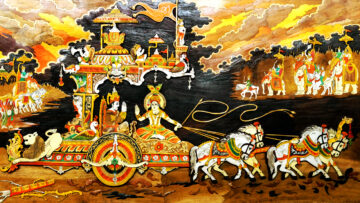
The Bhagavad Gita begins with a scene that is more than a historical moment. Dhritarashtra’s question about the battlefield of Kurukshetra invites us to see life itself as a karma-kshetra, a field of action. This is the ground where the lone journey unfolds. It is here that every thought, word, and deed plants a seed for the future. It is not only the outer events that make this field, but also the inner responses that shape what comes next.
Each person steps into this field carrying an unseen inheritance. These are the samskaras, the subtle impressions left by countless past experiences. They live in the mind and heart, shaping how we see the world and how we meet each situation. Some impressions create a natural pull toward kindness, courage, and clarity. Others give rise to hesitation, fear, or restless desire. These patterns are not fixed, but they do form the starting point from which the journey moves forward.
In the midst of this vast field, dharma is the guide. Dharma is not just a set of duties. It is the quiet alignment of our actions with truth. It is choosing what preserves harmony, within and around us. The Gita’s teaching is to act with full sincerity and skill, yet without clinging to the outcome. This frees the mind from the swings of success and failure. It allows us to work with steadiness, knowing that our part is to give our best, while the result rests in the larger order of life.
To step into the karma-kshetra with this awareness is to see the field for what it truly is. It is not a place to escape from. It is the very arena where inner growth happens. Every choice becomes an offering. Every action becomes a step toward the Self. The field may seem full of challenges, but for the seeker, it is also full of hidden blessings that appear when the heart is steady and the purpose is clear.
The Illusion of Companionship
Maya weaves the patterns through which we see the world. It makes the passing seem permanent and the changing seem stable. It gives rise to the feeling that we belong to certain people, places, and roles. It also creates the feeling that we are separate from others. These impressions form a web of connection and division that feels real in daily life, and it shifts with time.
The Īsha Upanishad reminds us that all we hold and all we call our own are meant to be used with a spirit of detachment. It teaches that the world and everything in it is pervaded by the Supreme, and nothing here truly belongs to us. Relationships, possessions, and titles are like stations on a long journey. We pause, we engage, we learn, and then we move on. They have value as experiences, but they are not the destination.
For the seeker, there comes an inner recognition. Even when surrounded by people, the path within must be walked alone. This aloneness is not emptiness. It is the quiet space where the Self is met directly. The outer world may offer companionship, support, and love, yet the inner work of seeing through illusion and realizing truth cannot be shared or transferred. In this way, the lone journey continues, not in rejection of others, but in the clear knowing that the deepest step is always inward.
Once, during a long retreat in the foothills, a seeker spent his days surrounded by other participants. Meals were shared, prayers were chanted together, and walks in the forest were filled with quiet smiles. Yet, in the still hours before dawn, when he sat alone in his small hut, he felt the truth stir within him. No matter how many voices joined in the evening hymns, the work of seeing the Self had to be done in the privacy of his own awareness. The presence of others was a comfort, but the final step into clarity could not be taken by any companion. In that recognition, he began to understand that solitude is not the absence of people, but the turning of the heart toward the One that no crowd can replace.
In the heart of a crowded city office, a seeker sat at his desk surrounded by the constant hum of voices, the tapping of keyboards, and the flow of urgent messages. Meetings filled the calendar, and lunch breaks were spent in bustling cafeterias. Yet, even in that busy rhythm, he discovered moments when the mind could turn inward. A few steady breaths before opening the next email, a silent pause while walking between conference rooms, became doorways to the same quiet he had once experienced on a meditation cushion. Though colleagues worked at arm’s length, the journey into the Self remained his alone. The noise of the workplace could not touch the stillness he carried within.
Moments of Inner Crisis
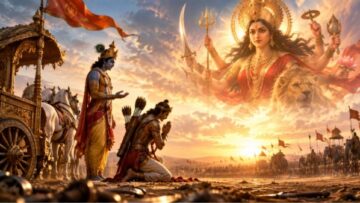
In the Gita, Arjuna stands between two armies, bow in hand, yet unable to lift it. His heart is pulled in different directions. On one side is his duty as a warrior. On the other is his love and compassion for those who stand against him. This is the Arjuna moment, when outer duty and inner longing seem to point in different directions. The mind feels heavy, the body resists action, and clarity is hidden behind a mist of emotion.
Such moments are not only found in epic stories. They arise in ordinary life when choices demand more than skill or knowledge. They demand a meeting with oneself. The lone journey does not allow us to pass these points by turning away. It asks for self-confrontation. It calls for the courage to stand still, to see the fears, attachments, and confusions without running from them. In this way, the crisis becomes a mirror in which we can see what truly drives us.
Śhrī Kṛiṣhṇa’s guidance in the Gita is that the highest friend and the highest enemy are both within.
बन्धुरात्मात्मनस्तस्य येनात्मैवात्मना जितः ।
अनात्मनस्तु शत्रुत्वे वर्तेतात्मैव शत्रुवत् ॥६. ६ ॥
bandhurātmātmanastasya yēnātmaivātmanā jitaḥ |
anātmanastu śatrutvē vartētātmaiva śatruvat ||6. 6 ||
(For the one who has conquered the mind, the mind becomes a friend, leading toward spiritual progress. However, for the one who has failed to control the mind, it acts as an enemy, dragging them into ignorance and suffering.)
Per this verse 6.6, stillness amidst turmoil is not about stopping all action. It is about acting from a place where the mind is steady and the heart is clear. When we meet the moment in this way, the crisis loses its power to bind, and the next step becomes visible.
Teacher, Scripture, and Grace
On the lone journey, there are moments when the path ahead is not clear. At such times, the guru-tattva becomes the light that shows the way. The guru is not only a person but the living principle of guidance and truth. This presence can come through a realised teacher, through words that awaken the heart, or through the quiet voice within that speaks with unmistakable clarity. The role of the guru is to point to the Self and to keep the seeker’s attention turned toward it.
The map for this journey is found in śhruti, smṛiti, and the lives of those who have walked before. Śhruti, the revealed wisdom of the Upanishads, shows the highest truth. Smṛiti, including the Bhagavad Gita, brings this truth into the context of life’s duties and challenges. The example of realised beings gives form to these teachings, showing how truth can be lived in the midst of the world. Their lives remind the seeker that the goal is possible and that each step matters.
There is also a silent force that moves beneath all effort. This is divine grace, or kripa. It cannot be earned in the way we earn a wage, but it comes when the heart is sincere and the effort is steady. Grace turns discipline into insight and turns insight into direct experience. It is the unseen hand that removes obstacles when the time is right. On the lone journey, effort and grace meet, and together they carry the seeker closer to the truth that has always been within.
Turning Inward – The Real Pilgrimage
There comes a stage in the lone journey when the search outside begins to quiet down. The eyes that once looked for answers in distant places start turning inward. Outer travel has its value, for it exposes the mind to new perspectives and challenges. But the real pilgrimage is the movement toward inner stillness. This is where the noise of the world fades, and the presence of the Self begins to be felt directly.
The Katha Upanishad speaks directly to this turning inward. In 2.1.1–2, it says: “Parāñci khāni vyatṛṇat svayambhūḥ…” — the Creator turned the senses outward, so beings look outside themselves. Rare is the one who, seeking immortality, turns the gaze inward and sees the Self within. This ancient insight affirms that the real pilgrimage has always been the movement from the pull of the senses to the stillness of the heart.
Vedantic tradition offers a clear process for this inward journey: śravana, manana, and nididhyāsana. Śravana is the listening to the truth from a clear and authentic source. It opens the mind to what lies beyond the senses and intellect. Manana is the reflection that removes doubts and fixes understanding firmly in place. Nididhyāsana is deep meditation, where the mind rests steadily in the truth until all sense of separation fades. Each stage supports the next, leading the seeker into a more direct awareness of the Self.
On this path, yogic discipline becomes the vehicle. Practices such as breath regulation, self-restraint, and concentration keep the body and mind steady. They prepare the ground so that the deeper work of inner absorption can happen without distraction. Yet these practices are not the destination. They are the means by which the seeker becomes fit to recognise what is already present. The real pilgrimage ends not in a distant temple or sacred place, but in the heart that has discovered its own stillness.
Facing the Shadows
When the outer noise lessens and the mind grows still, hidden layers begin to rise. Old desires, known as vāsanās, emerge from the depths. Patterns of the ego that once blended into daily life become more visible in solitude. These are the habits of thought and feeling formed over many lifetimes. They may appear as restlessness, pride, fear, or longing for recognition. In the quiet, there is no distraction to cover them, and they stand revealed.
Vedanta teaches that these inner shadows are not to be fought with force. Trying to destroy them through suppression only makes them stronger. Instead, they are to be observed with steady awareness. When seen clearly in the light of the Self, their nature is understood as insubstantial. They have no power apart from the attention we give them. This seeing-through is not a single act but a gentle, persistent recognition that they do not define who we are.
Modern psychology offers a parallel understanding through practices such as mindfulness and metacognitive awareness. These approaches, much like Vedantic guidance, emphasize observing thoughts and emotions without immediately acting on them or trying to force them away. Research in cognitive science shows that allowing inner states to be witnessed with openness reduces their intensity and influence over time. This mirrors the Vedantic process, where steady awareness loosens the grip of vāsanās, not by suppression, but by seeing them for what they are; temporary movements within the field of consciousness.
As the hold of these patterns loosens, a subtle joy begins to grow. It is not the thrill of achievement or victory, but a quiet freedom. The sense of being burdened by past tendencies fades. The identity that was tied to these patterns dissolves, leaving a clearer space for the Self to shine. In this way, even the shadows become part of the journey, for they lead the seeker toward a deeper and more unshakable peace.
The Dissolving of the ‘Lone’
There comes a point when the seeker looks back and realises something unexpected. The so-called lone journey was never a movement from one place to another. It was not about crossing a distance in space or time. It was the slow, steady shift from not knowing to knowing, from forgetting the Self to remembering it fully. The path was always within, and each step only uncovered what had been here from the beginning.
In the vision of Advaita, the culmination of this recognition is expressed in the mahāvākya, Aham Brahmāsmi – I am Brahman. This is not an idea to hold in the mind. It is the direct experience that the Self is not separate from the infinite reality. The sense of being a limited individual fades, and with it the feeling of being a traveller on a lonely road.
When this clarity dawns, the one who thought they were walking alone disappears. What remains is pure awareness, without centre or boundary. The journey ends in the recognition that there was never a traveller apart from the truth itself. The ‘lone’ dissolves into the fullness of the Self, and what remains is unbroken peace.
Closing Reflection
There is a deep rest that comes when the mind no longer searches for something outside itself. The heart feels unhurried. The breath moves gently. In this quiet space, the Self is not an idea to be reached but the ground on which all experience rests. There is no urge to hold on to anything, for nothing is missing. There is no fear of loss, for what is real cannot be taken away. It is a peace that does not depend on conditions and a fullness that needs no addition.
Sanātana Dharma speaks of life’s close not as a fading away but as purnatā, a state of completeness. It is the return of the wave to the ocean, where it was never truly separate. The journey of the soul is seen not as a chain of endings but as the unfolding of what is already whole. To live with this awareness is to walk lightly, knowing that every moment is part of that wholeness.
The opening prayer, “From the unreal lead me to the real, from darkness lead me to light, from death lead me to immortality,” now feels different. It is no longer only a call for guidance alone. It is also the quiet voice of the Self, heard from within, assuring that this movement has already been fulfilled. The lone journey rests here, in the silence of completeness, where all seeking dissolves into the peace that has always been.
Practical Contemplations for Your Own Lone Journey
- Begin each day with a quiet pause: Before the mind fills with tasks, sit in stillness for a few minutes. Recall the presence of the Self as your true home. Let this remembrance shape the tone of your day.
- Reflect on the karma-kshetra you are in now: Look at your current life as a field of action. Ask yourself: What is the dharma that guides my choices here? Where can I act with more sincerity and less attachment to results?
- Observe the play of māyā: Notice how roles, possessions, and relationships shift with time. Appreciate their value, yet remember they are stations on a longer journey. This keeps the heart light.
- Meet moments of inner crisis with stillness: When doubt or conflict arises, resist rushing to action. Take a step inward. See what fear or attachment lies beneath, and let clarity emerge before you decide.
- Turn to your sources of guidance: Keep a verse, teaching, or memory of a teacher close to heart. When the path feels unclear, let it be the lamp that shows your next step.
- Make inward time a daily pilgrimage: Set aside time for śravana (listening), manana (reflecting), and nididhyāsana (meditating). Even a short, regular practice can open the inner door.
- Face your shadows gently: When old desires or patterns surface, see them without judgment. Recognise they have no lasting substance. This soft seeing is often enough to loosen their hold.
- Rest in purnatā at day’s end: Before sleep, reflect on the completeness of the day, regardless of what was achieved. Let the mind rest in the sense that nothing essential was missing.
Key Terms
Here are the key terms glossary in alphabetical order
- Abhyāsa: Steady inner discipline that keeps the mind turned toward the Self. In the lone journey, abhyāsa strengthens attention through repetition and sincerity, helping the seeker stay rooted even when distractions arise.
- Aham Brahmāsmi: A mahāvākya, or great statement from the Upanishads, meaning “I am Brahman.” It is the realisation at the end of the journey that the Self is not separate from the infinite reality.
- Antaḥkaraṇa: The inner instrument made up of mind, intellect, ego, and memory. It is where samskaras are stored and where discernment and transformation take place during the inward journey.
- Bhakti: The natural devotion and surrender to the Divine that softens and supports the seeker’s steps, turning the lone path into a movement of the heart toward truth.
- Dharma: Living in alignment with truth and the order of life. In the karma-kshetra, dharma is the compass that guides actions without attachment to their results.
- Dhyāna Yoga: The discipline of meditation described in the Bhagavad Gita. It is not only a practice but a way of being in which awareness rests steadily in the Self.
- Guru-tattva: The principle of the guru, representing the light of guidance. It can appear through a realised teacher, sacred words, or the inner voice that points to the Self.
- Karma-kshetra: The field of action where life’s choices, duties, and challenges play out. It is both the outer world and the inner responses that shape the seeker’s growth.
- Kripa: Divine grace that moves silently beneath effort, turning discipline into direct experience and removing obstacles when the time is right.
- Maya: The power that creates the sense of belonging, separation, and permanence in a world that is constantly changing. Recognising its play helps the seeker see beyond appearances.
- Purnatā: Completeness or fullness. In Sanātana Dharma, life’s end is seen as purnatā rather than loss, the return to the wholeness that was always present.
- Saṃskāra: Subtle impressions left by repeated experiences, shaping the tendencies and starting point of each person’s journey.
- Sat–cit–ānanda: The true nature of the Self as pure existence, consciousness, and bliss. Remembering this is returning to the soul’s original resting place.
- Śhruti and Smṛiti: Śhruti is revealed wisdom, such as the Upanishads, while Smṛiti includes texts like the Bhagavad Gita that bring truth into the context of daily life. Together they serve as the map for the lone traveller.
- Vāsanā: Deep-seated desires and tendencies that surface in solitude. They are not destroyed by force but dissolved by clear seeing.
- Viveka: Inner discernment to recognise what is lasting and what is passing, helping the seeker choose truth over distraction.
- Yoga: The union of the individual self with the Supreme. It is both the destination and the way of living that integrates thought, action, and awareness.
Further Reading
For deeper insight into the themes explored in “My Lone Journey”
1. Vivekachudamani – Adi Shankaracharya
A luminous guide on discrimination, remembrance, and liberation. This work expands on viveka, the clarity to see what is real, and vairagya, the detachment that supports the inward path. It complements the article’s exploration of recognising the Self, dissolving illusion, and realising completeness.
2. Bhagavad Gita – Home Study Course by Swami Dayananda Saraswati
A detailed and traditional commentary on the Gita, showing how dharma, karma, and self-knowledge work together. It offers deep insight into acting without attachment, understanding samskaras, and trusting the larger order of life, as described in the journey through the karma-kshetra.
3. Bhagavad Gita – Translation and Commentary by Swami Chinmayananda
A clear and inspiring commentary that sheds light on the seeker’s moments of inner crisis, the role of the guru, and the steady movement toward realisation. It connects directly to the article’s themes of turning inward and walking the inner path with clarity.
4. Yoga Sutras of Patanjali – Translation by Swami Satchidananda
A foundational text for understanding abhyāsa, steady practice, and the purification of the mind. It supports the article’s sections on facing the shadows, cultivating stillness, and aligning mind and heart for deeper awareness.
5. Meditation and Mantras – Swami Vishnudevananda
A practical guide to using mantra and meditation in daily life. It shows how regular remembrance shapes the inner instrument (antaḥkaraṇa) and prepares the seeker for the quiet absorption described in the real pilgrimage inward.
6. The Upanishads – Translation by Eknath Easwaran
Selections from the Brihadaranyaka and Chandogya Upanishads that speak to the eternal Self, the nature of māyā, and the return to purnatā. These passages deepen the understanding of the soul’s original resting place and the dissolving of the ‘lone’ into the fullness of awareness.
(Note on Sources: This article draws from key teachings across the Bhagavad Gita, with particular reference to verses such as 2.20, 6.6, and 1.1, which illuminate the eternal nature of the Self, the mastery of the mind, and the field of action in life. It also reflects insights from the Upanishads, especially the Brihadaranyaka and Īsha, on the changeless Self, the role of māyā, and the spirit of detachment in the midst of life. The themes are situated within the broader Vedantic framework of the Prasthāna-Traya – the Upanishads, the Bhagavad Gita, and the Brahma Sutras – which together offer a complete vision of the Self, discernment, and liberation.
The reflections are inspired by the teachings of Adi Shankaracharya, Swami Dayananda Saraswati, Swami Chinmayananda, Swami Satchidananda, and others who have shared the depth of viveka, dharma, abhyāsa, and the inward journey of yog. While the tone of this work is contemplative and personal, its foundation rests on traditional Sanskrit sources and honours the clarity offered by classical commentaries and the lived wisdom of realised teachers.)
Feature Image Credit: istockphoto.com
Disclaimer: The opinions expressed in this article belong to the author. Indic Today is neither responsible nor liable for the accuracy, completeness, suitability, or validity of any information in the article.