
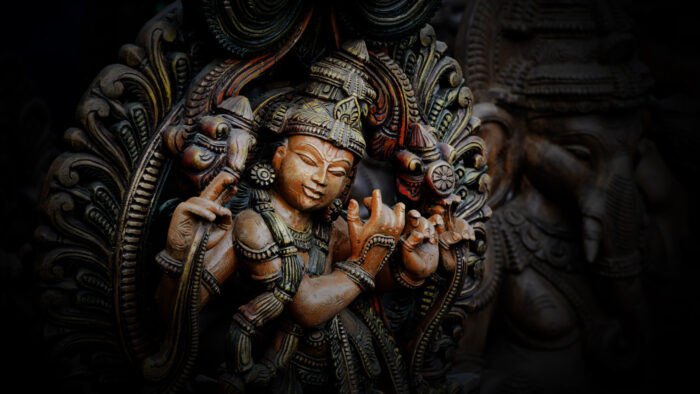
A reflection inspired by the Bhagavad Gītā’s image of the Self
Prologue
What you call yourself may be closer than breath, yet wider than the body you touch.
Before any teaching begins, there is a quiet habit we all live with. We wake up each day feeling located somewhere. The world feels outside. The body feels like home. Thoughts, memories, and plans seem to belong to this shape we move around in. This sense feels intimate and unquestioned. It carries us through work, relationships, and fear. It also carries us into loss and uncertainty.
The Bhagavad Gītā does not rush to correct this habit. It first allows us to notice it. In the early verses of Sānkhya Yog (the Yog of Transcendental Knowledge), Śhrī Kṛiṣhṇa speaks to Arjun while grief is still present. The teaching does not begin with comfort. It begins with seeing. Seeing how identity is quietly assumed. Seeing how sorrow is tied to that assumption.
This article stays with that seeing. It does not ask you to believe anything new. It only invites a pause. A pause to look at how you know yourself right now. From that pause, a simple question can begin to unfold.
Introduction: The everyday assumption we all carry
Most of us live with a quiet, steady feeling. I am inside my body. It feels like the most normal thing in the world. You wake up and the body is already here. You open your eyes and the world appears in front of you. You move your hands and feet and life moves with you. Even when you do not think about it, the sense of “me” seems tied to this skin, this face, this voice, this posture.
This assumption is formed early. People point at your body and call you by a name. They say you are tall, you are short, you are strong, you are weak. They praise you when the body performs well. They worry when it gets sick. Slowly, the body becomes the main reference point for identity. It becomes the way you feel present in the world. It becomes the way you feel seen.
This is why the body carries so much meaning. It is not only a physical form. It becomes a story. It carries your efforts, your achievements, your scars, your habits, and your memories. It also carries your comparisons. You may look at someone else and feel smaller. You may look in the mirror and feel uneasy. You may feel proud on some days. You may feel exposed on other days. The body becomes the stage where confidence and insecurity play out.
This assumption also shapes the way time feels. Youth feels like a promise because the body seems full of possibility. Middle age can feel like pressure because the body begins to show limits. Old age can feel like a narrowing because the body becomes slower, more fragile, and more dependent. Even when life is going well, the background thought remains. This body must hold up. This body must last.
From here, fear takes many forms. Fear of aging often comes first. It can be subtle. You notice wrinkles. You notice fatigue. You notice recovery taking longer. You notice that the body no longer obeys the mind in the same way. And because identity feels placed inside the body, these changes feel personal. They feel like they are happening to you, not only to a form you inhabit.
Fear of loss also grows from the same place. You fear losing health. You fear losing attractiveness. You fear losing ability. You fear losing the people who recognize you in the way you want to be recognized. When someone you love is hurt, your whole system shakes because you see how vulnerable bodies are. When someone dies, the shock is deep because the body is taken as the person.
Fear of failure joins in too. Work becomes heavy when your worth feels tied to performance. The body becomes part of that performance. You need energy. You need focus. You need stamina. When the body feels tired, you may feel you are falling behind. When anxiety arises, the body reacts. Heartbeat, breathing, and tension make it feel even more real. It can feel like you are trapped inside a system that keeps demanding more.
Fear of death sits behind all these fears. Most people do not think about it all day. Yet the knowledge is there. This body will end. And if “I” equals body, then “I” ends too. Even spiritual interest sometimes begins here. It begins as a search for something that can hold steady when the body cannot.
Śhrī Kṛiṣhṇa begins speaking into this human condition with a simple image. He says that just as a person discards worn-out clothes and takes new ones, the embodied being discards old bodies and takes new ones (BG 2.22).
वासांसि जीर्णानि यथा विहाय नवानि गृह्णाति नरोऽपराणि ।
तथा शरीराणि विहाय जीर्णान्यन्यानि संयाति नवानि देही ॥ २.२२ ॥
vāsāṁsi jīrṇāni yathā vihāya navāni gr̥hṇāti narō:’parāṇi |
tathā śarīrāṇi vihāya jīrṇānyanyāni saṁyāti navāni dēhī || 2.22 ||
(Just as a person discards old garments and wears new ones, so too does the soul discard old bodies and enter into new ones.)
This is not a poetic flourish. It is a deliberate nudge. It places a small question inside the mind without forcing an answer.
If the body is like clothing, then the body is something you wear through a phase of life. A garment has a use. It also has an end. A garment can be cared for. It can also be outgrown. The image gently shifts the center of identity away from the body’s condition. It also begins to loosen the sense that your reality rises and falls with the body’s state.
This inquiry does not question the lived reality of the body, but quietly examines where identity is placed.
This verse does not ask you to deny what you feel. It asks you to look again at what you assume. It asks you to notice the link between embodiment and fear. It asks you to sense that the deepest “I” may not be as fragile as the body appears.
From here, a simple inquiry can begin. It does not begin with big conclusions. It begins with a small change in attention. It begins by asking how you know the body at all. That is where we go next.
A simple question that changes direction
After noticing how deeply the sense of living inside the body shapes fear and identity, the Gītā invites a pause. It does not push for a conclusion. It places a gentle question in front of you. How do you know your body at all.
This question sounds ordinary at first. You may feel tempted to answer quickly. I know my body because I see it. I know it because I feel it. I know it because it moves when I want it to move. Yet the power of the question is not in answering it. It is in staying with it.
Right now, as you sit reading this, how is the body known. You may notice pressure where the body touches the chair. You may notice the rhythm of breathing. You may notice warmth, tension, or ease in different places. You may notice the position of your hands. Each of these is an experience that appears.
None of these experiences announce themselves as the body directly. They show up as sensations. Pressure shows up. Movement shows up. Breath shows up. Even the visual image you call your body shows up as color and shape in sight. All of these are known by you.
This is where the direction begins to change. Instead of starting with the idea that you are inside the body, the question asks you to look at how the body shows itself to you. The body is not known all at once. It is known through moments of experience. Each moment appears. Each moment is noticed.
Take pain as an example. When pain arises, it feels immediate and personal. Yet even pain is something you notice. It has a location. It has a quality. It may change in intensity. You know when it starts. You know when it eases. The knowing of pain is present through all these shifts.
The same is true for comfort. Comfort arises as a feeling. It may spread or fade. You know it while it is present. You know when it is gone. The body is revealed through these waves of sensation. It is never known apart from being noticed.
Even movement follows this pattern. When you raise your hand, you feel the intention. You feel motion. You feel the hand arrive at a new position. Each step is experienced. Each step is known. The knowing is already there before the movement finishes.
This question does not deny the body. It does not suggest the body is unreal or imaginary. It simply brings attention to the way the body is known. It shows that the body is not experienced as a solid block. It is experienced as a flow of sensations, perceptions, and thoughts that appear and are noticed.
Śhrī Kṛiṣhṇa prepares the ground for this shift through the verses that follow. In Verse BG 2.23, He says that the Self cannot be cut, burned, soaked, or dried.
नैनं छिन्दन्ति शस्त्राणि नैनं दहति पावकः ।
न चैनं क्लेदयन्त्यापो न शोषयति मारुतः ॥ २.२३ ॥
nainaṁ chindanti śastrāṇi nainaṁ dahati pāvakaḥ |
na cainaṁ klēdayantyāpō na śōṣayati mārutaḥ || 2.23 ||
(The soul cannot be cut by weapons, burned by fire, wet by water, or dried by wind. It is beyond all material interactions.)
This statement quietly separates what is experienced from what experiences. Weapons act on bodies. Fire acts on matter. Water and wind act on forms. Yet the knowing of these actions remains untouched.
By asking how you know the body, attention begins to turn inward, not as an inward journey, but as a noticing of what is already present. The question points to the fact that whatever you call the body appears in awareness. It arrives there. It changes there. It fades there.
You may notice something subtle as you stay with this. The body feels close. Awareness feels even closer. You do not need to reach for it. You do not need to create it. It is already present, noticing every sensation without effort.
This is why the question changes direction. It moves attention away from the body as a container and toward the act of knowing itself. It does not demand that you redefine yourself. It only invites you to observe how experience is actually known.
When this observation becomes steady, the body begins to feel less like a fixed center and more like something that is met moment by moment. From here, the inquiry can deepen without strain.
For a moment, let the question rest without trying to answer it.
As the noticing becomes clearer, it becomes natural to look more closely at the body itself. Not as an idea, but as something that is constantly being noticed. That is where the next step unfolds.
Seeing the body as something noticed
Once the question of how you know the body settles in, attention naturally turns toward what is actually being known. This step stays very close to everyday experience. It does not ask you to imagine anything new. It asks you to notice what is already happening.
Start with sensation. Right now, the body is felt through pressure, warmth, coolness, tightness, or ease. You may feel the weight of your feet on the ground. You may feel the contact of clothing on the skin. You may feel the steady rise and fall of breathing. Each of these shows up as a clear experience. Each one is known as it appears.
These sensations do not stay fixed. Pressure shifts when posture changes. Warmth increases or fades. Breathing deepens or becomes shallow. Through all of this movement, something remains present that notices each change. You do not need effort to notice. The noticing happens on its own.
Movement is known in the same way. When you stand up, you feel the shift of balance. When you walk, you feel the rhythm of steps. When you reach for something, you feel the arm extend and the hand close. The body reveals itself through these felt moments. Movement does not hide itself. It is known as it unfolds.
Pain brings this into sharp focus. Pain often feels overwhelming because it draws attention strongly. Yet even pain is something that is noticed. It has a place in the body. It has a texture. It may throb, burn, or ache. It may increase or soften. You know when it begins. You know when it changes. You know when it ends. The knowing remains steady through all of this.
Comfort works in a similar way. When the body relaxes, you feel at ease. When tension releases, there is relief. You know these states clearly. Comfort does not need explanation to be known. It is felt and recognized as it appears. When it fades, you know that too.
Appearance is another layer of knowing. You see the body in a mirror. You see your hands as you type. You see your reflection in glass or water. What you see shows up as shape, color, and form. The image changes with light, angle, and time. You recognize the image because it appears in sight and is known.
Thoughts about the body also appear. You may think, my back feels stiff. You may think, I look tired today. You may think I feel strong or weak. These thoughts are experiences as well. They arise, linger for a moment, and pass. You notice them just as you notice sensation and movement.
As this observation deepens, something becomes clear in a quiet way. The body is never encountered apart from being known. It is not experienced as a single solid thing. It is experienced as a flow of sensations, movements, images, and thoughts that appear and are noticed.
As we saw earlier Śhrī Kṛiṣhṇa points toward this separation gently in Verse BG 2.23, where He says the Self is untouched by weapons, fire, water, and wind. These forces act on the body and its elements. They do not act on the knowing of the body. The verse does not describe the body. It points to what knows the body.
In Verse BG 2.24, the Self is described as unchanging and ever present.
अच्छेद्योऽयमदाह्योऽयमक्लेद्योऽशोष्य एव च ।
नित्यः सर्वगतः स्थाणुरचलोऽयं सनातनः ॥ २.२४ ॥
acchēdyō:’yamadāhyō:’yamaklēdyō:’śōṣya ēva ca |
nityaḥ sarvagataḥ sthāṇuracalō:’yaṁ sanātanaḥ || 2.24 ||
(The soul is indivisible, incombustible, and neither wettable nor dryable. It is eternal, all-pervading, unchangeable, immovable, and ever-present.)
This points to the steady presence that remains while bodily experiences shift. Sensations come and go. Movement begins and ends. Pain rises and falls. Comfort appears and fades. Appearance changes over years. The knowing of all this remains present throughout.
This way of seeing does not ask you to step away from life. It invites you to see life more clearly. The body continues to function. Sensations continue to arise. Action continues. What changes is the quiet recognition that the body is something that appears to you, moment by moment.
As this recognition becomes familiar, another question naturally follows. If the body is something that is noticed, then what is the nature of what notices. Is that noticing another object, or is it something different altogether. That question opens the next section.
Awareness is not another object
As you continue noticing the body as something that is known, attention begins to rest more on the knowing itself. This is where the inquiry slows down. It does not rush forward. It stays with what is already present.
Awareness does not announce itself the way sensations do. You do not feel awareness as pressure or warmth. You do not see it as a shape. You do not hear it as a sound. Yet it is always there. It is present while sensations appear. It is present while thoughts arise. It is present while the body moves or rests.
Try to notice this gently. When a sensation appears, awareness is already there to know it. When a thought arises, awareness is already there to notice it. There is no gap where awareness arrives late. It does not turn on and off. It does not need to be summoned.
Now look for its shape. Look for its size. Look for its location. You may naturally point toward the head or chest at first. That is a habit learned over time. Stay with direct experience instead. Notice that sensations in the head are known. Sensations in the chest are known. The knowing itself does not feel confined to either place.
The body has clear edges. You know where the hand ends and the air begins. You know where the skin meets clothing. You know where your body stops in space. These edges are felt and seen. They are part of how the body is known.
Awareness does not show itself in this way. You cannot find a line where awareness ends. You cannot point to a boundary and say it stops here. You may notice that awareness includes sounds near and far. It includes sensations in many places at once. It includes thoughts that come from nowhere you can locate.
This does not make awareness vague. It makes it open. It holds whatever appears without changing its own nature. Sensations shift. Thoughts move. The body ages. Awareness remains present through all of it.
As we saw Śhrī Kṛiṣhṇa points to this in Verse BG 2.24 when He describes the Self as all-pervading and immovable. The Self, Ātman (the eternal witnessing Self), is not described as something that travels or changes position. It is present wherever experience appears. It does not need to move because nothing happens outside it.
Verse BG 2.25 adds another layer. The Self is described as unseen and inconceivable.
अव्यक्तोऽयमचिन्त्योऽयमविकार्योऽयमुच्यते ।
तस्मादेवं विदित्वैनं नानुशोचितुमर्हसि ॥ २.२५ ॥
avyaktō:’yamacintyō:’yamavikāryō:’yamucyatē |
tasmādēvaṁ viditvainaṁ nānuśōcitumarhasi || 2.25 ||
(The soul is said to be unmanifest, inconceivable, and unchangeable. Knowing this, one should not grieve for the temporary changes of the material body.)
This does not mean it is hidden somewhere. It means it cannot be grasped as an object. Anything you can picture has a form. The body is present here only as something already known. Awareness itself does not appear as a picture.
This is why awareness is not another thing inside the body. If it were a thing, it would have limits. It would come and go. It would be affected by conditions. Yet your experience shows something different. Awareness remains present whether the body feels strong or tired. It remains present whether the mind feels clear or confused.
This seeing does not remove the body from life. The body continues to act. It continues to feel. It continues to age. What changes is the quiet understanding of what holds all of this. Awareness is not added to experience. It is already the space in which experience unfolds.
When this is noticed, even briefly, a sense of effort can soften. You are no longer trying to locate yourself inside a form. You begin to sense yourself as the presence that knows the form.
This understanding is not built through reasoning. It grows through gentle noticing. As this noticing deepens, simple images can help the feeling of it settle more easily.
Notice what remains present even as this thought fades.
That is why the next section turns to a few everyday analogies. They do not explain awareness. They help you recognize it without strain.
Analogies for Better Understanding
Sometimes an idea is felt more easily than it is explained. Words can point, yet they can also crowd the space. This is why the Gītā often allows images to do quiet work. Analogies do not define truth. They help attention relax and turn in a new direction. They invite recognition rather than agreement.
Think first of a movie screen. You sit in a theater or at home, watching a film. Scenes move one after another. A child is born. A character struggles. Someone grows old. Someone disappears from the story. Joy and sorrow unfold in front of your eyes. Through all of this, the screen remains present. It does not age with the characters. It does not bleed when violence appears. It does not carry the sadness of the final scene. The screen allows every image to appear. The movie does not contain the screen. The movie appears on the screen.
This image works best when it is kept simple. It is not meant to be examined in detail. It only points to something you already know. The screen allows every scene to appear. The scenes do not change the screen. The screen stays the same while the scenes come and go.
Now consider the sky and the weather. On some days the sky is filled with clouds. On other days it opens into clear blue. Storms pass through with wind and rain. Lightning flashes. Thunder rolls. Later, the sky feels calm again. Through all these changes, the sky remains what it is. Rain does not soak the sky. Wind does not tear it. Heat does not burn it. Weather unfolds within the sky. The sky is not altered by what passes through it.
This image is close to how experience feels when attention rests in awareness. Thoughts can feel stormy. Emotions can feel heavy. Sensations can feel sharp or dull. These states move through awareness the way weather moves through the sky. Awareness does not need to fight them. It does not need to improve them. It simply remains present while they pass.
Now bring the image closer to daily life. Think of a room you know well. Furniture is arranged inside it. Chairs are moved. Tables are shifted. People enter and leave. Sounds fill the space and then fade. Light changes from morning to evening. The room remains the space where all of this happens. It is not defined by any single object inside it. When the room is empty, it is still a room. When it is full, it remains the same space.
This image helps ground the inquiry. Awareness feels like the room in which bodily sensations, thoughts, emotions, and actions appear. Sensations come in. Thoughts move through. Moods arrive and leave. Awareness remains the space that allows all of this to be known.
As we saw Śhrī Kṛiṣhṇa points toward this in a subtle way when He describes the Self as all-pervading and ever present (BG 2.24). The Self, Ātman (the eternal witnessing Self), is not described as changing with experience. It is described as present wherever experience appears.
These analogies are not meant to convince you. They are not meant to be taken literally. Each one simply invites the same noticing. Something remains present while experiences move. Something holds change without becoming changed.
When you stay with this feeling, even briefly, the sense of being trapped inside the body can soften. You may begin to feel that life unfolds within a wider presence than you assumed. The body continues to act. Sensations continue to arise. Yet the background sense of space feels more open.
These images are stepping stones. They help attention settle without strain. Once they have done their work, they can be left behind. What remains is a quieter seeing.
From here, it becomes important to clarify what this way of seeing does not suggest. Without that clarity, misunderstanding can slip in quietly. That is why the next section pauses to address what this understanding does not mean.
What this does not mean?
As this way of seeing begins to settle, it is important to stay grounded. Quiet misunderstandings can arise if this inquiry is taken in the wrong direction. So this pause matters. It helps keep the reflection connected to life as it is lived.
Seeing awareness as primary does not erase the body from experience. The body continues to breathe, walk, speak, and respond. Hunger still appears. Fatigue still shows up. Healing still takes time. Injury still hurts. The rhythms of the body remain part of daily life. This understanding does not remove you from that flow.
Responsibility also remains intact. Work still needs attention. Relationships still ask for care. Words still carry impact. Choices still shape outcomes. Seeing yourself as awareness does not lift you out of the human situation. It places you more fully inside it, with clarity rather than confusion.
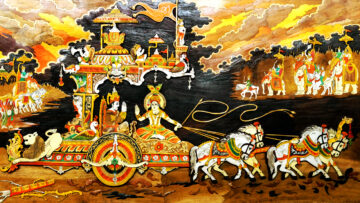
The Bhagavad Gītā never teaches withdrawal from action at this stage of the dialogue. Śhrī Kṛiṣhṇa speaks these verses to Arjun on a battlefield, not in isolation. The setting itself matters. The teaching unfolds while duty, consequence, and action are all present. The verses about the Self being untouched by weapons and elements are spoken in the middle of real responsibility (BG 2.23).
This understanding does not make the body unimportant. The body remains the instrument through which life expresses itself. Care for the body still matters. Rest still matters. Attention to health still matters. The difference is subtle. The body is no longer asked to carry the entire weight of identity. It is allowed to function without being the sole definition of who you are.
Emotions continue as well. Joy still arises. Sorrow still comes. Fear may still appear. The teaching does not flatten human feeling. It allows feeling to move without being mistaken as the whole of you. When emotion is seen as something that arises in awareness, it can be met with more patience. It does not need to be suppressed. It does not need to be acted out blindly.
Ethical life remains essential. Seeing the Self, Ātman (the eternal witnessing Self), as untouched by physical change does not excuse harmful behavior. Actions still unfold in the world. Actions still affect others. Cause and consequence still operate. The clarity offered here supports careful action. It does not replace it.
Śhrī Kṛiṣhṇa describes the Self as unchanging and immovable (BG 2.24). This description does not remove the need for movement in life. It points to what remains steady while movement happens. From that steadiness, action can arise with less inner conflict. Decisions can be made with less fear clouding them.
The verse that calls the Self unseen and inconceivable also carries guidance (BG 2.25). Knowing this, one should not grieve in the same way. This does not say that grief disappears instantly. It suggests that grief is held differently. It is felt within a wider understanding. It is allowed to pass without collapsing identity.
This reflection also does not ask you to adopt a special posture or state. You do not need to withdraw from work or family. You do not need to speak differently or appear detached. The shift happens quietly inside. It shows up as a little more space around experience. A little more ease in the middle of effort.
Life continues in full color. Conversations continue. Mistakes happen. Learning happens. Growth unfolds. Awareness does not replace life. It allows life to be lived with a softer grip on fear.
As this clarity settles, something else becomes noticeable. Fear does not disappear as an idea. It begins to loosen as an experience. The next section looks at how this way of seeing gently softens fear in everyday life, without promising escape or certainty.
Why this softens fear?
Fear feels very close to us. It shows up in the body as tightness, restlessness, or heaviness. It shows up in the mind as worry and repeated thoughts. Most of the time, fear feels personal. It feels like something is happening to you.
Fear often rests on one quiet idea. It rests on the sense that who you are depends on what can change. When identity feels locked to the body, roles, and outcomes, fear finds many ways to enter.
Fear of loss is one of the most common forms. You may fear losing a relationship, health, status, or stability. When these things feel tied to who you are, loss feels like being reduced. It feels like something essential is being taken away. When awareness is recognized as what remains present through change, loss is still painful, yet it is held in a wider space. Sadness comes. Grief comes. The feeling of being erased does not come with the same force.
Fear of failure works in a similar way. Failure hurts deeply when worth feels measured by success. The body tightens. The mind becomes harsh. When identity rests in awareness rather than outcome, effort continues with less strain. You still care about doing things well. You still learn from mistakes. The fear that one failure defines you begins to soften.
Fear of death sits beneath many other fears. Even when it is not spoken, it shapes how time feels. Aging brings unease. Change brings anxiety. When the Self, Ātman (the eternal witnessing Self), is understood as not being born or destroyed with the body, death is seen differently. Śhrī Kṛiṣhṇa speaks of the embodied being setting aside bodies the way clothing is set aside (BG 2.22). This points to continuity rather than ending.
This does not remove the sadness of death. Loss still hurts. Absence is still felt. What changes is the fear that everything real disappears. Death is seen as a change in form, not the loss of what is most present.
The verses that describe the Self as untouched by weapons, fire, water, and wind speak directly to fear (BG 2.23). They show that what you are at the deepest level is not damaged by events. Pain may appear. Loss may appear. The knowing of these experiences remains steady.
Śhrī Kṛiṣhṇa also describes the Self as unchanging and ever present (BG 2.24). Fear depends on change. It feeds on what might happen or what has happened. Awareness stays present while fear rises and falls. Seeing this makes fear feel less solid.
In daily life, this shift shows up quietly. You may notice that anxious thoughts pass more easily. You may notice that uncertainty does not demand immediate escape. Fear still appears. It does not run the whole inner space.
You do not need to fight fear for this to happen. You do not need to replace it with courage. You only need to see fear as something that appears and is known. The one who knows fear is not shaken in the same way.
When the Self is described as unseen and inconceivable, the Gītā says that knowing this, one need not grieve as before (BG 2.25). This does not promise a life without pain. It points to a softer way of holding fear. Fear is felt. It is not allowed to define who you are.
From here, the inquiry does not close with answers. It opens into a quiet invitation. That invitation forms the closing of this reflection.
Closing: An invitation, not a conclusion
There is no need to carry anything from this reflection as a final answer. Nothing here asks to be settled or resolved. It is enough to let the words fall quiet and notice what remains.
In the Vedic view, the human being is not limited to the sthūla śarīra (gross physical body), there is also the sūkṣhma śarīra (subtle body), which includes prāṇa (vital life force), manas (sensory and emotional mind), buddhi (discernment), and ahaṅkāra (sense of individuality). The aura belongs to this subtle dimension. They all form an ecosystem of experience.
Sanātana Dharm also links this field to the pañcha kośas (five layers of being). The prāṇamaya kośa (vital energy sheath) and manomaya kośa (mental sheath) especially shape what is sensed as an aura.
A peaceful mind and balanced prāṇa are said to create a sattvic (clarity and harmony) presence. A restless mind reflects rājasic (restless drive) movement. A dull or withdrawn state reflects tāmasic (inertia) heaviness. Each layer functions. Each layer changes. Each layer can be observed. Even the most refined inner states come and go.
The Ātman stands apart from this movement, not by distance, but by nature. It does not act. It does not flow. It does not expand or shrink. It does not improve or decline. It simply witnesses.
You can notice this directly. The body is known. Breath is known. Feelings are known. Energy states are known. The sense of calm or disturbance is known. Whatever can be noticed belongs to the ecosystem. The one that notices is not inside what is noticed.
So the Ātman is not at the center of the system as a power source. It is not above the system as a controller. It is not around the system as a field. It is the silent presence in which the entire system appears.
In simple terms, the ecosystem is like a living display. The Ātman is like the light by which the display is seen. The light does not enter the picture. The picture appears in the light.
This is why the Ātman is described as akartā (non doer) and sākṣī (witness). It is present in every experience, yet untouched by all of them. When this is seen, the ecosystem is respected for what it is, while identity quietly shifts away from it.
Nothing needs to be rejected. Nothing needs to be fixed. The body, mind, and energies continue their life. The Ātman remains what it has always been. The one that knows.
This reflection does not close with certainty. It leaves space. Space for noticing. Space for returning to this seeing again and again, in small moments. It does not function as a practice or a goal. Just as a quiet recognition.
What you truly are may not be inside the body in the way you once assumed. It may be closer than that. It may be what has been present all along, gently holding every moment, without asking for attention.
In that seeing, the body is simply known. The body is experienced within you, not as something separate, but as part of what is known.
This is not a conclusion. It is an opening.
Key Terms
Here are the key terms glossary in alphabetical order
- Ātman: The eternal witnessing Self that knows all experiences. It remains present through every change described in the body and mind.
- Avidyā: Ignorance arising from mistaken identification. It causes the Self to be confused with the body, thoughts, and roles.
- Awareness: The simple fact of knowing experience. It has no shape or boundary and remains present while sensations and thoughts appear.
- Deha: The physical body as an experienced form. It changes over time and is known through sensation, movement, and appearance.
- Dehī: The embodied being spoken of in the Gītā. It refers to the presence that takes up bodies without being limited by them.
- Identification: The habit of taking the body or mind as the Self. It quietly shapes fear, attachment, and suffering.
- Prakṛiti: Nature or the material field where bodily and mental experiences arise. It includes all changeable forms.
- Puruṣa: Pure consciousness that witnesses all experience. It remains untouched by physical or mental change.
- Sākṣī: The inner witness that observes sensations, thoughts, and emotions. It does not act but knows all action.
- Śarīra: The lived body as it appears in experience. It is sensed, seen, and felt, yet constantly changing.
- Sthiratā: Inner steadiness that arises from clear seeing. It reflects reduced fear and greater ease with change.
- Vikāra: Modification or change in form or state. It applies to the body and mind, not to the Self.
Further Reading
For deeper insight into the themes explored in “Are You Inside the Body or Is the Body in You?”
- Swami Dayananda Saraswati: Bhagavad Gītā Home Study Course, Arsha Vidya (various volumes and editions). Strong for step by step clarity on how to contemplate the verses without turning them into abstract theory.
- Gita Press, Gorakhpur: Śhrīmad Bhagavad Gītā, with Śaṅkar Bhāṣya (Hindi), Gita Press (standard edition). Useful for staying close to the classical phrasing and the traditional rhythm of meaning, while reflecting on the Self as unchanging presence.
- Swami Chinmayananda: The Holy Geeta, Chinmaya Mission Trust (standard edition). Helpful for reflective reading that keeps the teaching practical and alive, while still honoring the depth of Sānkhya Yog.
- David Chalmers: The Conscious Mind, Oxford University Press (1996). A modern philosophical exploration of consciousness that can support deeper reflection on what awareness is, while keeping the inquiry honest about what experience directly reveals.
Note on Sources: This article draws primarily on the Bhagavad Gītā, with focused attention on Chapter 2, Verses 2.22 to 2.25. These verses speak of the changing of bodies, the untouched nature of the Self, its unchanging presence, and its unseen and inconceivable character. Together, they frame the inquiry into embodiment and awareness, and support the reflective question of whether identity is located in the body or whether the body appears within awareness.
The reflections follow the Advaita Vedānta understanding as articulated by Ādi Śaṅkarācārya, where the Ātman (the eternal witnessing Self) is understood as awareness itself, not as an object within experience. This perspective reflects Śaṅkara’s method of adhyāsa (superimposition), where the attributes of the body and mind are mistakenly placed upon the Self. This inquiry rests within the broader Vedāntic approach shaped by the Prasthāna-Traya, namely the Upaniṣhads, the Bhagavad Gītā, and the Brahma Sūtras.
The method of reflection aligns with the traditional movement of śravaṇa (listening to the teaching), manana (quiet reflection), and nididhyāsana (deep contemplation), allowing insight to arise through careful seeing rather than assertion. Standard English translations and traditional commentarial insights were consulted to maintain clarity, accuracy, and fidelity to the scriptural intent.
Feature Image Credit: Istock
Disclaimer: The opinions expressed in this article belong to the author. Indic Today is neither responsible nor liable for the accuracy, completeness, suitability, or validity of any information in the article.