
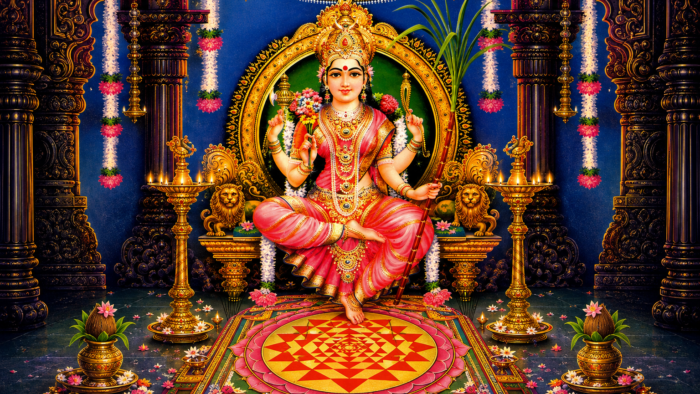
Every spiritual journey has a beginning. Sometimes it begins in the sanctum of an ancient temple. Sometimes in the quiet pages of a sacred text. Ours began unexpectedly nearly two years ago, when my wife, Sreelakshmi, happened to watch a television programme featuring singer Kalabhavan Alice explaining the significance of the daily chanting of Sri Lalita Sahasranama.
Sreelakshmi was visibly moved. What had impressed her was not merely Alice’s exposition of the celebrated hymn to the Divine Mother, but the fact that it came from a lady born into a Christian family. “You must listen to her,“ she insisted. “As a devotee of the Divine Mother, you will appreciate what she has to say.”
Curiosity led me to her talks on YouTube. One discourse became two, and gradually I understood why Alice commanded such attention. She spoke neither as a scholar eager to display learning nor as a preacher seeking followers, but as a sincere seeker sharing something that had transformed her own life. I resolved to meet her.
For one reason or another, the meeting kept getting postponed. It was only recently that Sreelakshmi and I finally found ourselves driving towards Madannada in Kollam, to a quiet locality near Bharanikavu Devi Temple, where Alice and her husband, Sri Unnikrishnan, live in his ancestral home.
The tiled-roof house, more than a century old, stood amidst greenery with an unassuming elegance that immediately evoked memories of old Kerala homes. As our car entered the compound, Alice noticed us and hurried to the front door to receive us. There was nothing formal about the welcome. She received us with the affection of a close relative.
Though around sixty-six, Alice appears considerably younger, with a cheerful and charming countenance. Dressed in a brown churidar, she ushered us into the drawing room. Within minutes, we were conversing as though we had known each other for years.
Tea and snacks appeared without ceremony. Before we left, she insisted that we visit again, packed a packet of banana chips for our return journey and remarked affectionately that she had taken a liking to both of us. Sreelakshmi, in particular, won her heart instantly. Embracing her with motherly affection, Alice smilingly remarked that she resembled the presiding deity of a temple. That spontaneous warmth revealed far more about her personality than any formal introduction could. It was a small gesture, but one that revealed the warmth behind the public personality.
Both Sreelakshmi and I felt the unmistakable positive vibrations that seemed to permeate the house. Every day, nearly twenty-five students gather there to chant Lalita Sahasranama. Alice herself told us that she now also teaches Rudram and Chamakam while continuing to study them. Whether one attributes such feelings to psychology, habit or spirituality, the home possessed a calmness that was immediately perceptible.
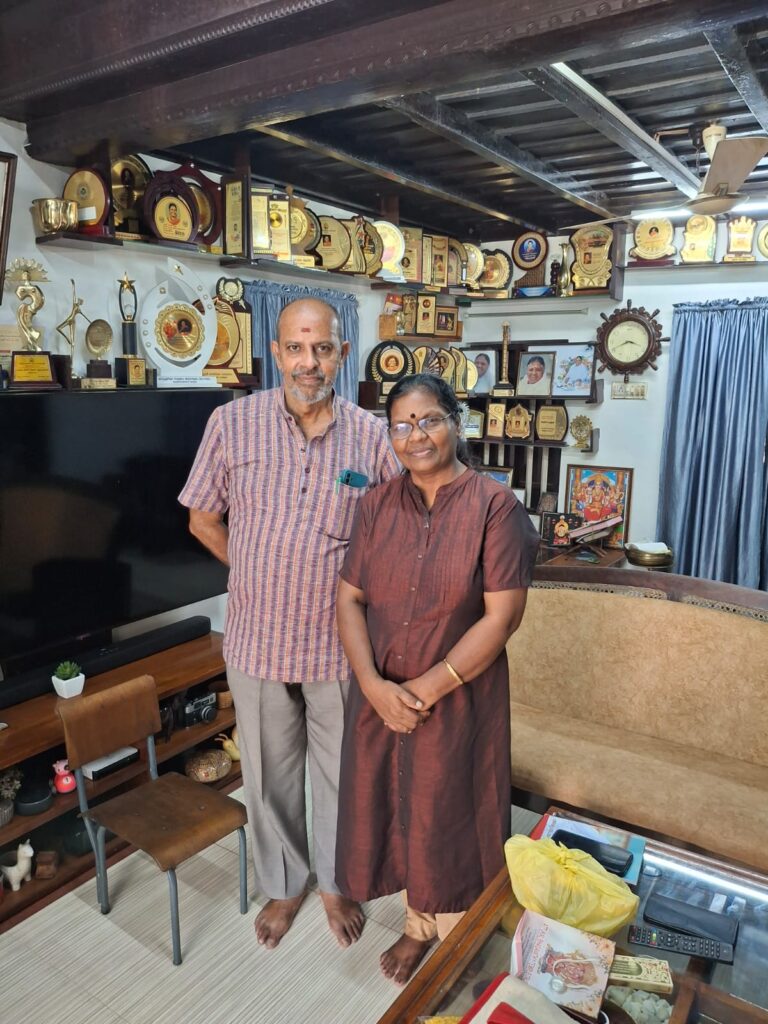
(Figure 1: Smt. Alice and Pradeep Krishnan)
From Music to Mantra
Keralam has known Alice for decades as “Kalabhavan Alice,” the gifted singer associated with the renowned Kalabhavan troupe of Kochi. Her journey towards Lalita Sahasranama, she told us, was intimately connected with her marriage. “I came to know about Lalita Sahasranama through my husband, Unnikrishnan,” she said.
Born into a Christian family, Alice moved from Kottayam to Kollam after marrying Unnikrishnan, a Hindu Nair. Their interfaith marriage initially encountered opposition. Yet what could have become a source of lasting bitterness instead opened before Alice an entirely new cultural and spiritual world.
She began visiting temples, observing customs, reading and trying to understand the traditions into which marriage had brought her. Music provided a natural bridge.
Alice is deeply trained in Carnatic music, having pursued graduate and postgraduate studies in music at the Sri Swathi Thirunal College of Music, Thiruvananthapuram. As a professional singer and playback singer, her musical career extends across decades, including performances outside India.

(Figure 2: Sri Swathi Thirunal College of Music where Alice received her formal training in Carnatic music)
For Alice, however, Carnatic music cannot be separated from India’s civilisational and spiritual inheritance. Its compositions, deities, philosophy, Sanskrit vocabulary, bhakti and musical grammar continually brought her into contact with the larger world of Sanatana Dharma. Gradually, acquaintance became fascination. Fascination became study, and study became sadhana. She began chanting Lalita Sahasranama about nineteen years ago. Today, she says with complete conviction that she cannot imagine her life without it.
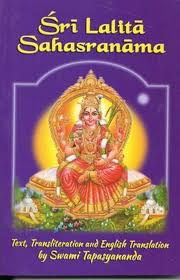
(Figure 3: For Alice, Sri Lalita Sahasranama is not merely a hymn but a lifelong spiritual discipline)
The Power of a Thousand Names
She told us that the daily chanting of Lalita Sahasranama transformed her physically, mentally and materially. She explained this not as a miraculous event but as a gradual inner change. According to her, the positive vibrations generated by disciplined chanting quietly reshape one’s outlook, often without the practitioner even noticing the process. She added that she no longer worries excessively about life’s uncertainties because she lives with the conviction that the Divine Mother takes care of everything. These are deeply personal convictions born of her own experience, and she shares them with disarming sincerity rather than dogmatic certainty.
For Alice, Lalita Sahasranama is much more than a devotional composition consisting of a thousand names of the Divine Mother. She understands chanting as a profound interaction between sacred sound, body, mind and consciousness. “Chanting is not only meditation,” she explained. “When we connect with it, we connect with Brahman—with the universe itself.” Alice believes that sacred sounds resonate within the human system and influence the chakras, beginning with the Muladhara. The energy experienced within, she says, is ultimately inseparable from what human beings call God.
Her explanation is rooted not in claims of academic authority but in years of personal practice. The deeper one goes into chanting, she believes, the more silence one discovers within oneself. For her, that silence is not emptiness. It is mastery over the restless tendencies of body and mind.
She has also arrived at an interesting observation through years of meeting spiritual teachers and studying sacred literature: those possessing genuine wisdom, she says, seldom indulge in excessive talk. Depth often expresses itself through quietness. Her own life, she believes, changed fundamentally through Lalita Sahasranama. Anxiety gradually diminished. Problems ceased to possess the same power over her. Faith replaced fear.
“When you realise that Bhagavati is always with you, where is the room for fear?” is the essence of her conviction. Whatever happens, she says, has to be understood in the larger context of karma. One does what one can, accepts what comes and entrusts the rest to the Divine Mother.
At one point during our conversation, she softly chanted the opening lines of the celebrated dhyana śloka beginning with “Sindhooraruna Vigraham…”. The familiar verses, rendered in her melodious voice, seemed to transform the room into a place of worship. It lasted only a few moments, yet those moments remain among the most memorable of our visit.
She explained that transformation seldom occurs overnight. Rather, it is like the slow dawn that dispels darkness without announcing its arrival. One continues chanting every day, and after months or years one begins to notice that anxiety has diminished, patience has increased and faith has become stronger. Looking back, one realises that the change had been taking place quietly all along.
Alice readily acknowledges that this is her personal spiritual experience. She told us that after she began chanting Lalita Sahasranama regularly, her outlook towards life underwent a remarkable transformation. She found herself becoming calmer and less anxious. Problems that once appeared overwhelming gradually lost their power to disturb her. “The Divine Mother will take care of everything,” she said with complete confidence, reflecting the faith that now guides her daily life.
Listening to her, one understands that the attraction of her talks lies not in philosophical complexity but in their simplicity. She does not claim mystical powers or exclusive knowledge. Instead, she repeatedly encourages ordinary householders to begin with sincerity, discipline and perseverance. One of the recurring themes in Alice’s public discourses is that chanting should never become a mechanical exercise. The words must be pronounced with care, the mind should remain focused and the heart should be open towards the divine Mother.
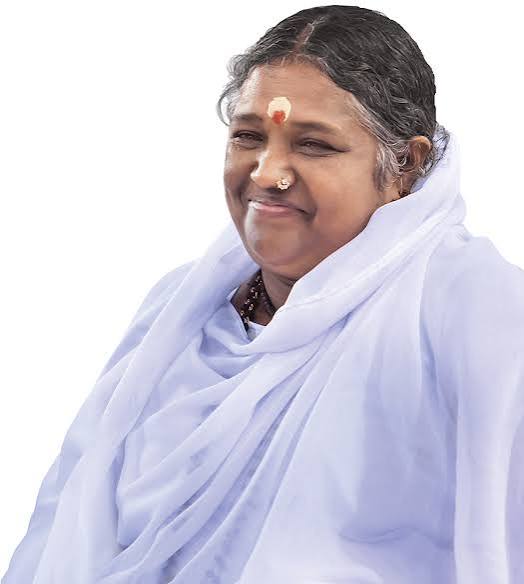
(Figure 4: Mata Amritanandamayi Devi, whom Alice reverentially regards as one of her gurus)
A Prayer Corner
One feature of the drawing room attracted my attention immediately. In one corner was a simple prayer space. It was neither elaborate nor ostentatious. Yet it radiated serenity. Pictures of various Hindu deities adorned the walls. Prominently displayed among them was a photograph of Mata Amritanandamayi Devi, whom Alice reverentially regards as one of her gurus. She spoke with gratitude about having met Amma on several occasions and acknowledged her encouragement in pursuing the path of chanting and sharing sacred hymns with others.
The walls of the room also bear testimony to another life—the public life of Kalabhavan Alice. Scores of plaques and mementos presented by organisations over the years recall the singer who once travelled extensively and performed before large audiences. Yet the Alice sitting before us seemed far more interested in what she had still to learn than in what she had already achieved. “I am still a student,” she repeatedly reminded us. The statement is crucial to understanding her.
Alice does not attribute her spiritual learning to any single source. Her mother-in-law, she says, was her first and primary teacher. Thereafter, many others contributed to her journey. Books, discourses, online resources and the teachings of various Acharyas all became sources of knowledge and inspiration. Her approach to learning has thus been eclectic, yet persistent and deeply earnest.
Alice readily admits that she did not acquire her knowledge of Vedic texts through conventional residential study under one teacher. Much of it came from determined self-education. “I read a lot,” she said.
YouTube, online classes, messages, books and recorded teachings opened before her a vast library of knowledge. Among the teachers she has listened to are respected Vedic exponents. Her musical education had given her some exposure to Sanskrit, but as her chanting progressed, she realised that pronunciation alone was insufficient. To teach responsibly, she needed to understand what she was chanting. So, she studied Sanskrit further.
This is particularly important in Vedic recitation, she emphasises, because texts such as Sri Rudram contain prescribed notations and patterns of intonation. They cannot simply be sung according to individual preference. Pronunciation and svara matter. Alice makes no exaggerated claim of perfection. Even now she readily says that there is much she does not know. But chanting, learning and teaching give her immense spiritual fulfilment. “If my intention is sincere,” she said in essence, “God will take care of the rest.” That humility lends credibility to everything else she says.
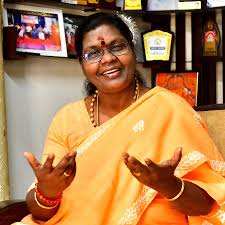
( Figure 5: Smt. Alice)
When the Student Became a Teacher
What began in the life of a housewife as personal study eventually became a collective spiritual pursuit. Alice started teaching music and chanting to others. Today, around twenty-five students learn regularly from her. The curriculum that evolved is remarkable.
After Lalita Sahasranama, Alice and her students studied and chanted Soundarya Lahari. Following a forty-one-day observance, they visited temples and rendered it there. They proceeded to Sivananda Lahari, and later to Narayaniyam, which Alice taught with what she describes as a classical musical touch. Narasimha Stotram followed. They brought these chants into homes and other devotional spaces.
Their studies expanded further to Ganapati Atharvashirsha and different Suktas. She now uses her YouTube channel to share what she has learnt with a wider audience. Yet she remains a demanding teacher. Her musical discipline carries over into spiritual instruction. Students who fail to practise may receive a gentle scolding. To Alice, sadhana without regular practice is a contradiction. Whether one is learning a raga or a Vedic chant, sincerity must manifest itself in disciplined effort.
She rejoices when a student learns the correct pronunciation of a difficult passage, develops confidence in chanting or discovers the joy of regular spiritual practice. At the same time, she expects sincerity. Discipline, she believes, is inseparable from sadhana.
It would be inaccurate to describe Alice merely as a singer, just as it would be incomplete to describe her only as a teacher of Lalita Sahasranama. She represents something deeper—a lifelong seeker who has discovered that learning itself can become a form of worship.
“Tat Tvam Asi”
Alice’s engagement with Sanatana Dharma has also led her towards its philosophical foundations. For her, one of its most powerful insights is contained in the mahavakya Tat Tvam Asi—”That Thou Art.” God, she believes, cannot ultimately be confined within religious compartments. The Divine is within the human being—in the heart, the body, the breath and the consciousness that animates life. Human beings exist within the vastness of creation and that creation exists within the Divine.
“God is in you, and you are in God,” she says in essence. “Everything is God.” This understanding has made sectarian rivalry incomprehensible to her. Why, she asks, should Shiva be regarded as opposed to another manifestation of the Divine? Why should one fear or reject a form through which another person approaches the same ultimate reality?
Alice does not deny the importance of traditions. On the contrary, she stresses sampradaya, correct chanting, temple worship and disciplined practice. Her argument is subtler: traditions are pathways to the Divine, not weapons for dividing humanity.
Whether one calls upon Jesus or Krishna, she believes, sincere prayer ultimately reaches the same transcendent source. Her own biography gives this conviction unusual force. A Christian by birth, married into a Hindu family, a Carnatic musician by training and now a dedicated student and teacher of Lalita Sahasranama and Vedic chants, Alice has encountered religious identity not as an abstraction but as lived experience.
The Divine Spark Within
Alice often speaks of a “divine spark” within every individual. Through prayer, mantra, visualisation and disciplined chanting, she believes one becomes increasingly conscious of this inner presence. That awareness creates what she describes as a protective spiritual aura. Wherever she travels, she says, Bhagavati accompanies her. She chants mantras, worships Shiva through Rudram, follows traditional practices and lives with the conviction that the Divine Mother protects her.
Her devotion to the Goddess does not diminish her reverence for other manifestations of the Divine; rather, it appears to have expanded it. This perhaps explains her attraction to Soundarya Lahari as well as Lalita Sahasranama. Both remain inexhaustibly profound to her despite years of study. The more she learns, the more she becomes conscious of what remains unknown. “Sanatana Dharma is a vast ocean,” was the unmistakable spirit of her words. “I am still a simple student trying to understand its nuances.”
A Message to Hindus
Alice also has a forthright message for practising Hindus: understand your own tradition properly. Do not, she urges, reduce religion to superficial observances without attempting to understand their meaning. Ask what a temple represents. Understand the principles underlying worship. Study what the deities signify. Explore the scriptures and philosophical ideas inherited from earlier generations.
For Alice, the democratisation of knowledge through technology has removed many old excuses. Books, discourses and the teachings of Vedic scholars are now readily accessible, particularly through online platforms. Even the nuances of Sanskrit pronunciation can be learnt through repeated listening and diligent practice. “If you have the desire to learn, the knowledge is there,” is the essence of Alice’s message. Her own remarkable journey stands as a compelling testimony to that conviction.

(Figure 6: Bharanikavu Devi Temple near Alice’s residence in Madannada, Kollam)
When Music Became Sadhana
As our conversation drew to a close, I looked again at the prayer corner, the images of the deities, the photograph of Amma and the numerous mementos lining the walls. Two lives appeared to coexist in that room. One belonged to Kalabhavan Alice, the accomplished singer whose voice had entertained audiences for decades.
The other belonged to Alice Unnikrishnan, the seeker who wakes each day conscious that there is still something more to learn. Yet perhaps they are not two lives at all. Music never disappeared from Alice’s journey. It simply acquired another purpose.
The voice trained to render Carnatic compositions and playback songs became an instrument for mantra. Musical discipline became spiritual discipline. The performer gradually became a practitioner, and the practitioner, in turn, became a teacher. Music had become sadhana.
As we prepared to leave, Alice once again asked us to visit her whenever we came to Kollam. She accompanied us with the warmth with which she had received us. The packet of banana chips she pressed upon us for the journey home was a characteristically simple gesture of affection. It was the spontaneous affection of someone who had welcomed us not as visitors but as members of an extended family.
Driving away from the century-old tiled house near Bharanikavu Devi Temple, I realised that what remained most strongly in my mind was not any grand philosophical declaration. It was her humility. There had been no elaborate discourse, no attempt to impress us with scholarship, and no desire to project spiritual superiority. Again and again came the simple acknowledgement: “I am still learning.”
Perhaps therein lies the real significance of Alice Unnikrishnan’s journey. Nearly two decades of chanting have convinced her of how vast the journey is. Every mantra opens another door. Every text reveals another depth. Every teacher becomes another opportunity to learn.
Every age produces individuals who remind us that spiritual life is not confined to monasteries or philosophical treatises. It can flourish in ordinary homes, through ordinary people, sustained by extraordinary sincerity.
Whether one approaches Lalita Sahasranama as an act of devotion, a treasured cultural inheritance, or a profound literary and spiritual composition, Alice’s message remains remarkably consistent: begin with sincerity, continue with discipline, and allow the practice itself to become the teacher.
Our own journey to meet her had begun almost casually, with a television programme watched two years earlier. We went to Kollam expecting to meet a well-known singer whose eloquent discourses on Lalita Sahasranama had inspired thousands of listeners. We returned having encountered something far more enduring—a humble seeker whose life bears witness to the transformative power of faith, disciplined learning and the timeless wisdom preserved in the spiritual traditions of Bharat.
We returned having encountered something far more enduring—a humble seeker and lifelong student whose passage from music to mantra bears witness to the transformative power of faith and disciplined learning. Her journey also illustrates how the spiritual traditions of Bharat continue to live—not merely in scriptures and temples, but in individuals who discover them, practise them and pass them lovingly to another generation.
Long after the memory of conversations fades, one image remains vivid in my mind: Alice sitting beside her little prayer corner, softly chanting the opening words, “Sindhooraruna Vigraham…”
For a few moments, the singer, the seeker and the teacher became indistinguishable. Music, mantra and devotion seemed to merge into one. And perhaps, in that brief confluence, lay the essence of Kalabhavan Alice’s extraordinary journey—and the quiet reason why she continues to inspire so many.
Music had not ended; it had become prayer.
Disclaimer: The opinions expressed in this article belong to the author. Indic Today is neither responsible nor liable for the accuracy, completeness, suitability, or validity of any information in the article.