
An Exclusive Conversation with Shri Palpandian, author of ‘Siddhas: Masters of Nature’
Few spiritual traditions in India are as ancient and profound as the Tamil Siddha tradition. Revered for their remarkable contributions to medicine, yoga, alchemy, and spiritual realisation, the Siddhas have often remained veiled behind layers of mythology, symbolism, and esoteric language. While Ayurveda and Yoga have acquired worldwide recognition, the Siddha tradition, despite its antiquity and vast body of knowledge, remains relatively unexplored beyond southern India.
It was against this backdrop that my interest in Sri Palpandian ji began. When someone suggested that I read his book, ‘Siddhas: Masters of Nature,’ I approached it with curiosity. As I progressed through the book, however, curiosity gradually gave way to a strong desire to meet its author. What particularly fascinated me was the distinctive manner in which he presented the Siddha tradition—not merely as an ancient system of medicine or a world of mystical accomplishments, but as a living spiritual tradition rooted in an intimate relationship between the human being and nature.
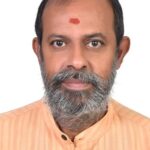
I first contacted Sri Palpandian about a year ago, and a meeting was arranged for July 2025. For various reasons, however, it could not materialise. Almost a year later, on 2 July 2026, the long-awaited meeting finally took place when my wife, Sreelakshmi and I visited him at his residence in Tiruvannamalai. He received us warmly with folded hands and ushered us into a spacious hall. It was the very hall where he conducts classes on the Siddha tradition. A large portrait of Sri Shirdi Sai Baba dominated the setting, and it was seated beside this imposing image that Sri Palpandian began speaking with us. After first offering us water, he settled into a conversation that would continue uninterrupted for nearly an hour and a half.
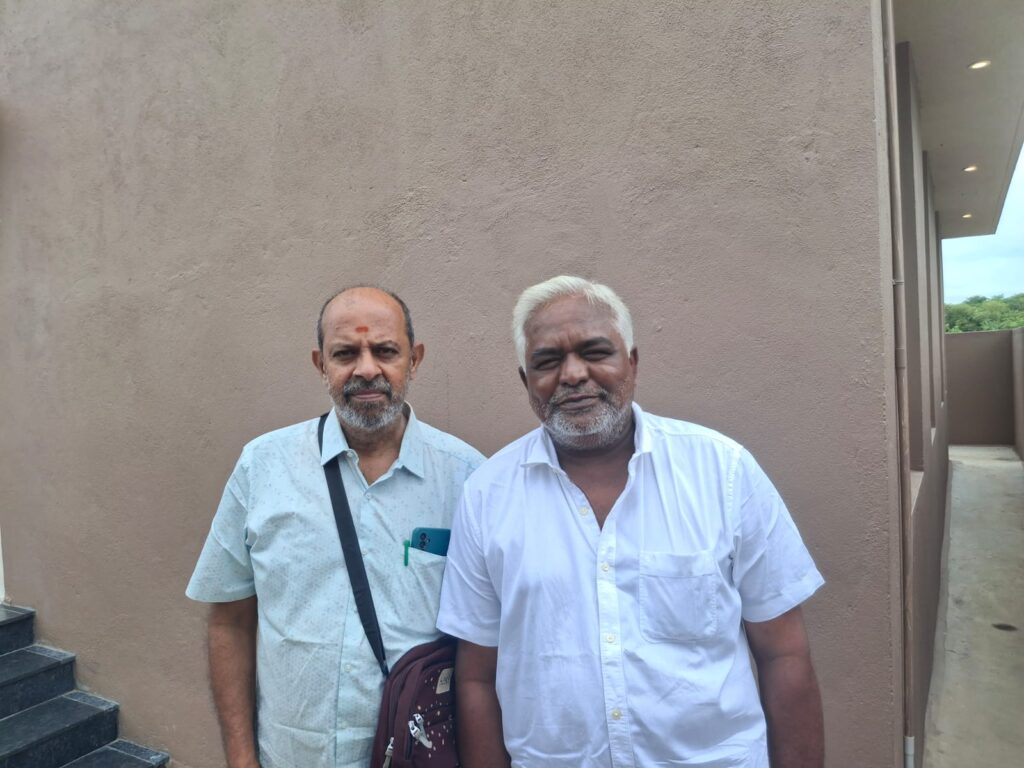 (Figure 1: Sri Palpandian and Pradeep Krishnan)
What began as an interview soon developed into an absorbing exploration of the Siddhas, their understanding of nature, the Guru–shishya tradition, Siddha medicine, spiritual practice, and the challenges confronting the modern seeker.
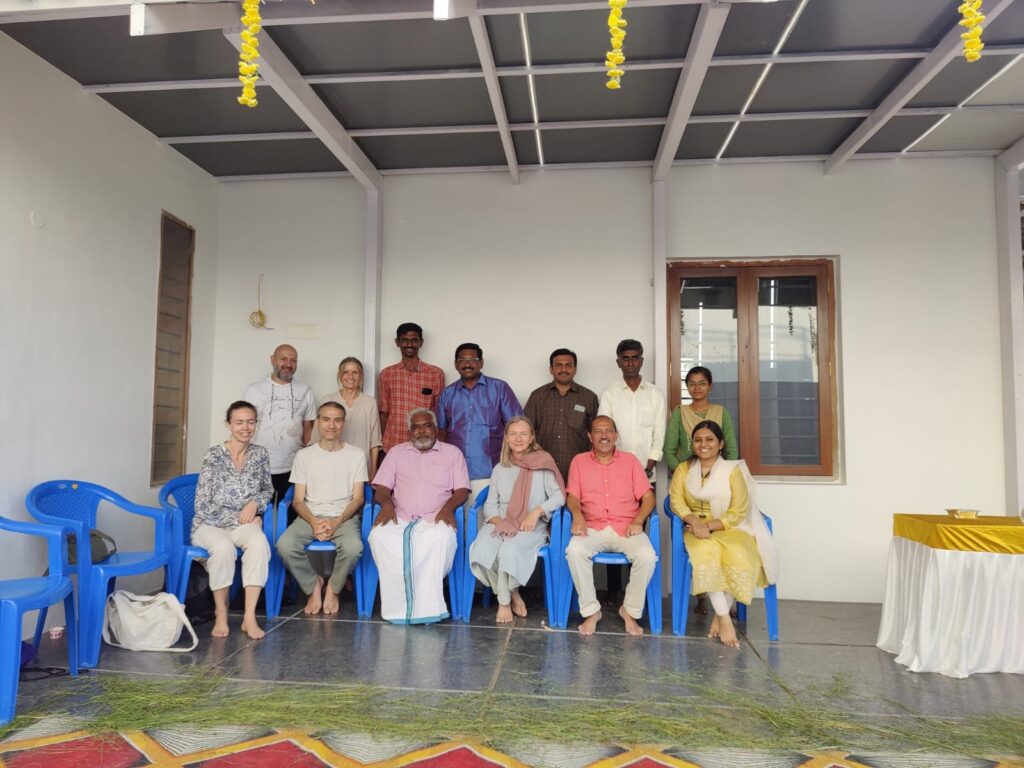
(Figure 2: Participants of weekend Class Tiruvannamalai with Palpandian)
Sri Palpandian belongs to the reclusive Agha Guru (Inner Guru) lineage of the Tamil Siddha tradition. After spending nearly eighteen years offering free Siddha medical treatment in Tiruvannamalai, he gradually withdrew from active medical practice to devote himself primarily to teaching the spiritual dimensions of the tradition. His book, Siddhas: Masters of Nature, seeks to introduce contemporary readers to a tradition that, according to him, predates many of the philosophical and spiritual systems familiar to us today. During our conversation, he spoke candidly about the mysterious inner restlessness that had seized him in childhood, his unconventional youth, the search that eventually led him to his Guru, and the years he spent treating people without charging a fee. He also explained what the word “Siddha” means to him and why reducing the Siddhas to miracle workers fundamentally misunderstands their spiritual legacy.
Equally striking was his assessment of contemporary spirituality. At a time when information about spirituality is available at the touch of a screen—and when Artificial Intelligence itself can explain complex philosophical concepts with increasing sophistication—Sri Palpandian believes that merely speaking eloquently about spirituality will no longer suffice. What humanity will increasingly seek, he argues, is a “functional spirituality” that is lived, experienced, and capable of transforming one’s everyday existence.
With remarkable candour, Sri Palpandian challenges several popular assumptions surrounding the Siddha tradition. Rather than portraying the Siddhas as mysterious ascetics endowed primarily with supernatural powers, he presents them as realised human beings who attained an extraordinary harmony with nature. For him, the Siddha path is ultimately not about withdrawing from life but about discovering a more natural, spontaneous, and integrated way of living it.
The conversation opens a fascinating window onto a spiritual tradition that deserves far greater attention. Sitting beneath the gaze of Shirdi Sai Baba in that quiet hall in Tiruvannamalai, our conversation traversed ancient wisdom and modern anxieties, medicine and mysticism, Guru and disciple, nature and consciousness—and, above all, the perennial human quest to discover who we truly are.
Palpandian ji, unlike many spiritual teachers who conduct retreats or classes from a permanent centre, you travel extensively and teach in different places. Why have you chosen this approach?
I have never believed that spirituality belongs to any one geographical region. A person may be born in Tamil Nadu, Europe, Africa, or anywhere else. If that individual embodies the qualities of the Siddhas, I would call such a person a Siddha. Spirituality is not determined by geography or culture but by one’s state of being.
Your book Siddhas: Masters of Nature has attracted considerable attention. What inspired you to write it?
To answer that, I have to go back to my childhood. My search did not begin with a desire to know God. It began with a desire to understand myself. Even as a schoolboy studying in the eighth standard in Madurai, I experienced an inexplicable inner restlessness. I could no longer relate to ordinary life around me.
Instead of attending school, I would spend entire days wandering through parks or travelling aimlessly on buses. Sometimes I simply ran for miles until complete physical exhaustion brought temporary peace. There was an inner force driving me, although I had no name for it. Eventually the school informed my parents that I had been absent for three months. My father, who had never raised his hand against me before, slapped me for the first and only time. That very night I left home and spent nearly three months living among beggars. Looking back, I still cannot fully explain those experiences. I only knew that I felt like a stranger in the world.
Did those experiences affect your education?
Ironically, my academic difficulties had nothing to do with intelligence. When I returned home, my parents assumed I was simply unable to cope with studies. Later, I witnessed my mother returning home in tears after relatives had ridiculed me as someone wasting his life. Seeing her pain changed me completely. I asked my parents to admit me to the best school in Madurai. They were astonished, but they supported me. From then onwards I consistently excelled in my studies and won gold medals every year. I often say that I studied not for myself, but for my mother. Even then, however, I knew that academic success alone could never satisfy the deeper questions within me.
You later entered engineering college. Yet that was not where your journey ended.
Not at all. During my first year in engineering college, I drifted into a lifestyle that included drinking, marijuana, and reckless company. Then one day everything changed. Near our college stood a small hill associated with a saint named Mayandi Swami. My friend and I climbed the hill out of curiosity and met an extraordinary Swami quietly preparing herbal medicines. Although I was intoxicated when I first met him, something remarkable happened. Simply sitting in his presence dissolved the intoxication. I experienced a peace I had never known before. That meeting transformed my life.
Was he the person who introduced you to the Siddha tradition?
Yes. During my second year, he gave me four books to study, including a rare Tamil collection of Siddha verses published in 1918. I confidently assumed I would understand them because Tamil was my mother tongue. Instead, I found that I could not comprehend even a single page. When I admitted my frustration, he explained that Siddha literature cannot be approached merely through logic. Its language is symbolic, experiential, and deeply coded. That realization shattered my intellectual pride. More importantly, I gradually understood that the answers I had been seeking throughout my life were hidden within this ancient tradition.
Was this the beginning of your search for a Guru?
The search had already begun, but now it acquired direction. My teacher once described the uniqueness of the Siddha tradition using just one word—Vasi (Primal breath/ universal life force). I did not understand what he meant, yet the word awakened something extraordinary within me. It felt strangely familiar, as though I had known it long before this birth. Interestingly, he himself admitted that although he followed the Siddha tradition through mantra and spiritual practice, he had never been initiated into this deeper dimension of Vasi.
He encouraged me to continue searching for someone who could guide me further. That advice intensified two parallel quests within me. One was to discover a Guru who truly knew me. The other was to understand this mysterious principle called Vasi.
Your search eventually took you away from engineering.
Yes. I left engineering without informing my parents because I felt drawn toward understanding human life rather than machines. Initially I intended to travel to the Himalayas, but circumstances unexpectedly took me to Tiruvannamalai, where I spent time meditating in caves. One night, after several days of wandering, I experienced intense hunger. Someone directed me to Sri Esanya Desikar Ashram, where I received food for the first time. While wandering near Arunachala, I met a disciple of Poondi Swamy who told me something that remained with me forever. He said: “Your real Guru is waiting elsewhere. Continue your search, and you will eventually return.” I followed that advice. I met many teachers, but the moment I finally met my Guru, the search ended completely.
Who was your Guru?
His name was Chandrasekhar Swami, belonging to the highly reclusive Agha Guru lineage. He was ninety-one years old when I first met him in a small village between Karur and Coimbatore. Until then my life had been driven by constant inner restlessness. The moment I met him, that restlessness disappeared. For the first time in my life, I felt completely at home. I realized that throughout my life I had not been searching for knowledge or mystical experiences. I had been searching for someone who truly knew me.
After meeting your Guru, how did your life evolve?
My Guru gradually prepared me for a life I had never imagined. Medicine itself was never my primary interest. Had it been so, I would probably have completed my engineering studies and settled into a conventional career like many of my classmates. Instead, my Guru cultivated in me an understanding of Siddha medicine as part of a much larger spiritual tradition. About ten days before he attained Mahasamadhi in 2000, he summoned me and entrusted me with the responsibility of continuing the lineage. He instructed me to offer Siddha medical treatment entirely free of cost, just as he had done throughout his own life. Following his instructions, I first served in Madurai and Dindigal before moving to Tiruvannamalai, where I continued treating patients for nearly eighteen years. People came from nearby villages as well as from distant countries seeking treatment.
What did those eighteen years of service teach you?
More than medicine, they taught me humility. My Guru had laid down two simple rules: never calculate and never judge. Whoever came before me was to be treated with equal compassion. Whether a patient returned repeatedly or arrived only once made no difference. Service itself was the practice.
Around 2004, I began working on my first book, Siddhas: Masters of Nature. The idea grew directly out of my years of treating patients. Almost everyone who came to me wanted to understand what Siddha medicine actually was, and many assumed it was simply another form of Ayurveda. I often found myself spending twenty or thirty minutes during a consultation explaining the Siddha tradition before I could even turn to the treatment. Gradually, I realised that the real gap was not merely in access to Siddha medicine, but in awareness and understanding of the tradition itself. I wanted to present its larger dimensions—beyond medicine—to a wider audience, and that impulse eventually took the form of Siddhas: Masters of Nature, which I published in 2008.
After my mother’s passing in 2016, I received what I understood to be an inner instruction from my Guru that this particular phase of my life had come to an end. I gradually withdrew from active medical practice and thereafter devoted myself fully to teaching and sharing the deeper dimensions of the Siddha tradition.
Most people associate the Siddhas primarily with medicine. How would you explain the Siddha tradition to someone unfamiliar with it?
That is precisely the misunderstanding I wanted to address through the book. The Siddha tradition is not merely a medical system. A genuine Siddha manuscript encompasses spirituality, yoga, philosophy, meditation, alchemy, esoteric sciences and the study of nature itself. In my understanding, the Siddha tradition represents a prototype from which many later spiritual systems evolved. Within it one finds elements that later emerged separately as Raja Yoga, Ashtanga Yoga, Tantra and Advaita. Long before these traditions assumed their present forms, the Siddhas had already explored every dimension of human existence and recorded their insights in symbolic manuscripts.
My own Guru repeatedly emphasised that while many paths exist within the Siddha corpus, its unique contribution lies elsewhere—in what he simply called Vasi. That single word transformed my entire spiritual search.
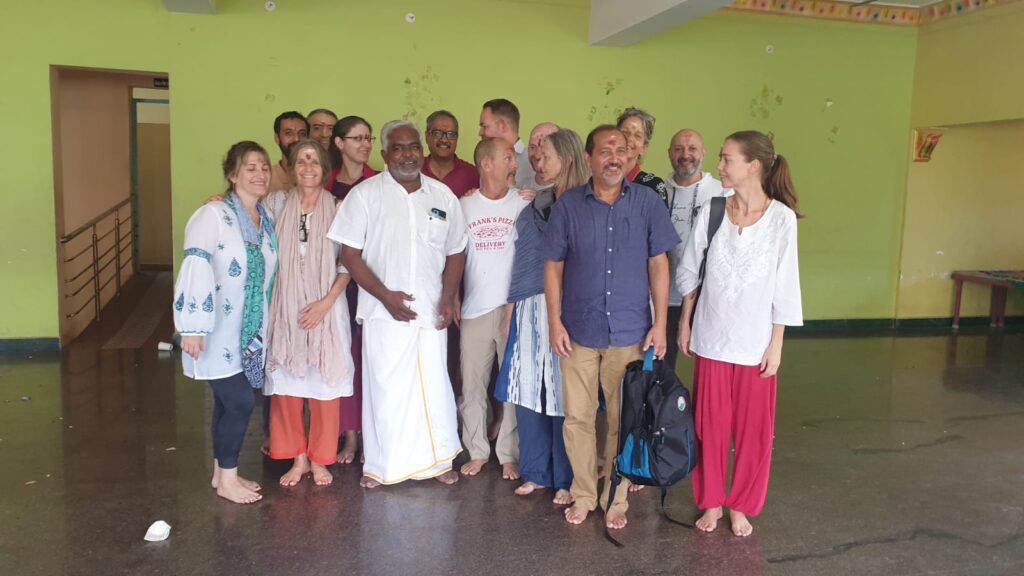
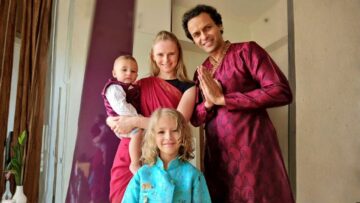
(Figure 3: Palpandian with Western Students (2024))
Your book describes the Siddhas as “Masters of Nature.” What exactly does that mean?
The earliest human communities did not worship idols in the way later generations came to do. They worshipped nature itself. Archaeological discoveries around Madurai and other regions indicate remarkably advanced settlements dating back several millennia. They reveal organised civic life, yet comparatively little evidence of temple-based deity worship during those early periods. To me, this suggests that humanity once related directly to nature without intermediaries. The Siddhas were not merely observers of nature. They became one with it. That is why I describe them as Masters of Nature. Their spiritual attainment did not consist in escaping the world but in entering into complete harmony with the living forces of existence. Even what people call “Samadhi” carries a different meaning in the Siddha tradition. A realised Siddha does not simply disappear. His presence continues to permeate the place where he lived and realised Truth, leaving behind a living field of spiritual transmission for future generations.
The Siddha tradition is often surrounded by extraordinary legends and miracles. How should we understand them?
Much confusion has arisen because of language. Many scholars derive the word “Siddha” from Siddhi, meaning miraculous powers. Consequently, Siddhas have often been portrayed as miracle workers. I totally disagree with that interpretation. In Tamil, we commonly use the word Chitta, not Siddha. Its roots point not towards miraculous powers but towards deeper dimensions of consciousness. One meaning refers to accumulated memory—the countless impressions carried across lifetimes that obscure our original nature.
Another derives from Chit, the pure awareness described in Sat-Chit-Ananda. Every realised being reaches the same Truth. What distinguishes the Siddhas is that they do not remain absorbed in transcendence alone. They return into manifestation. Rather than seeking merely to reach God, they seek to bring the Divine into everyday existence. This is why the Siddhas are remembered as immortal—not because they physically never die, but because their presence continues to live and guide humanity. Miracles, when they occur, are merely incidental by-products. They are never the goal.
What role does nature play in spiritual evolution according to the Siddhas?
Everything. The greatest obstacle to spiritual growth is the sense that “I am the doer.” Many systems emphasise techniques that strengthen the practitioner’s sense of personal effort. Breath control, for instance, is undoubtedly beneficial for health. Yet it can also subtly reinforce the feeling that I am achieving spiritual progress. The Siddha approach is fundamentally different.
Nature breathes. Nature transforms. Nature guides. The seeker gradually learns to surrender personal doership and allow the intelligence of life itself to function unhindered. Our heartbeat does not boast about its achievements. Our life-force does not calculate rewards. The mind constantly claims ownership; life itself never does. Learning to trust that spontaneous intelligence is central to the Siddha path.
The Siddhas are credited with remarkable contributions to medicine, yoga and alchemy. How do you view that legacy today?
Those contributions are indeed significant. However, even here one must understand the distinction between external techniques and inner understanding. Take alchemy as an example. There is laboratory alchemy and there is natural alchemy. Modern science generally concerns itself with laboratory processes. The Siddhas recognised another dimension altogether—living in complete harmony with the rhythms of nature. The same principle applies to medicine, yoga and every other branch of the Siddha tradition. One does not impose one’s will upon nature. One learns to cooperate with it. That, in my view, is the essence of Siddha wisdom.
What advice would you offer an ordinary person seeking a spiritual life?
Before trying to become spiritual, become fully human. We often assume that human beings are somehow superior to every other form of life. Once that attitude develops, it soon extends to other human beings as well. Real spirituality begins with humility. Place yourself in another person’s position. People frequently speak about compassion and love, but these words have become so overused that they often lose their depth. Instead, genuinely feel another person’s suffering and joy as your own. Such empathy demands emotional maturity, humility and openness. That, to me, is the true beginning of spiritual life.
Modern seekers are surrounded by innumerable teachers, books, videos and online discourses. What guidance would you offer them?
We are living in what I call the post-information age. The challenge today is no longer the absence of knowledge but its overwhelming abundance. Take something as simple as ginger. Search for its benefits online and you will find thousands of explanations. The real difficulty is knowing which one to trust. Information is multiplying endlessly, while wisdom is becoming increasingly scarce. The same phenomenon is affecting spirituality. For decades, people have been satisfied listening to inspiring talks or attending satsangs. But gradually they are beginning to realise that intellectual discussions alone do not resolve the crises of daily life. Economic uncertainties, pandemics, wars and growing psychological stress are forcing people to seek something deeper. The future, therefore, belongs to what I call functional spirituality—a spirituality that genuinely transforms life rather than merely explaining it. Today, Artificial Intelligence can explain Vedanta with remarkable clarity. If spirituality remains confined to words alone, technology may soon perform that task equally well, or even better. What cannot be replaced is the living presence of a realised person. The spiritual teacher of the future will not be someone who merely speaks eloquently about Truth. It will be someone whose very presence transforms the state of another human being. As humanity enters increasingly uncertain times, people will naturally turn towards a spirituality that offers direct inner transformation rather than intellectual entertainment.
Has there been one experience that most profoundly shaped your understanding of the Siddha tradition?
I have never approached the Siddha tradition merely as a subject to be understood intellectually. Without my Guru, I honestly do not believe I would be alive today. The inner turmoil that haunted me during my youth could easily have ended in self-destruction. The Siddha tradition gave me life itself. It is not simply a philosophy or a collection of practices. It is the very movement of life expressing itself through human existence. When I study the verses of the great Siddhas such as Sivavakkiyar, I find not merely mystical teachings but a fearless challenge to social conditioning. Many of those poems question empty rituals, mechanical religious practices and discrimination. The Siddhas sought to restore spontaneous humanity. They lived naturally, free from artificial social conditioning, responding directly to life itself. That, more than anything else, defines the Siddha tradition for me.
How should scholars and sincere seekers approach this ancient tradition?
Scholarly study certainly has its place. Yet the Siddha tradition cannot be understood through scholarship alone. Its origins lie in communities that lived in complete intimacy with nature, long before intellectual analysis became the dominant way of understanding reality. The Siddhas spoke from direct experience rather than theoretical speculation. Therefore, anyone wishing to understand the tradition must eventually move beyond concepts and become open to lived experience. Intellectual understanding may begin the journey. It cannot complete it.
What advice would you give someone inspired by your book and eager to begin practising the Siddha path?
My first advice is simple. Do not imitate practices blindly. Many traditional disciplines developed under circumstances entirely different from those of modern life. A practice that was appropriate for a yogi meditating in a Himalayan cave may not necessarily benefit someone living amidst contemporary stress.
Take Kapalabhati, for example. It is undoubtedly valuable, but like every powerful discipline, it must be practised appropriately. Excessive or indiscriminate practice may create imbalance instead of harmony. Throughout my years of medical service, I met many people—including visitors from abroad—who had suffered because spiritual techniques were applied without proper guidance. Spirituality survives because it adapts itself to the needs of each individual and each age. Discernment is therefore as important as discipline.

(Figure 4: Palpandian examining a boy during a free Varma camp)
After withdrawing from medical practice, what occupies your time now?
My principal work today is teaching. I spend my time explaining the Siddha tradition through classes and personal interactions, at our Siddha centre in Tiruvannamalai. I personally do not maintain a website or engage in social media. However, some of my students, both in India and abroad, have created platforms through which they share the wisdom and teachings of the Siddha tradition with a wider audience. Among them are Agaguru.com and EarthIndiaSiddha.com, which seek to present different dimensions of Siddha wisdom to people across the world. Alongside this, I am engaged in preparing a Navapashanam Shivalingam dedicated to my Guru—a sacred work that requires prolonged periods of retreat and contemplation.
I also encourage a group of Siddha physicians who are reviving classical medicinal formulations that have gradually disappeared from common practice. These initiatives are carried forward independently by dedicated doctors. I merely offer guidance whenever they seek it. Similarly, a charitable trust associated with the Siddha tradition continues various community service activities, including food distribution and medical outreach. None of these institutions bear my name. That is entirely in keeping with my Guru’s teachings. Service should remain anonymous whenever possible.
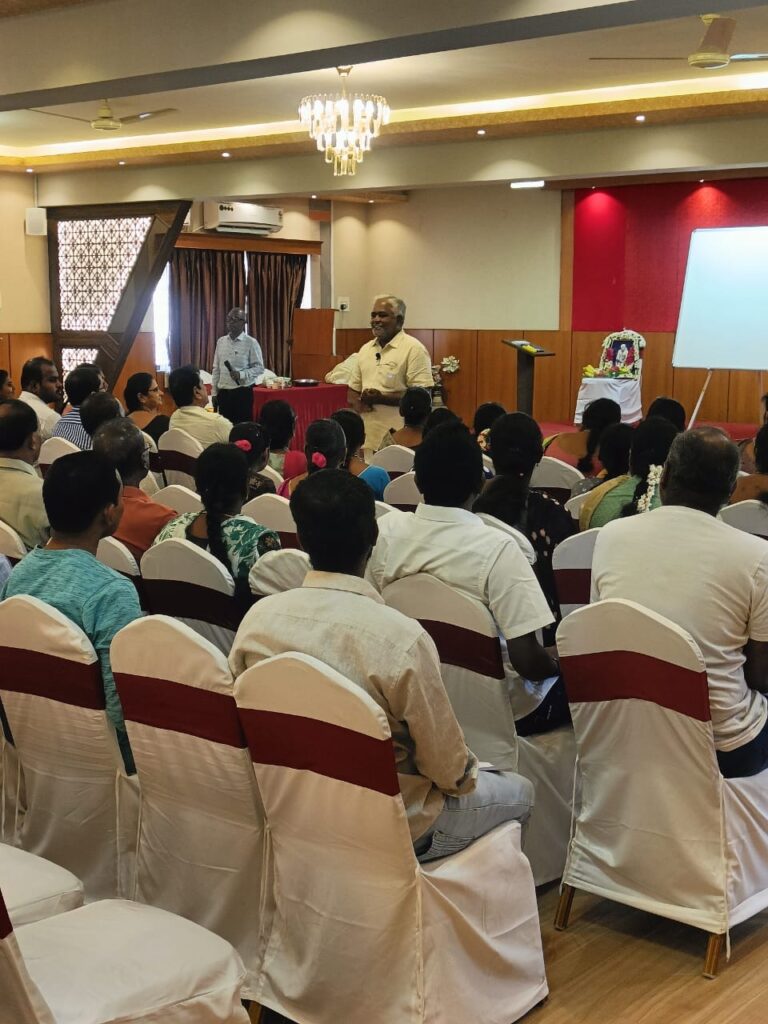
(Figure 5: Palpandian addressing a workshop)
How do you view the relationship between the Siddha tradition and Sanatana Dharma?
If by Sanatana Dharma one refers to the timeless lineage of India’s Rishis, then the Siddha tradition unquestionably belongs to that eternal stream. Over centuries, however, what was once an integrated body of knowledge gradually diversified into numerous specialised traditions. Certain streams developed into Tantra. Others evolved into Ashtanga Yoga. Still others became associated with various philosophical schools. Different regions adopted different names. In northern India, realised beings came to be known primarily as Rishis. In Tamil Nadu, they came to be known as Siddhas. The names differ. The essential realization remains the same.
Before we conclude, would you like to share any final thoughts?
Certainly. My reverence for Shirdi Sai Baba goes back many years. To me, Siddhahood is not determined by language, caste or community. It is a quality of being. By that measure, Shirdi Sai Baba embodied the spirit of a Siddha. His greatest teaching lay not in philosophical discourse but in the silent transformation that occurred through his presence.
The same may be said of Arunachala. For me, Arunachala is not merely a sacred hill or a historical pilgrimage centre. It is a living Siddha. Bhagavan Sri Ramana Maharshi himself referred to extraordinary experiences associated with Arunachala, recorded by Kunju Swami in My Reminiscences. These accounts speak of the living presence of realised beings associated with the mountain. To me, they beautifully illustrate the central truth of the Siddha tradition. The Siddha does not withdraw from existence. He remains present—ever-living, silently guiding those who are receptive. That is the enduring message of the Siddhas.
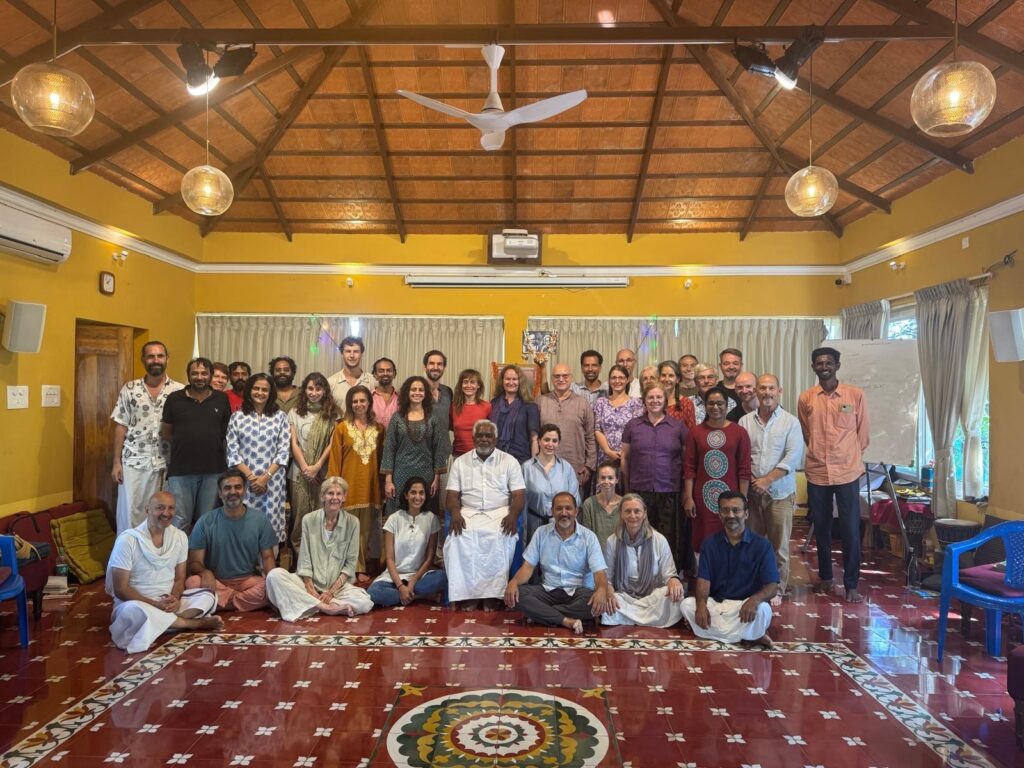
(Figure 6: With the participants of a retreat at Thiruvannamalai)
Finally, what message would you like to leave with our readers?
Modern life constantly pulls our attention outward. Consumerism, endless information and continuous distraction gradually distance us from our own inner being. Many people spend years without ever experiencing genuine stillness. When given free time, we instinctively reach for a mobile phone, television or some other distraction. We have forgotten how simply to be. The first step towards spirituality is therefore not extraordinary mystical experience. It is learning to relax deeply. It is learning to sit quietly with oneself. Only then the need for true self-realisation can begin.
Think of a farmer who works throughout the day and sleeps peacefully beneath the open sky. He has never studied neuroscience or meditation techniques, yet he often possesses a natural harmony that modern society has forgotten. Spirituality ultimately invites us to rediscover that simplicity. Within each one of us already exists a quiet presence waiting patiently to be recognised. We need only create the space to receive it.
Disclaimer: The opinions expressed in this article belong to the author. Indic Today is neither responsible nor liable for the accuracy, completeness, suitability, or validity of any information in the article.