
Sometimes, a journey begins long before one actually reaches the destination. In my case, the journey to Chikkamagaluru began in my mind nearly five decades before I ever set foot amid its mist-clad mountains. From the moment I first encountered the name, it somehow stayed with me, refusing to fade from memory.
As a schoolboy growing up in Kerala during the late 1970s, I often overheard animated political discussions among my father, his teacher friends, and visitors to our home. One place repeatedly found its way into those conversations—Chikkamagaluru. The otherwise tranquil hill town suddenly shot to national prominence in 1978 when former Prime Minister Indira Gandhi, following her humiliating defeat in the Rae Bareli constituency in the 1977 general election, contested and won the Lok Sabha by-election from Chikkamagaluru. Her victory brought the little-known town into the national spotlight, making it familiar to millions of Indians.
As newspaper features and travel magazines began introducing readers to this picturesque corner of Karnataka, another image gradually replaced the political one in my imagination—a landscape of emerald coffee plantations, lofty mountain peaks, sparkling waterfalls and ancient temples that had silently witnessed the passage of kingdoms. What had once been merely a parliamentary constituency slowly became my dream destination.
Dreams, fortunately, do not always fade with time. Sometimes, they simply wait for the right moment. That moment arrived in February 2022. After spending two delightful days amidst the serene landscapes of Sakleshpur, my wife Sreelakshmi and I continued our pilgrimage through the Malnad region of Karnataka towards Chikkamagaluru. The drive itself was worth the journey. As the road climbed gently into the Western Ghats, the scenery changed almost imperceptibly. The plains gave way to undulating hills. Thick forests alternated with neatly manicured coffee estates. Silver ribbons of waterfalls appeared unexpectedly between giant trees before disappearing into the valleys below. Every few kilometres offered another postcard-worthy panorama.
Unlike many hill stations that have been overwhelmed by commercialisation, Chikkamagaluru continues to retain much of its unspoilt beauty, charm, and elegance. The landscape has not been overwhelmed by concrete. Coffee plantations continue to dominate the countryside, while mountain ranges stand like silent sentinels guarding centuries of history and tradition.
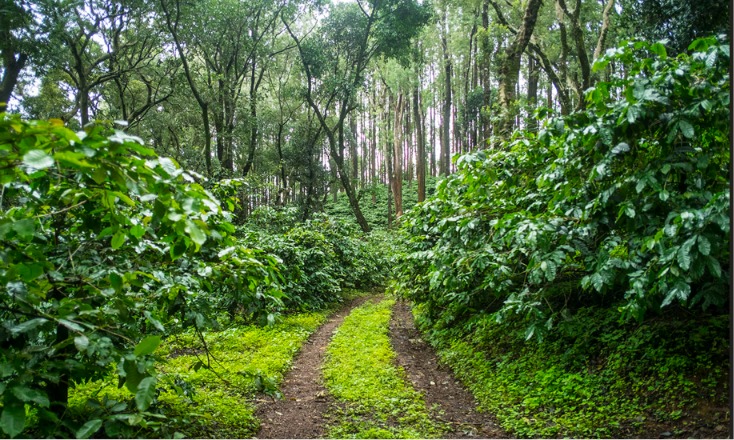
(Figure 1: A coffee estate in Chikkamagaluru, the cradle of India’s coffee culture.)
As we entered the town towards evening, another sensation welcomed us even before its sights did—the rich, inviting aroma of freshly roasted coffee. It drifted through the streets from cafés, roasting houses, and coffee merchants, filling the cool mountain air with an irresistible fragrance. It seemed as though the entire town breathed coffee. For me, an ardent filter-coffee enthusiast, the experience was nothing short of delightful. The familiar aroma instantly lifted my spirits, filling me with a sense of cheerfulness, and anticipation. That was hardly surprising, for Chikkamagaluru is widely regarded as the cradle of India’s coffee culture.
It is here that the story of Indian coffee is believed to have begun nearly four centuries ago. According to a cherished local tradition, the Sufi saint Baba Budan returned from Arabia in the seventeenth century carrying seven coffee beans hidden in his robes, defying the Arab monopoly on coffee cultivation. Those precious beans were planted on the slopes of the Chandradrona Hills, now known as Baba Budangiri. From this modest beginning emerged one of India’s most celebrated coffee-growing regions, whose plantations today contribute significantly to the country’s premium coffee production. Yet Chikkamagaluru is much older than its coffee.
The very name of the town carries echoes of an earlier age. In Kannada, Chikka means “younger,” Magala means “daughter,” and Ooru means “town.” According to local legend, the region was gifted as a dowry by the ruler Rukmangada of Sakrepatna to his younger daughter. Her elder sister is said to have received the neighbouring town of Kadur. Whether history or folklore, the story lends the town a charming identity that has endured through generations.
Nestled at an elevation of about 1,000 metres above sea level and embraced by the lofty ranges of the Western Ghats, the district enjoys a pleasant climate throughout much of the year. The district forms part of the biodiversity-rich Malnad region, where tropical forests nurture an astonishing variety of flora and fauna. During the monsoon, clouds descend upon the hills, waterfalls spring to life, and the entire landscape is transformed into a luxuriant green paradise.
Karnataka’s most celebrated natural landmarks—Mullayanagiri, rising to 1,930 metres as the State’s highest peak, the nearby Baba Budangiri Hills, Hebbe Falls, Jhari Falls, Hirekolale Lake, Ayyanakere Lake, and Kemmangundi—draw nature lovers, photographers, and trekkers throughout the year. For many visitors, these spectacular landscapes alone justify the journey.
Our itinerary, however, followed a slightly different path. Although we never tire of mountains and forests, our travels across Bharat have always been guided by another enduring passion—the exploration of her sacred geography. Behind every hill, river or ancient settlement often lies a temple, an ashram, or a forgotten shrine preserving stories that seldom find a place in history textbooks. We have increasingly discovered that to understand India, one must journey not only through her landscapes but also through her temples and ashrams.
Consequently, after spending a day enjoying the breathtaking natural beauty of Chikkamagaluru and its surroundings, we turned our attention towards the region’s spiritual heritage. This proved to be one of the most rewarding decisions of our journey.
A short drive from the town leads to a constellation of remarkable temples whose history spans nearly a millennium. Some are magnificent creations of the illustrious Hoysala dynasty, celebrated for producing some of India’s most exquisite temple architecture. Others trace their origins to even earlier times, preserving ancient traditions that have endured through the ages. Each shrine is far more than a place of worship; it stands as a living testament to extraordinary artistic craftsmanship, architectural ingenuity, enlightened royal patronage, and the enduring resilience of Hindu civilisation, which has withstood centuries of political upheaval while preserving its sacred heritage.
Towering above the surrounding hills is Mullayanagiri, the highest peak in the State. The winding mountain road climbs through thick coffee plantations and sweeping grasslands before reaching the summit, where clouds often drift across the landscape even on bright days. The panoramic view from the top is simply breathtaking. Layer upon layer of mountain ranges fade into the horizon, while valleys carpeted with forests stretch endlessly below.
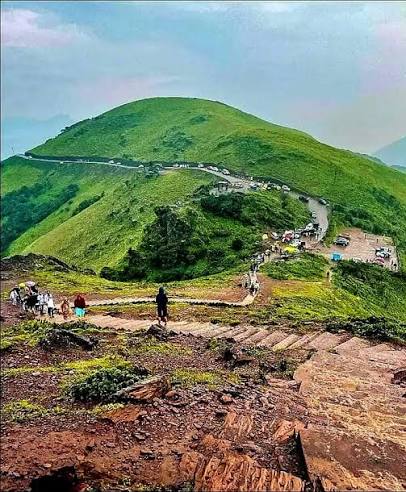
(Figure 2: The winding pathway leading to Mullayanagiri, Karnataka’s highest peak.)
At the summit stands a modest shrine dedicated to Lord Shiva, worshipped here as Mullappa Swamy. Unlike the magnificent stone temples we would encounter later in our journey, this small hill shrine derives its sanctity not from architectural grandeur but from its location amidst the sublime majesty of nature. Local tradition associates the hill with the sage Mullappa, whose penance is believed to have sanctified the mountain. Pilgrims, trekkers and nature enthusiasts alike climb the final flight of steps to seek the Lord’s blessings while simultaneously absorbing one of the finest panoramic vistas in southern India.
Standing there, with cool mountain winds brushing past and clouds floating almost within touching distance, it became easy to understand why sages throughout Indian history sought the solitude of mountains for meditation. Here, the silence itself seemed sacred.
In the Footsteps of the Hoysalas
Leaving behind the lofty heights of Mullayanagiri, we descended into a landscape that bore witness to the genius of an extraordinary civilisation. The roads that meander through Chikkamagaluru district pass sleepy villages, fertile paddy fields, coconut groves and coffee estates, giving little indication that some of India’s greatest architectural masterpieces lie hidden within these quiet settlements.
Unlike the celebrated temple towns of Madurai, Kanchipuram or Bhubaneswar, many of the ancient shrines around Chikkamagaluru remain blissfully untouched by mass tourism. There are no long queues, no bustling commercial complexes surrounding the temples, and very little noise beyond the occasional temple bell or birdsong. One often has the rare privilege of admiring these monuments in peaceful solitude, allowing both the architecture and the atmosphere to speak for themselves.
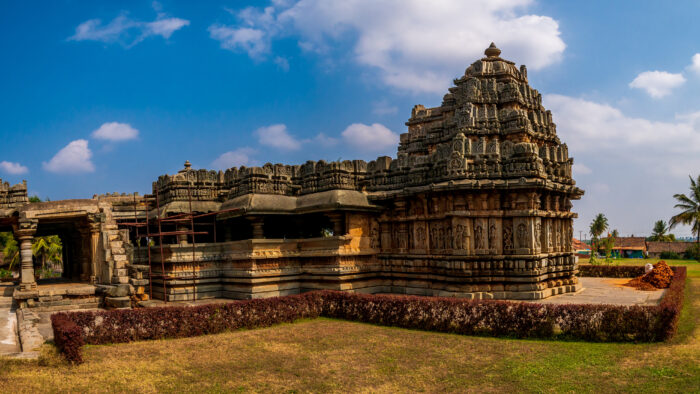
Our first destination was the magnificent Sri Veeranarayana Temple at Belavadi, situated about thirty kilometres from Chikkamagaluru. The drive itself was a pleasure. The countryside unfolded gently before us—green fields, arecanut gardens, village homes shaded by towering trees, and distant hills seemed to accompany us throughout the journey. As we approached Belavadi, the imposing temple gradually emerged above the village skyline. At first glance, its exterior appears restrained, almost austere. Yet as one steps closer, the quiet dignity of Hoysala architecture begins to reveal itself.
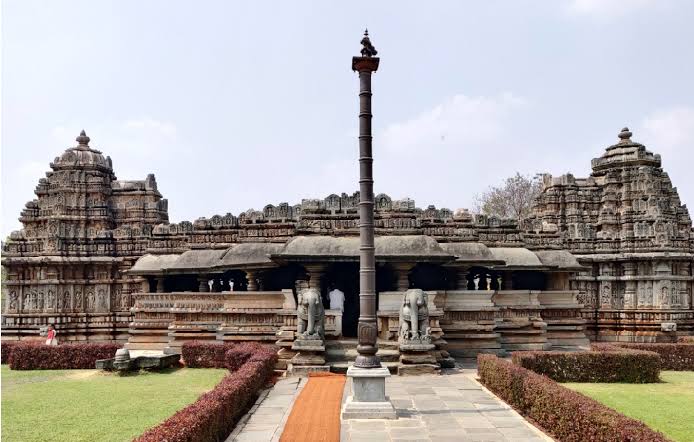
(Figure 3: Sri Veeranarayana Temple, Belavadi—one of the finest Hoysala temples.)
Belavadi occupies an honoured place in the history of Hoysala architecture. The Veeranarayana Temple was commissioned in the early thirteenth century, around 1200 CE, during the reign of the celebrated Hoysala monarch Veera Ballala II, one of the greatest rulers of the dynasty. By this time, the Hoysalas had emerged as a formidable power in southern India, extending their influence across much of present-day Karnataka and parts of Tamil Nadu and Andhra Pradesh.
The Hoysalas were not merely successful rulers; they were among India’s greatest patrons of art and architecture. Their temples represent the culmination of centuries of experimentation in stone, combining religious devotion with astonishing technical mastery. It was during this golden age that masterpieces such as Belur, Halebidu, Somanathapura, Amruthapura and Belavadi came into being.
Dedicated to Lord Veeranarayana, a majestic form of Lord Vishnu, the temple is unique for its Trikuta (three-shrined) plan. Unlike many Hoysala temples that follow a star-shaped layout, Belavadi combines elegant proportions with remarkable spatial harmony. The principal sanctum enshrines Veeranarayana in a standing posture, while the lateral shrines are dedicated to Yoga Narasimha and Venugopala, presenting three distinct manifestations of Vishnu.
Walking through the spacious navaranga hall, we were immediately struck by the remarkable symmetry of the structure. Graceful lathe-turned pillars rise effortlessly to support intricately carved ceilings, each displaying floral motifs, celestial dancers and geometric designs executed with extraordinary precision. Even after more than eight centuries, the polish on many of these soapstone pillars continues to reflect light with remarkable brilliance. Every sculpture appears purposeful; every carving contributes to the overall harmony of the monument.
The temple walls narrate stories from the Ramayana, Mahabharata and the Bhagavata Purana. Episodes from Krishna’s childhood, heroic exploits of the Pandavas, and scenes from the life of Rama unfold across the stone panels with astonishing vitality. The sculptors were not merely craftsmen; they were storytellers who transformed sacred literature into visual poetry. One cannot help wondering how these anonymous artists, working with simple chisels and hammers, achieved such astonishing finesse. Jewellery appears delicate enough to move, garments seem to flow naturally over the bodies of deities, and even the expressions on human faces convey profound emotion.
The temple has survived the turbulent centuries that witnessed repeated invasions across southern India. Although the Hoysala kingdom gradually declined following military campaigns led by the Delhi Sultanate during the early fourteenth century, many of its temples endured owing to the resilience of local communities who continued worship despite political upheavals. Today, the Veeranarayana Temple is protected by the Archaeological Survey of India, ensuring that this jewel of Hoysala architecture continues to inspire future generations. After spending nearly an hour admiring its sculptures and absorbing its tranquil ambience, we reluctantly took leave of Belavadi.
Sri Kodandarama Temple, Hiremagaluru
Hiremagaluru, literally meaning “the town of the elder daughter,” stands in delightful contrast to Chikkamagaluru—the “town of the younger daughter.” According to local folklore, both settlements were established as gifts to the two daughters of the ancient ruler Rukmangada, preserving a charming family memory in the geography of Karnataka itself.
The Sri Kodandarama Temple occupies a special place among Rama temples in southern India. While the present structure reflects contributions from various dynasties—including the Gangas, Cholas, Hoysalas and later Vijayanagara rulers—the temple’s sacred tradition is believed to be far older.
According to local legend, Sage Parashurama himself performed the celestial marriage (Kalyana) of Lord Rama and Goddess Sita at this very spot after the coronation of Rama at Ayodhya. Consequently, the principal deity depicts Rama and Sita not in the familiar coronation posture but in the unique Kalyana form.
Interestingly, in most temples, Sita stands to Rama’s left. Here, however, she stands to His right, signifying the sacred wedding ceremony. Lakshmana, ever devoted to his elder brother, stands nearby with folded hands, while Hanuman occupies a place of reverence before the divine couple. The priest explained that this unusual arrangement is deeply cherished by devotees and is regarded as one of the defining features of Hiremagaluru.
Architecturally, the temple reflects several centuries of additions and renovations. Its entrance gateway belongs to a later period, while portions of the sanctum exhibit characteristics of early medieval Karnataka temple architecture. Beautiful stone pillars, intricately carved doorways and sculpted lintels reveal the artistic continuity that flourished under successive Hindu dynasties. Here, I felt that the emphasis is not on architectural extravagance but on devotional continuity. For centuries, pilgrims have gathered before these deities to celebrate Rama Navami, recite the Ramayana, and seek the blessings of the divine couple.
As we sat in quiet contemplation within the temple precincts after the evening deeparadhana, a gentle breeze carried the lingering fragrance of jasmine flowers offered at the sanctum. The rhythmic chanting of the priest filled the air with a profound sense of devotion and serenity.
Moments such as these reminded us why India’s ancient temples continue to draw pilgrims across generations. Their true greatness lies not merely in their magnificent architecture or historical antiquity, but in the unbroken continuity of living worship that has endured through the centuries. Dynasties and kingdoms have flourished and faded, and waves of invasion have ravaged the land, its people, and its cultural heritage. Yet, despite every turbulance, the sacred flame of devotion has never been extinguished, sustained through the unwavering faith, courage, and sacrifices of countless generations. It continues to burn with unwavering radiance, linking the present to an unbroken civilisational legacy that stretches back through the ages.
As twilight gently enveloped Hiremagaluru, bringing our day’s pilgrimage to a satisfying close, we sought the comfort of our hotel. There, we savoured the simple yet delightful flavours of traditional Karnataka cuisine—soft akki roti, delicate neer dosa, and a perfectly crisp masala dosa—a fitting finale to a day enriched by devotion and discovery.
Mist, Mysticism and Monuments in Stone
The next morning mist still lingered over the surrounding hills as we set out towards one of Karnataka’s most fascinating destinations—the legendary Baba Budangiri. Few places in South India possess such a remarkable blend of natural beauty, spirituality, history and cultural memory.
The road from Chikkamagaluru gradually climbs into the Chandradrona mountain range, named after its crescent-shaped profile that resembles the mythical Dronagiri mountain mentioned in the Ramayana. Every bend reveals a changing panorama—deep valleys blanketed with forests, slopes carpeted with coffee plantations, distant waterfalls cascading down rocky cliffs, and clouds floating lazily across the mountain peaks.
At an altitude of nearly 1,900 metres lies the sacred shrine popularly known as Datta Peetha or Baba Budangiri. Few shrines in India possess a history as layered and intriguing as this one. For countless Hindu devotees, the hill is revered as the meditation site of Lord Dattatreya, the combined manifestation of Brahma, Vishnu and Maheshwara. Ancient traditions hold that Sri Dattatreya performed intense tapas on these serene mountains, sanctifying the entire region. Pilgrims climbing the hill often experience an indescribable sense of serenity, perhaps born of centuries of uninterrupted spiritual practice.
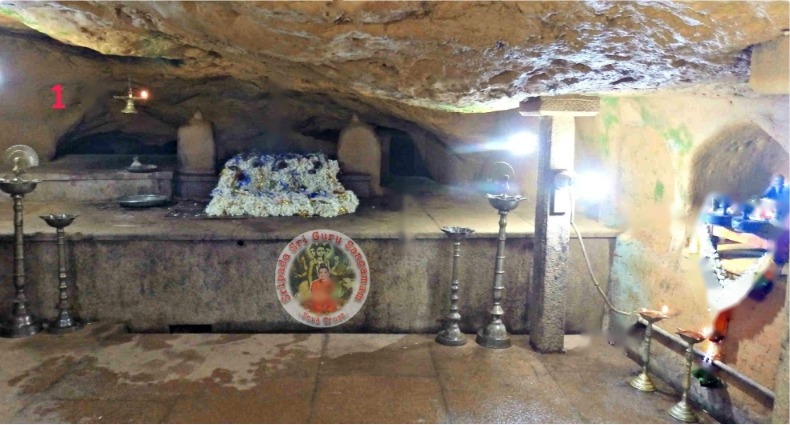
(Figure 4: Datta Peetam, Baba Budhangiri)
Centuries later, during the seventeenth century, Muslims came up with the story of a Sufi saint, popularly known as Baba Budan, who made these hills his abode. They created the story of his introducing coffee cultivation to India after bringing seven coffee beans from Yemen. Though not historically verifiable, it is believed that Baba Budan popularised coffee cultivation in this region.
Thus, these hills, too, became yet another site of confrontation in India, joining the long list of places marked by invasions and destructions. In recent decades, the Datta Peetha has to initiate legal process to prove its legitimate character and traditional patterns of worship. One cannot overlook the fact that the shrine continues to be deeply revered by lakhs of Hindu pilgrims, who regard it as one of the most important centres of Dattatreya worship in southern India.
Standing inside the ancient cave shrine with heads bowed in reverence, surrounded by towering cliffs, I felt that the silent majesty of the mountains seemed to speak more eloquently than any historical debate.
Within the dimly lit cavern, the spiritual heart of the shrine is the pair of silver-plated padukas, revered by devotees as the sacred footprints of Lord Dattatreya and a symbol of His eternal presence. Nearby stands the ancient stone Peetha, traditionally believed to be the very seat where the Lord performed intense tapas. The soft glow of the Akhanda Jyoti—the eternal oil lamp that has been kept burning continuously by generations of priests—dispels the darkness of the cave, filling it with an atmosphere of quiet sanctity. Completing the sacred experience is the crystal-clear water that emerges naturally within the cave complex. Revered as theertha, it is received by pilgrims as a blessed reminder of the shrine’s timeless spiritual grace.
As we stepped out of the cave and gazed once more at the mist-covered hills, we carried with us the profound feeling of having encountered a great living tradition of hundreds of years. From the summit, the panorama is unforgettable. Endless ranges of the blue Western Ghats disappear into the horizon, while valleys below shimmer under changing sunlight. During the monsoon these mountains transform into a sea of green, punctuated by numerous seasonal waterfalls that tumble down rocky escarpments. It is easy to understand why saints sought solitude here. The mountains themselves seem to inspire meditation.
The Soul of Chikkamagaluru
Descending from Baba Budangiri, we paused at one of the numerous viewpoints overlooking sprawling coffee plantations. Coffee is far more than an agricultural crop in Chikkamagaluru. It has shaped the district’s economy, landscape, architecture and culture for over three centuries. The neatly pruned coffee bushes, shaded by lofty silver oak trees and interspersed with pepper vines, create a unique ecosystem where agriculture and biodiversity coexist harmoniously.
Many estates still preserve charming colonial-era bungalows built during the nineteenth century when British planters expanded coffee cultivation across the Malnad region. Today, these heritage estates have been transformed into delightful homestays, allowing visitors to experience plantation life while enjoying traditional Malnad cuisine.
Walking through a coffee estate is an experience unlike strolling through a conventional farm. The cool shade, the fragrance of blossoms, the chirping of birds and the gentle rustling of leaves create an atmosphere of remarkable tranquillity. During flowering season, millions of delicate white blossoms cover the bushes, earning them the poetic description—“the jasmine of the coffee world.” It seemed entirely fitting that a district so deeply rooted in nature should also preserve some of Karnataka’s greatest monuments.
Sri Lakshmi Narasimha Temple, Javagal
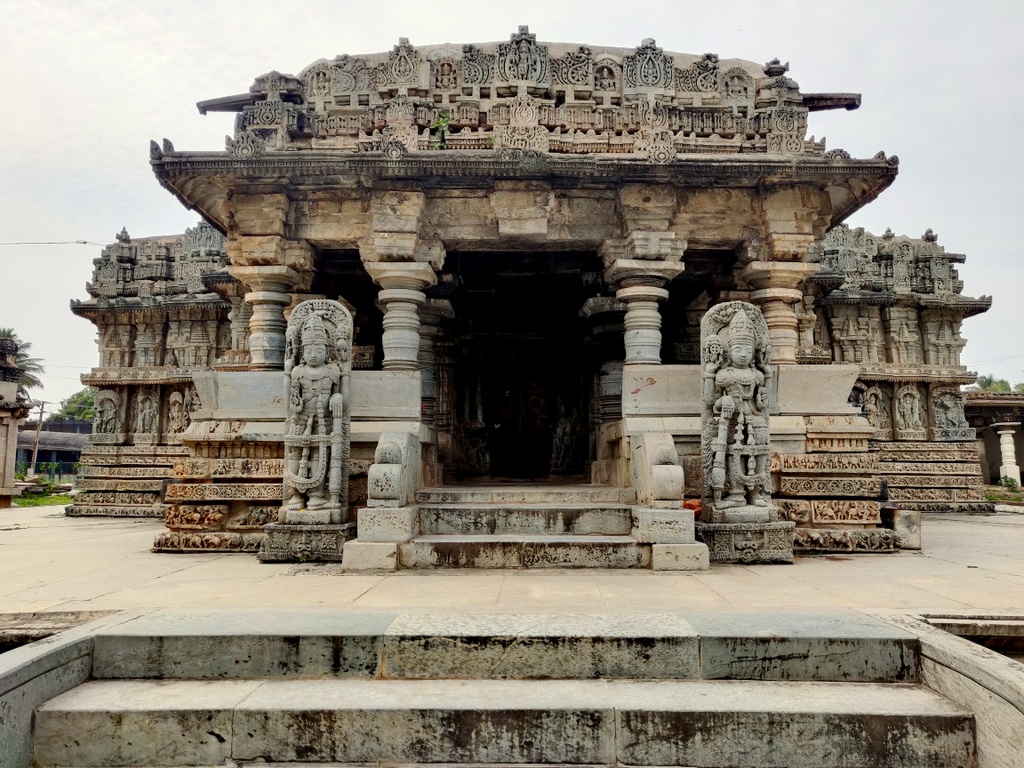
(Figure 5: Sri Lakshmi Narasimha Temple, Javagal.)
Nestled amidst serene rural surroundings, the Lakshmi Narasimha Temple at Javagal is a hidden Hoysala masterpiece that rarely finds a place on mainstream travel itineraries. Built in 1250 CE by King Vira Someshwara, it represents the mature phase of Hoysala architecture. Though smaller than the celebrated temples of Belur and Halebidu, it displays the same extraordinary craftsmanship, with intricate life-sized soapstone carvings, a distinctive stellate (star-shaped) layout, and three separate shrines dedicated to Lakshmi Narasimha, Sridhara, and Venugopala.
Dedicated to Lord Narasimha, the fourth incarnation of Lord Vishnu, the sanctum enshrines the deity seated majestically with Goddess Lakshmi upon His lap, symbolising the transformation of divine wrath into cosmic compassion following the destruction of the demon Hiranyakashipu. The temple stands upon the characteristic jagati, or raised platform, allowing devotees to circumambulate the shrine while simultaneously admiring its sculptural programme.
Every inch of the outer walls appears animated. Rows of elephants symbolise strength and stability. Above them march cavalry, processions, mythical yalis, graceful swans, intricate creepers and episodes from the Ramayana, Mahabharata and Bhagavata Purana. Each horizontal frieze contributes to a carefully conceived visual narrative that reflects not only religious themes but also the social life, music, dance and military traditions of medieval Karnataka.
Inside the temple, the polished pillars display remarkable geometric perfection. The sculptors exploited the softness of chloritic schist—popularly known as soapstone—to achieve astonishing delicacy, while ensuring that the finished structure would harden with age. Unlike many monuments where worship has ceased, Javagal remains a living temple. The fragrance of sandalwood paste, fresh flowers and burning lamps reminded us that this was not merely an archaeological monument but a sacred space where centuries-old rituals continue uninterrupted.
Poetry in Stone
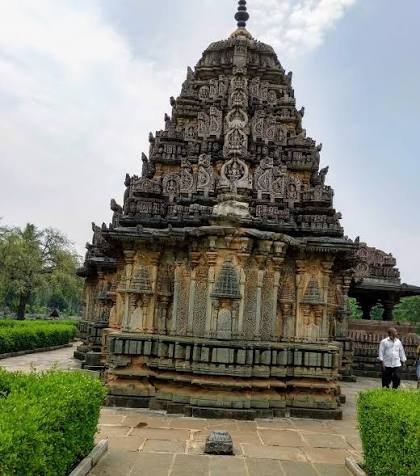
(Figure 6: The magnificent Sri Amruteswara Temple at Amruthapura.)
If one temple in the Chikkamagaluru region deserves to be called an open-air museum of Hoysala sculpture, it is undoubtedly the Amrutesvara Temple at Amruthapura. Built in 1196 CE during the reign of King Veera Ballala II, the temple was commissioned by his distinguished military commander Amrutesvara Dandanayaka, from whom both the temple and the village derive their names. Dedicated to Lord Shiva as Amrutesvara, this magnificent monument represents the artistic confidence of the Hoysala Empire at its zenith.
The moment we entered the temple courtyard; our attention was irresistibly drawn to its extraordinary sculptural richness. Unlike many medieval temples where decorative elements appear repetitive, every panel here possesses its own identity. Hundreds of exquisitely carved figures cover the exterior walls, transforming stone into an illustrated chronicle of Hindu civilisation.
One of the temple’s greatest artistic treasures is its continuous sculptural narration of the Ramayana. Running across the walls like a beautifully illustrated manuscript, these panels depict episode after episode from Valmiki’s immortal epic with astonishing narrative clarity. Warriors ride into battle, monkeys leap across the ocean, Ravana’s court comes alive with dramatic intensity, while Rama’s coronation concludes the sequence in regal splendour.
The precision achieved by the sculptors remains almost unbelievable. Jewellery appears delicate enough to sway in the breeze. Fingernails, strands of hair, musical instruments, weapons and even the folds of garments have been rendered with microscopic attention to detail.
Equally impressive is the engineering behind the monument. The Hoysalas perfected sophisticated stone-joining techniques employing interlocking systems, concealed joints and precision-cut masonry that allowed enormous structures to stand for centuries without modern cement. Every block appears to fit seamlessly into the next, demonstrating a remarkable understanding of structural mechanics.
As we slowly walked around the temple, we repeatedly found ourselves pausing in silent admiration. Each circuit around the shrine revealed details overlooked during the previous one. It was impossible to absorb the artistic wealth of the monument in a single visit.
The renowned art historian Percy Brown once observed that Hoysala temples represent the climax of decorative architecture in medieval India. Standing before the Amrutesvara Temple, his words seemed entirely justified. The afternoon sun was beginning to soften as we concluded our visit.
As we drove back towards Chikkamagaluru that evening, the significance of our journey gradually became clearer. Most visitors associate Chikkamagaluru with coffee plantations, mountain trekking and pleasant weather. Indeed, it offers all these in abundance. Yet to view it merely as a hill station is to overlook its deeper identity. Like many other parts of India, this region is a rich repository of the nation’s sacred and artistic heritage.
Indian temples were never conceived simply as places of worship. They were universities of sculpture, centres of music and dance, repositories of sacred literature, hubs of community life and symbols of civilisational confidence. Every pillar, every ceiling panel and every sculpted frieze carried philosophical meaning. Geometry, engineering, and architecture became expressions of prayer.
Long before modern engineering software or mechanised machinery, they raised enormous monuments using precisely cut stone blocks fitted together through ingenious interlocking systems. Massive ceilings appear to float effortlessly upon exquisitely carved pillars. The remarkable durability of these structures stands as eloquent testimony to the scientific knowledge possessed by ancient Indian architects and sthapatis.
Standing before these temples, one is reminded of the profound observation made by Sri Aurobindo: “An Indian temple, to whatever godhead it may be built, is in its inmost reality an altar raised to the Divine Self, a house of the Cosmic Spirit, an appeal and an aspiration to the Infinite.” Those words accompanied us throughout our pilgrimage.
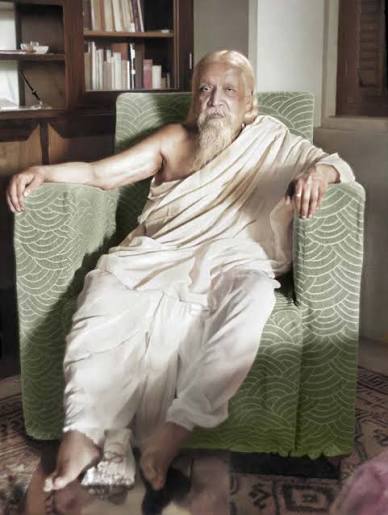
(Figure 7: Sri Aurobindo, whose words beautifully capture the spiritual significance of Indian temples.)
In all the temples we experienced the same underlying truth—that India’s temples are far more than historical monuments. They are living embodiments of a civilisation that viewed art as worship and beauty as a pathway to the Divine.
As our pilgrimage drew to a close, the rich fragrance of coffee once again filled the evening air. Being an ardent coffee lover, I found it impossible to leave without savouring one final cup. Sreelakshmi gently suggested that we stop at a roadside coffee stall. For the modest sum of just ₹15, we were served a generous cup of exquisitely brewed coffee whose rich flavour lingered long after the last sip. Delighted by its freshness and aroma, and at Sreelakshmi’s insistence, we purchased a kilogram of finely ground coffee to carry home.
Many travellers leave Chikkamagaluru with bags of freshly roasted coffee. We too carried home its finest coffee, but far more precious were the memories of an unforgettable pilgrimage through sacred temples, breathtaking landscapes, and the warm hospitality of its people, along with appreciation of the spiritual and artistic genius that has shaped Bharat for millennia.
For those seeking only cool weather and scenic landscapes, this land will undoubtedly delight. But for those willing to look beyond its coffee estates and mountain peaks, it offers something richer—a journey into the great civilization called Sanatana Dharma. And that, perhaps, is the true fragrance of the land of the younger daughter.
Disclaimer: The opinions expressed in this article belong to the author. Indic Today is neither responsible nor liable for the accuracy, completeness, suitability, or validity of any information in the article.