
People who know of my pilgrimages to Gurus often pose a question that lingers with quiet intensity: “Have you ever encountered a realized master — one in the mould of Sri Ramana Maharshi?” For long, I had no answer that felt complete. But now, with a deep and unshakable conviction, I can say: Yes — I have had the darshan of such a presence, in Sadguru Subrahmanyam of Srikalahasti.
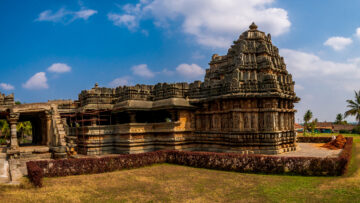
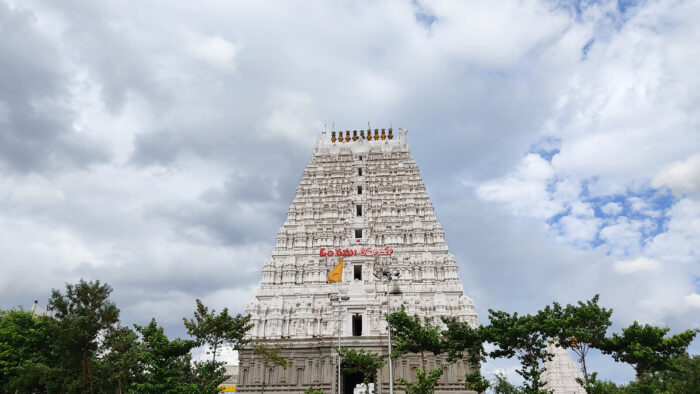
Two years ago, my wife Sreelakshmi and I found ourselves in Tirupati, the bustling spiritual city nestled in the Eastern Ghats. The warmth of our stay was enhanced by the gracious hospitality at the Sri Aurobindo Guest House, arranged through the kindness of Sri Vikram, a friend and Chartered Accountant, based there. Yet, our spiritual journey led us beyond the temple town to the quiet, revered land of Srikalahasti, renowned for its Panchabhuta temple that embodies the element of Vayu (air). This path was inspired by a conversation with our family friend, Sri Mohana Krishna of Hyderabad, who spoke to us of a Jnani, reminiscent of Ramana Maharshi, residing there. His words stirred a deep curiosity in us, making our visit feel almost inevitable, as if we were being gently led to encounter a spiritual presence whose simplicity and depth had quietly transformed the lives of many seekers.
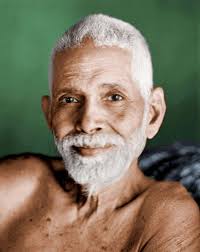
(Figure 1: Bhagwan Sri Ramana Maharshi)
Sri Vikram arranged a car, and soon we were driving along dusty, winding roads, with hills and stretches of lush greenery visible in the distance. Along the way, we passed through small villages where a few tea shops, bakeries, and provision stores stood by the roadside, and fruit sellers could also be seen adding a touch of local life to the journey. As time passed, the journey itself began to invite quiet introspection. The landscape, though simple, carried a stillness that gradually slowed our minds and attuned our hearts to a deeper, unspoken rhythm. Our destination was the modest home of a modern-day mystic—Sadguru Sri Subrahmanyam.
Simplicity and Stillness
What greeted us wasn’t a sprawling ashram or an ornate temple, but a simple white-walled home exuding a sense of timelessness. The atmosphere was unassuming — no crowds, no rituals, just a quiet courtyard and an even quieter room. There, for an hour, we sat in the serene presence of Sadguru Subrahmanyam Garu, along with about five or six of his close disciples, enveloped in deep silence and peace.
There were no elaborate introductions, no discourses. And yet, the silence said it all. It was a different kind of darshan—one of presence rather than performance. In that modest setting, the stillness was palpable. What emanated from him was not charisma but calm, not sermon but serenity. We found ourselves enveloped in a profound peace, as if time had come to a standstill. It wasn’t about what was said, but about who he was.
Rooted in the spiritually potent soil of Srikalahasti — regarded by many as the mancham (throne) of his life and teachings — Sadguru has been leaving an indelible imprint on the spiritual landscape of South India. A prolific writer and spiritual communicator, he authored several volumes that serve not just as literature, but as tools of awakening. His works in Telugu —”Sadguru Hrudhayam“, “Sadguru Dharshanam“, “Gnana Prasoonalu“, “Ippudu Ikkada Ila“, and “Paramapadam“—offer reflections, dialogues, and aphorisms meant to awaken the dormant truth within each reader.
Core Teachings
At the heart of Sadguru’s message lies a simple but profound truth — lasting peace is possible only through the realization of the Self. He does not urge people to withdraw from life, but to let go of their false sense of identity. His words, often described as divine sayings from the heart, continue to guide seekers toward this realization. As he once said, “A path to eternal happiness was discovered by Sadguru Subrahmanyam. Eternal happiness can only be attained through realizing your true Self.”
In another succinct insight, he observes, “Everything, including myself, exists within me.” This single line captures the essence of Advaita — not as a lofty philosophy, but as an intimate, lived experience. In his book Gnana Prasoonalu, Sadguru echoes a timeless Upanishadic truth: “The soul itself chooses whom to reveal itself to. This is the core teaching of the Upanishads.”
He often clarifies that the true spirit of the Bhagavad Gita lies not in giving up action (karma sannyasa), but in dissolving the ego that claims to act. As he puts it, “Karma renunciation and renouncing the fruits of action is not the essence of the Gita. Erasing the feeling ‘I am the doer’ — that is.”
A Personal Reflection
That hour-long silent darshan remains etched in our memory. There were no formal ceremonies, no rituals, no blessings bestowed — yet something profound occurred. A subtle shift, a deep quietness descended. We, along with the few devotees present, simply gazed at Sadguru’s luminous face. Dressed in simple shorts and a white banian, he radiated a natural ease and serenity that words cannot describe.
After some time, tea and biscuits were served to everyone. A few devotees spoke with him in Telugu, asking questions which he answered gently in the same language. We could not follow the conversation, as we did not know Telugu. Though some around us knew English, for some reason no questions arose in our minds. We simply sat there in silence, observing Sadguru keenly — his calm gestures, his stillness, and the unspoken grace that filled the room.
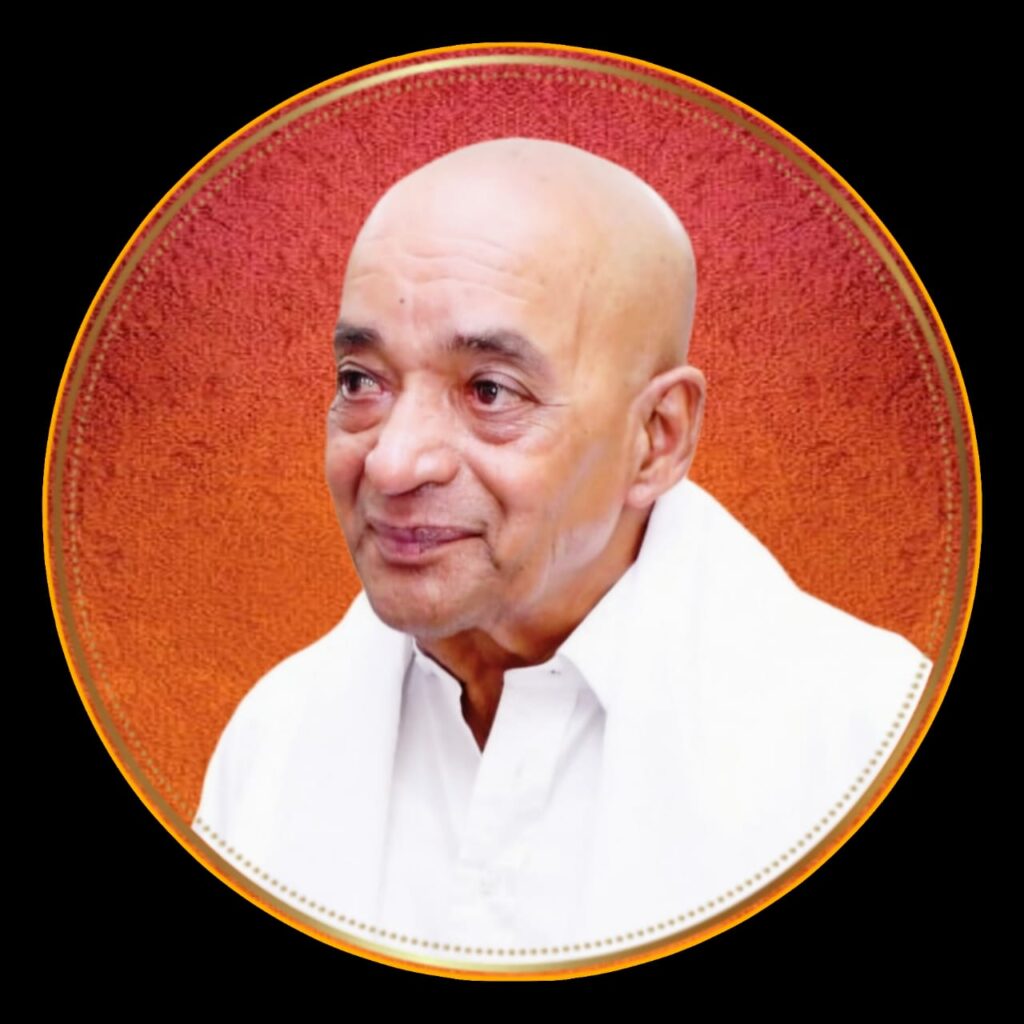
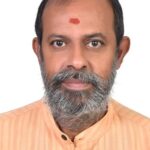
(Figure 2: Sadguru Subrahmanyam)
It became clear that the deepest communication often happens beyond words — in the silent radiance of a realized being.
After a while, as the quiet stillness deepened, an inner prompting arose within Sreelakshmi to offer a bhajan. Seeking Sadguru’s permission, she began to sing — her melodious rendering of “Prabhuji Dayakaro Mana mein an baso…,” a traditional Hindi bhajan and a favourite of the legendary Pandit Ravi Shankar ji, who popularized it. The words, a humble cry to the Lord for mercy, carried the spirit of surrender — a devotee’s earnest plea for the Divine to dwell within the heart and suffuse life with love. In that shared devotion, the song unfolded as a living prayer. Sadguru’s face grew radiant as he listened; he nodded in gentle appreciation, a soft smile playing upon his lips. Then, raising his hand, he blessed her. It was a moment that revealed itself in stillness, yet touched us with a depth beyond expression — a grace quietly received rather than spoken.
What we encountered in Srikalahasti was not a guru performing miracles or grand gestures. What we found was far rarer: a living embodiment of stillness, a mirror of self-awareness, a radiant silence that spoke volumes. As the website Athyashramam rightly puts it:
“Everything including myself, exists within me.” This is not merely a quote—it is an invitation. An invitation to turn inward, to recognize the Self, and to walk the path in stillness.
When it was time to bid farewell to Sadguru, the same quiet grace that had marked our meeting stayed with us. He gently agreed to take photographs, his smile unassuming and full of warmth. We offered our sastanga namaskarams, and with a certain heaviness of heart, began to take leave. Sadguru sat there with a benevolent smile, gently waving his hand in blessing, his gaze following us in silence until we passed beyond the gate and out of sight. Even as we drove away, the stillness lingered within. In the car, Vikram spoke at length about the personal struggles he had faced in life and how Sadguru’s intermittent guidance and benign presence had together brought about a profound inner transformation.
Meeting him was not merely an outer encounter; it was an inner awakening. In that simple home we experienced a rare stillness — a silence that seemed to flow directly from the source of Being itself. His presence was not dramatic or overwhelming; it was gentle, and deeply transforming.
As we left his home, the world outside seemed softer, lighter, and more luminous. The air itself felt charged with peace. There were no grand sermons, no outward miracles — only the quiet miracle of the heart touched by grace.
As time passed, the ripples of that sacred encounter continued to flow quietly through our lives, leaving behind a lasting fragrance of peace and clarity. The inner stillness we experienced has stayed with us, like a silent melody that deepens with each passing day. What touched us most was the simplicity of the teaching — no spiritual jargon, no elaborate rituals, only direct truths offered through silence and gentle guidance. It was a rare glimpse of authentic spirituality — free from hierarchy, devoid of spectacle, resting solely in presence, humility, and truth. In its quiet way, that moment became a timeless reminder of what the spiritual path truly means.
In the days that followed, that silent hour with Sadguru continued to echo within. It reminded us that the greatest teachers do not teach through words, but through the living example of their own stillness. For us, meeting Sadguru Subrahmanyam Garu was like standing in the presence of truth itself — simple, vast, and eternal.
For more details please visit: https://athyasramam.com
…The life of Sadguru Sri Subrahmanyam follows
Feature Image Credit: IStock
Disclaimer: The opinions expressed in this article belong to the author. Indic Today is neither responsible nor liable for the accuracy, completeness, suitability, or validity of any information in the article.