
“Realization is not about adding to yourself, but about seeing what cannot be taken away.”
1. Introduction: The Silent Question in Every Seeker
What does it truly mean to be realized? This question has stirred the hearts of seekers for centuries. It is not a query confined to scholars or monks. It is the quiet wonder that arises in anyone who has paused, even for a moment, to look beyond the routines of life. Across cultures and traditions, people have searched for something beyond fleeting pleasures and painful struggles. Words like enlightenment, liberation, or awakening all point to a state that cannot be easily captured.
The Upanishads, those timeless records of ancient India, speak with a rare clarity about this state. They do not speak in riddles but in a voice that penetrates the restless mind. Ādi Śaṅkarāchārya, one of the greatest interpreters of these texts, distilled their wisdom into a vision that has guided seekers for more than a thousand years. He pointed again and again to one truth: realization is not about becoming someone extraordinary. It is about recognizing what you have always been.
This article takes us into the heart of that vision. It explores the qualities of the realized one, the inner shifts that unfold on the path, and the way such a being lives in the world. More than doctrine, it is an invitation to reflect on what freedom and truth might mean in your own life.
To begin, we clear a common confusion: realization is not something we achieve but what we uncover.
2. Realization Is Not an Achievement
Many approach realization as though it were a medal to be won. Years of practice, long rituals, and austerities are seen as steps to achieve something new. But the Upanishadic teaching, sharpened by Śaṅkara’s insight, overturns this idea. Realization is not the crowning glory of effort. It is the rediscovery of your true nature. You do not become divine; you uncover the divinity that has always been present.
Śaṅkara often used the method of adhyāropa-apavāda, meaning superimposition and negation. First the teacher allows a student to superimpose an idea, like “I am this body” or “I am the doer.” Then, through reasoning and guidance, that assumption is gently withdrawn. What remains is the shining truth of the Self.
Viveka, or discernment, plays a central role here. Without the ability to see what is real and what is temporary, the seeker gets lost in appearances. Realization is not the reaching of a destination. It is the falling away of all false destinations.
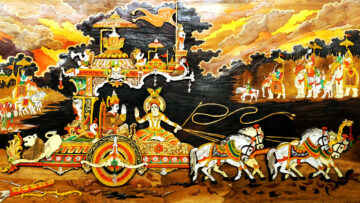
As Śhrī Kṛiṣhṇa reminds Arjun in the second chapter, realization rests on knowing the Self as eternal and untouched by birth and death.
न जायते म्रियते वा कदाचिन्नायं भूत्वाभविता वा न भूयः ।
अजो नित्यः शाश्वतोऽयं पुराणो न हन्यते हन्यमाने शरीरे ॥ BG २.२० ॥
(na jāyatē mriyatē vā kadācinnāyaṁ bhūtvābhavitā vā na bhūyaḥ |
ajō nityaḥ śāśvatō:’yaṁ purāṇō na hanyatē hanyamānē śarīrē || 2.20 ||)
(The soul is unborn, eternal, ever-existing, and ancient. It does not die when the body dies.)
From this correction, we can ask what living in that truth feels like: it is abidance in the Self.
3. Abidance in the Self
To abide in the Self is to live free from the shifting tides of identification. The body may be young or old, strong, or weak. The mind may be filled with thoughts one day and calm the next. But the realized one does not take these fluctuations as identity. They rest in the awareness that holds them all.
Ramana Maharshi, one of the luminous examples of the twentieth century, described the Self as the space in which the world rises and sets. He lived most of his life in silence, yet thousands were transformed by simply sitting in his presence. Śrī Nisargadatta Maharaj, another teacher, spoke with fiery simplicity: “You are not the body, nor the mind. You are the witness of both.”
A metaphor often used is the sky. Clouds may gather, thunder may roar, or sunlight may blaze, but the sky itself is never stained. Similarly, the Self is untouched by the play of experience. To abide in it is not to escape life but to remain unshaken by its constant change.
Reflection: Can you recall a moment when you felt like the silent witness of your thoughts rather than being caught in them?
When abidance deepens, the sense of separation grows thin and begins to fall away.
4. Dissolution of Separation
In realization, the sense of being a separate knower fades away. The duality of “I” and “world” loses its grip. There is no longer a boundary between subject and object. This is why Śaṅkara insisted that realization is anubhava, direct experience. It is not a concept held in the mind. It is the intimate recognition of unity.
Many people taste glimpses of such unity in meditation, music, or moments of deep stillness. A sense of vastness opens, and the usual chatter of thought quiets down. Yet these are often temporary states. Realization is not a passing glimpse but a steady abiding. It is not something to be repeated; it is what remains when repetition is no longer needed.
The realized one does not see the world as fragments. For them, everything is Brahman, the one reality. There is no inside and outside, no this and that. Only fullness remains.
Reflection: Have you ever sensed a moment where the line between “you” and the world felt less solid, even if only briefly?
As separation dissolves, a quiet ease appears as freedom within and in action.
5. The Freedom of the Realized
Inner Freedom: Untouched by Desire and Fear
When realization dawns, freedom becomes the natural fragrance of the Self. It is not the freedom of choice between options, but freedom from the very compulsions that drive choice. Desires lose their sharp grip. Fear, which hides in every corner of the mind, loosens its hold. The realized one does not measure their life by gain or loss. They rest in a completeness that is not touched by events.
The Upanishads describe this as mokṣha, liberation. It is not a future event, but the present recognition that you are whole and complete. Śaṅkara writes that bondage is nothing but ignorance of this truth. Once ignorance is removed, freedom shines on its own. Just as darkness vanishes when a lamp is lit, so the sense of limitation disappears when knowledge arises.
This inner freedom is quiet. It does not announce itself with dramatic change. Yet it transforms everything. The mind may still produce thoughts. The senses may still seek contact. But none of these disturb the one who knows they are not defined by them. Like a dream recognized as a dream, the play of life is seen without clinging or resistance.
Outer Expression: Freedom in the Midst of Action
Though the realized one rests in inner stillness, they continue to act in the world. Their body moves, their speech flows, their hands work. But inwardly they remain untouched. The Bhagavad Gita calls this karma phala tyāga, the abandonment of attachment to the fruits of action. Actions happen as expressions of the moment, not as means to fulfill personal lack.
This freedom in action is visible in daily life. The realized person does not act out of compulsion. Their words carry no hidden agenda. They may teach, serve, or remain quiet, but nothing is driven by insecurity. Even in success, they do not swell with pride. In failure, they do not sink into despair. Their life flows like rivers that move steadily to the sea, offering nourishment without claim or ownership, just as the Gita teaches of the one who remains at peace despite desires flowing toward them (Bhagavad Gita 2.70).
For seekers, this expression offers reassurance. Realization does not mean retreating from responsibilities or abandoning relationships. It means living them with a different center. The realized one may raise a family, run an organization, or walk in solitude. The outer form varies, but the inner freedom remains the same. This is why the presence of such people uplifts others. Their freedom is not for themselves alone. It radiates silently, offering a glimpse of what is possible for every human heart.
This freedom in action is beautifully described by Kṛiṣhṇa, who says that the wise one sees stillness in action and action in stillness.
कर्मण्यकर्म यः पश्येदकर्मणि च कर्म यः ।
स बुद्धिमान्मनुष्येषु स युक्तः कृत्स्नकर्मकृत् ॥ BG ४.१८ ॥
karmaṇyakarma yaḥ paśyēdakarmaṇi ca karma yaḥ |
sa buddhimānmanuṣyēṣu sa yuktaḥ kr̥tsnakarmakr̥t || 4.18 ||
(One who sees inaction in action and action in inaction is truly wise among human beings. Such a person, though performing all kinds of actions, is never bound by them and is considered a yogi who has mastered all that needs to be done.)
Reflection: What would your life feel like if action no longer carried the weight of anxiety about its results?
This freedom shows why words and texts can only point and why the living truth must be seen.
6. Beyond Thought and Scripture
Scriptures are precious. They light the way, explain what cannot be seen, and preserve the wisdom of ages. Yet Śaṅkara reminded seekers that scriptures are like signposts. They point to the truth but are not the truth itself.
He described the true teacher as both śrotriya, well-versed in scripture, and brahmaniṣṭha, established in the Self. A teacher who knows words but not realization can inspire the mind but not transform the heart. Only one who abides in the Self can awaken the same recognition in others.
The journey from intellectual conviction to lived clarity is subtle. One may read and understand, yet doubts linger. When realization dawns, the doubts fade. There is no need to hold onto belief because the truth has been seen. Like tasting sweetness, once experienced, no argument is required.
From here it helps to see how this clarity looks in daily life through the qualities it brings.
7. Qualities of the Realized One
When we try to picture a realized being, the mind often imagines a figure seated in silence, withdrawn from the world. Yet realization is not confined to posture or outer appearance. It reshapes the very texture of life. The Bhagavad Gita and the Upanishads describe qualities that arise naturally when ignorance falls away. These can be grouped into three broad themes: emotional, ethical, and relational.
Emotional Qualities: Peace, Equanimity, and Contentment
The first fragrance of realization is inner peace. The realized one is no longer swept away by the rise and fall of emotions. Joy and sorrow appear, yet they do not bind. This state is equanimity, a calm steadiness that is not touched by shifting emotions. The mind remains steady, like a lamp protected from the wind.
Contentment is another mark. Having recognized the Self as whole, the realized person does not chase after fulfillment in objects. Desire may arise, but it does not dominate. Fear may visit, but it does not linger. Their inner world is like a clear lake, reflecting whatever comes without disturbance.
The Bhagavad Gita describes this in Chapter 2: the sthita-prajña is not shaken by suffering, nor attached to pleasure, and lives free from longing. This emotional steadiness is not practiced as a discipline after realization; it arises spontaneously as the natural state of freedom.
To illustrate this steadiness, the Gita compares the realized one to the ocean, vast and undisturbed even as countless rivers flow into it.
आपूर्यमाणमचलप्रतिष्ठं समुद्रमापः प्रविशन्ति यद्वत् ।
तद्वत्कामा यं प्रविशन्ति सर्वे स शान्तिमाप्नोति न कामकामी ॥ BG २.७० ॥
āpūryamāṇamacalapratiṣṭhaṁ samudramāpaḥ praviśanti yadvat |
tadvatkāmā yaṁ praviśanti sarvē sa śāntimāpnōti na kāmakāmī || 2.70 ||
(Just as the ocean remains undisturbed despite countless rivers flowing into it, a wise person remains unshaken despite the continuous influx of desires, attaining true peace, unlike those who chase desires.)
Kṛiṣhṇa also describes their balance in joy and sorrow, explaining that they remain unmoved by either pleasant or unpleasant experiences.
यः सर्वत्रानभिस्नेहस्तत्तत्प्राप्य शुभाशुभम् ।
नाभिनन्दति न द्वेष्टि तस्य प्रज्ञा प्रतिष्ठिता ॥ २.५७ ॥
(yaḥ sarvatrānabhisnēhastattatprāpya śubhāśubham |
nābhinandati na dvēṣṭi tasya prajñā pratiṣṭhitā || 2.57 ||)
(He who remains detached from both good and bad outcomes, neither rejoicing in pleasure nor hating pain, has attained steady wisdom.)
Ethical Qualities: Humility, Compassion, and Integrity
Realization softens the heart. With no burden of ego, humility shines through. The realized one does not think, “I am greater than others.” They see themselves in all beings, so there is no ground for superiority. Their humility is not forced modesty, but the absence of self-importance.
Compassion flows naturally. Seeing the same Self in all, the realized person cannot turn away from suffering. Yet their compassion is not anxious or pitying. It is calm, steady, and grounded in clarity. It uplifts without expectation.
Integrity is also central. Because there is no hidden agenda, the actions of a realized being align with truth. They are transparent in speech and simple in conduct. Śaṅkara points out that realization is marked by freedom from deceit and hypocrisy. Ethics are no longer rules to be followed but spontaneous expressions of truth.
Relational Qualities: Equality, Presence, and Non-Attachment
How does the realized one relate to others? The Gita gives a striking image. In Chapter 5, Kṛiṣhṇa says they see the same Self in a wise scholar, a cow, an elephant, or even in one who is despised. This vision of equality flows into all relationships. No one is favored or rejected.
Their presence itself becomes nourishing. Many seekers describe how simply sitting with a realized teacher brings stillness. Words may be few, yet the silence speaks volumes. This is not charisma, but the quiet power of being established in the Self.
Short Story from a Sage’s Life
A devotee once came to sit before Ramana Maharshi, troubled with many questions. He asked nothing aloud, but simply remained in the hall with the sage. Hours passed in silence. When he finally rose to leave, his face was calm and his heart was unburdened. Later, he said that no words had been needed. Ramana’s presence alone had dissolved his doubts. This quiet moment reveals how realization communicates itself without speech, shining as peace in the hearts of those who come close.
Non-attachment colors their relationships. They may love deeply, but without clinging. They care without trying to possess. Their love is not selective; it is an open space where all are welcomed. In this way, realization frees not only the individual but also those who come into contact with them.
This vision of equality is captured in a well-known verse where the sage sees the same Self in a scholar, a cow, an elephant, or even in one considered lowly.
विद्याविनयसम्पन्ने ब्राह्मणे गवि हस्तिनि ।
शुनि चैव श्वपाके च पण्डिताः समदर्शिनः ॥ BG ५.१८ ॥
vidyāvinayasampannē brāhmaṇē gavi hastini |
śuni caiva śvapākē ca paṇḍitāḥ samadarśinaḥ || 5.18 ||
(A wise person who possesses true knowledge and humility sees the same divine essence in all beings; whether a learned and humble brāhmaṇa, a cow, an elephant, a dog, or even in one considered lowly. They understand that all living entities are fundamentally the same at the level of the soul, beyond bodily distinctions.)
These qualities echo the scriptures, so we now listen to the Gita and the Upanishads speak about realization and its path.
8. Vedantic Perspective
The vision of realization is not left vague in Vedanta. Both the Bhagavad Gita and the Upanishads speak with precision about its nature and the way to approach it. The Gita presents living portraits of the realized one, while the Upanishads lay out a clear pathway to make that vision a lived truth. Together, they form a complete guide, offering seekers both inspiration and method.
Realization in the Bhagavad Gita
The Bhagavad Gita offers some of the most vivid descriptions of realization in the language of Vedanta. In Chapter 2, Śhrī Kṛiṣhṇa paints the portrait of the sthita-prajña, the person of steady wisdom. Such a one is free from the pull of desire, undisturbed by sorrow, and calm in joy. They are compared to the ocean, vast and full, into which rivers flow without ever disturbing its depth.
Śaṅkara, in his commentary, explains that realization in this sense is not an altered state of mind but the very recognition of one’s identity with Brahman. The realized one knows, without doubt, “I am not this body or mind. I am the imperishable Self, untouched by birth or death.” This is not an intellectual conclusion but a lived awareness.
In Chapter 4, Śhrī Kṛiṣhṇa goes further. He says that one who sees action in inaction, and inaction in action, is wise among people. The realized being acts in the world, but inwardly knows they do nothing at all. Their awareness rests in Brahman, and their actions are like the movements of wind across space; present, yet leaving no trace.
Chapter 5 adds another dimension. The yogi who is united with the Self sees the same reality in a learned person, a cow, an elephant, or even in one who is despised. This vision of equality arises because the Self is not fragmented. For the realized one, difference is only a surface appearance. The underlying truth is always one.
In Chapter 18, Kṛiṣhṇa concludes by describing the supreme knowledge. To see the one imperishable being in all existence, unchanging amid change, is to be truly wise. Śaṅkara highlights that this vision is the culmination of Vedanta. It is not a belief about oneness, but the cessation of seeing oneself as anything other than that oneness.
At the close of the Gita, Kṛiṣhṇa declares that true knowledge is to see the one reality shining through all beings, undivided in the midst of diversity.
सर्वभूतेषु येनैकं भावमव्ययमीक्षते ।
अविभक्तं विभक्तेषु तज्ज्ञानं विद्धि सात्त्विकम् ॥ BG १८.२० ॥
sarvabhūtēṣu yēnaikaṁ bhāvamavyayamīkṣatē |
avibhaktaṁ vibhaktēṣu tajjñānaṁ viddhi sāttvikam || 18.20 ||
(That knowledge by which one sees the single imperishable reality in all beings, undivided among the divided; know that to be sāttvic knowledge.)
For a seeker reading the Gita, these descriptions are not just lofty ideals. They are reminders of what lies at the heart of their own being. Realization is not somewhere else. It is the stillness, clarity, and fullness that has never left you.
The Gita also distinguishes this sāttvic knowledge from rājasic knowledge, which sees reality as fragmented, and tāmasic knowledge, which mistakes the unreal for the real; thus, the highest vision is to see one undivided Self shining in all beings.
Having met the vision, we now look at the method the Upanishads offer.
The Upanishadic Pathway: Śravaṇa, Manana, Nididhyāsana
The Upanishads not only describe the state of realization but also offer a pathway to reach it. Śaṅkara was clear that realization does not come from mechanical rituals or blind belief. It unfolds through a steady process of listening, reflection, and deep assimilation. These three steps: śravaṇa, manana, and nididhyāsana form the backbone of the Vedantic journey.
Śravaṇa means listening to the truth as revealed in the Upanishads, usually through the guidance of a teacher. The seeker hears that the Self is not the body or mind, but pure consciousness, eternal and unchanging. This hearing is not casual. It requires a mind prepared by values like truthfulness, self-control, and compassion.
Manana follows. Here the seeker reflects deeply upon what has been heard. Doubts are faced and resolved, not brushed aside. The intellect turns the teaching over and over until it becomes clear that the Self is indeed one’s own nature. Without this step, the knowledge may remain only as borrowed words, never ripening into personal clarity.
Nididhyāsana is the final stage, often described as meditation or contemplation. But it is not about focusing on an object or repeating a mantra. It is the constant abiding in the truth revealed by śravaṇa and clarified by manana. It is resting in the awareness that is free from all attributes, refusing to slip back into old identifications. Śaṅkara calls this steady absorption brahmākāravṛtti, the mental state that takes the form of Brahman alone.
Together, these three stages turn knowledge into realization. They dissolve the gap between knowing and being. The Upanishads insist that the truth is not far away. It is immediate, but it needs to be uncovered. Śravaṇa opens the door, manana clears the pathway, and nididhyāsana anchors the seeker in the Self.
For the modern reader, this pathway is both practical and profound. We begin by exposing ourselves to teachings of truth, whether through scripture, teachers, or deep study. We then allow questions to arise and resolve them with honesty. Finally, we return again and again to silent contemplation, letting the truth settle until it becomes the ground of our life.
The Upanishads themselves affirm this truth with great simplicity:
ब्रह्मविद् आप्नोति परम् ।। ३.२.९ ।।
Muṇḍaka Upaniṣad 3.2.9
brahmavid āpnoti param
(The knower of Brahman attains the Supreme.)
This statement stands as both assurance and reminder that realization is not about becoming something new but awakening to what has always been.
With vision and method in view, we turn to life in society and work.
9. Realization and the World
A question often arises: if one realizes the Self, what happens to their life in the world? Do they withdraw from society, or do they continue to participate? The answer is not fixed, for realization expresses itself differently through different personalities.
Some, like Swami Chinmayananda or Swami Vivekananda, poured their energy into teaching, service, and social upliftment. Others chose silence, remaining hidden from the public eye. Yet in both cases, their freedom was the same.
Realization does not demand escape from the world. It brings freedom within it. The realized one can walk in a busy street, lead an institution, or sit alone in a cave. The outer form matters less than the inner freedom. The world becomes a field of play, not a cage of bondage.
And when speaking of life in society, Kṛiṣhṇa honors the yogi who treats the joys and pains of others as their own.
आत्मौपम्येन सर्वत्र समं पश्यति योऽर्जुन ।
शुखं वा यदि वा दुःखं स योगी परमो मतः ॥ BG ६.३२ ॥
ātmaupamyēna sarvatra samaṁ paśyati yō:’rjuna |
śukhaṁ vā yadi vā duḥkhaṁ sa yōgī paramō mataḥ || 6.32 ||
(O Arjun, one who perceives true equality by comparing others with oneself and responds to others’ joys and sorrows as one’s own is regarded as the highest yogi.)
Walking in the world brings questions, and guidance from a true teacher steadies the heart.
10. The Role of the Guru
On this path, the role of the guru cannot be overstated. A mirror is needed to see our own face. In the same way, a guru reflects the truth that is already within us. They cut through confusion and show what cannot be seen alone.
Śaṅkara bowed deeply to the guru-paramparā, the lineage of teachers who passed down this vision. He often began his works with a salutation to the guru, acknowledging that without such guidance, the subtle truth of the Self might remain hidden.
Yet the true guru never asks for blind submission. They lead the disciple back to their own inner knowing. Their presence says: you are already what you seek. My role is to help you see it.
The right teacher points you back to your own seeing, so the next question is yours.
11. A Question for the Reader
At this point, it is worth pausing. In your own life, what does freedom feel like? Not as a concept, but as an experience. Is there a moment where you felt unburdened, even briefly, by fear or desire? That taste, however small, points to the essence of realization.
The longing behind all seeking is the longing to return home to yourself. Ask quietly: what is it that I truly seek? In listening deeply, you may find the silent thread that has always guided your steps.
Hold that question close and carry it to a simple closing reminder.
12. Closing Thought: Living Realization Today
Realization is not locked away in the Himalayas or reserved for the past. It is the living truth of your own being. The sages remind us that nothing new is to be created. Only the covering needs to be lifted.
To live realization today is to stop searching for fulfillment outside and to rest in the fullness already within. It begins in small ways: sitting quietly, watching the play of thought, and remembering that awareness is never disturbed.
The invitation is simple yet profound. Are you willing to live as the Self you already are? The journey does not begin with steps. It begins with stillness.
Key Terms
Here are the key terms glossary in alphabetical order
- Abidance in the Self: Resting in one’s true nature beyond body and mind, steady and untouched like the sky that remains clear while clouds pass.
- Adhyāropa–Apavāda: The Vedantic method of teaching through superimposition and negation—first allowing false identifications like “I am the body,” then withdrawing them to reveal the Self.
- Ānanda: The bliss or deep peace that shines naturally in realization, not dependent on external pleasure.
- Anubhava: Direct inner experience of truth. In Vedanta, realization is not intellectual understanding but immediate recognition of the Self beyond subject and object. It is this lived awareness that dissolves the sense of separation.
- Ātman: The eternal Self; unborn, unchanging awareness that underlies all experiences and is distinct from body and mind.
- Bhagavad Gītā: A central scripture of Vedanta, where Śhrī Kṛiṣhṇa teaches Arjun the wisdom of Self-knowledge, duty, and realization amidst life.
- Brahman: The infinite, formless reality that is the essence of everything, pure being and consciousness.
- Brahmākāravṛtti: The mental state in which the mind takes the form of Brahman alone during contemplation, dissolving all other identifications.
- Brahmavid: A knower of Brahman; one established in the direct experience of the ultimate reality.
- Discernment (Viveka): The clarity to distinguish between the eternal Self and the transient body, mind, and world.
- Guru-paramparā: The lineage of teachers who transmit Vedantic knowledge and realization through words and presence.
- Jñānī: The realized being who lives in steady knowledge of the Self, free from ignorance and bondage.
- Karma Phala Tyāga: Renunciation of attachment to the results of action; living freely in the world without being bound by outcomes.
- Manana: The reflective process of Vedanta, where doubts are questioned and resolved until the truth of the Self becomes clear.
- Mokṣha: Liberation; the natural freedom of the Self revealed when ignorance and false identification fall away.
- Nididhyāsana: Deep contemplative assimilation of truth, a steady absorption in the awareness of Brahman beyond all attributes.
- Sāttvic: A quality of clarity, harmony, and purity of mind that supports knowledge and realization, described in the Gita as the highest mode of understanding.
- Śaṅkara (Ādi Śaṅkarāchārya): The 8th-century philosopher who clarified Advaita Vedanta, emphasizing that realization is not becoming but recognizing what always is.
- Śhravaṇa: Deep listening to the teachings of the Upanishads and Gita, usually under a teacher, as the first step in realization.
- Sthita-prajña: The person of steady wisdom described in the Bhagavad Gita, unmoved by pleasure and pain, content in the Self.
- Tattvavit: The knower of truth, one who understands the essence of reality without illusion.
- Upanishads: Ancient Indian scriptures that form the basis of Vedanta, teaching the non-dual nature of Self and Brahman.
- Vedanta: The concluding wisdom of the Vedas, based on the Upanishads, Bhagavad Gita, and Brahma Sutras, teaching the oneness of Self and Brahman.
- Viveka: See Discernment; the ability to separate the real (unchanging Self) from the unreal (changing phenomena).
- Yogi: One united with the Self; described in the Gita as one who treats others’ joys and sorrows as their own.
Further Reading
For deeper insight into the themes explored in Who Is the Realized One? A Journey into the Heart of Upanishadic Wisdom:
1. Vivekachūḍāmaṇi – Ādi Śaṅkarāchārya
A crown jewel of Advaita Vedanta, this text lays out the qualifications of a seeker, the role of the guru, and the path of discernment (viveka) leading to Self-realization. It resonates strongly with the article’s focus on abidance in the Self and freedom from bondage.
2. Talks with Sri Ramana Maharshi – Edited by Munagala Venkataramiah
A living example of realization in the modern age, this collection records Ramana Maharshi’s spontaneous answers to seekers’ questions. His teachings on abiding as the Self and dissolving separation make the article’s ideas vivid and personal.
3. The Crest-Jewel of Yoga: Bhagavad Gita with Commentary by Swami Chinmayananda
This commentary presents Kṛiṣhṇa’s teachings on the sthita-prajña, freedom in action, and equality of vision in clear modern language. It grounds the article’s use of Gita verses in authoritative interpretation.
4. I Am That – Sri Nisargadatta Maharaj
A direct and uncompromising dialogue on Self-realization, this work highlights how the realized one lives free from concepts and yet functions fully in the world. It parallels the article’s section on inner and outer freedom.
5. Mundaka Upanishad with Commentary – Swami Gambhirananda
This Upanishad explores the nature of Brahman, the distinction between higher and lower knowledge, and the process of realization through śravaṇa, manana, and nididhyāsana. It provides scriptural depth to the pathways outlined in the article.
6. Vedanta: An Art of Living – Swami Dayananda Saraswati
A contemporary explanation of Vedanta that emphasizes discernment, freedom, and the transformation of daily life. It beautifully bridges classical insight with practical living, echoing the article’s section on realization in the world.
(Note on Sources: This article draws from key teachings across Chapters 2, 4, 5, 6, and 18 of the Bhagavad Gita, with particular attention to verses 2.20, 2.57, 2.70, 4.18, 5.18, 6.32, and 18.20. These passages describe the nature of the Self as unborn and eternal, the balance of the sthita-prajña, the vision of equality, and the highest knowledge of oneness. The Upanishadic pathway of śravaṇa, manana, and nididhyāsana further grounds the discussion, highlighting the process through which knowledge matures into realization.
The insights are situated within the broader Vedantic framework of the Prasthāna-Traya: the Upanishads, the Bhagavad Gita, and the Brahma Sutras. The reflections are inspired by traditional commentaries, especially those of Ādi Śaṅkarāchārya, and modern expositions by teachers such as Swami Dayananda Saraswati, Swami Chinmayananda, and others who have explained realization as the rediscovery of one’s true nature. While the tone here is contemporary and reflective, the essence remains rooted in the Sanskrit sources, preserving the clarity of the original vision.)
Disclaimer: The opinions expressed in this article belong to the author. Indic Today is neither responsible nor liable for the accuracy, completeness, suitability, or validity of any information in the article.