

In the heart of India’s sacred landscapes, ancient temples rise not just as monuments of devotion but as marvels of astronomical insight. These awe-inspiring structures were designed with more than beauty in mind. They mirror the cosmos, encode calendars, and track the rhythms of the stars.
From the blazing chariot of the Konark Sun Temple to the silent shadow play of Brihadeshwara’s vimana, Indian temple architecture seamlessly weaves the spiritual and the scientific. This is no accident. Rooted in Vedic thought and refined through centuries of astronomical observation, these sacred spaces were envisioned as microcosms of the universe, a place where the divine order of the heavens found expression in stone, light, and geometry.
The Vedic View of Space and Time
Long before temples took shape in granite or sandstone, the Vedas, the oldest Indian scriptures, were already attuned to the movements of the stars. The Vedanga Jyotishā (1200 BCE), one of the earliest Indian texts on astronomy, offered rules for calculating auspicious timings based on celestial positions. Meanwhile, texts like the Shatapatha Brahmana (A Shuklā Yajurved Commentary) linked the rhythm of rituals with solar cycles, solstices, and equinoxes.
In this worldview, Ritā – the cosmic order, was not an abstract idea. It was something to be seen, measured, and upheld through precise ritual and architectural design. The temple, therefore, became a physical manifestation of this order – a sacred space aligned with the heavens.
Vastu Shastra and Sacred Geometry
At the heart of Indian temple planning lies Vastu Shastra, the traditional science of architecture. Far from being a set of aesthetic rules, it is a cosmological blueprint. Central to it is the Vastu Purusha Mandala, a square diagram divided into smaller squares, each linked to a deity or cosmic force.
Temples are typically oriented along cardinal directions, especially the east, to welcome the rising sun. The innermost chamber, the garbhagriha or “womb chamber” sits at the center of this mandala, representing the source of creation. Rising directly above it is the shikhara & vimana, a symbolic Mount Meru – the mythical axis that connects heaven and earth.
In this design, architecture becomes more than form. It becomes a map of the cosmos, harmonizing the physical with the metaphysical.
Solar Architecture in Practice
Many Indian temples are masterpieces of solar alignment. Their east-west axes are often planned so that, on equinoxes or solstices, the first rays of the sun fall directly onto the main deity. This is not a coincidence. It’s cosmic choreography.
(Equinox happens twice a year: around March 21 and September 23): The day and night are equal in length. It’s when the Sun is exactly above the equator.
Solstice (also happens twice a year: around June 21 and December 21): It’s when the day is the longest (June) or the night is the longest (December), depending on where you live. It happens because the Earth tilts toward or away from the Sun.
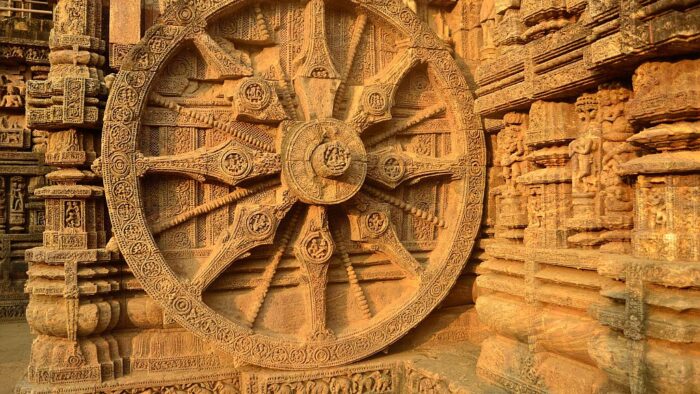
The Konark Sun Temple in Odisha (13th century CE), for example, is designed as a massive chariot drawn by seven horses with twelve stone wheels, each marking a solar month. The wheels function as sundials, and the temple was built so that the sun’s rays would enter the sanctum at sunrise on equinox days.
In Gujarat, the Modhera Sun Temple (11th century CE) reveals similar precision. On the day of the equinox, sunlight floods the sanctum and touches the image of Surya, the Sun God. These are the temples that don’t just honour the sun, they even track it.
Calendars and Shadows
Beyond celebrating celestial events, temples often acted as living calendars. Many included gnomons, sundials, or pillars that cast shadows on designated stones to mark the passing of time and seasons.
Take the Brihadeshwara Temple in Thanjavur (11th century CE). Its towering vimana, over 60 meters high, was so precisely designed that during certain times of the year, it casts no shadow at noon, an architectural feat requiring deep knowledge of solar angles and zeniths.
In South Indian temples, it’s common to find sunlight aligning with specific sculptures or shrines on important days of the year. These interactions of light and shadow are not ornamental; they’re cosmic clocks, used to guide rituals and festivals.
Cosmic Structure and Meaning
The symbolic architecture of Indian temples reflects layers of cosmology. Vertically, temples are often divided into three worlds:
Bhū (earth), Bhūr (intermediate realms), and Svarga (heaven). Horizontally, their concentric walls and mandapā (halls) represent expanding rings of the universe.
At the center sits the garbhagrihā, the “womb” of the temple – silent, dark, and sacred, representing the source of all existence. From here, the cosmos unfolds outward. The towering shikhara above symbolizes not only Mount Meru but the upward journey of the soul toward liberation.
Many temple complexes also house Navagraha shrines, dedicated to the nine planetary deities, further reinforcing the connection between sacred ritual and celestial order.
How Indian Temples Mirror the Cosmos
Indian temples are more than just places of worship; they’re cosmic blueprints carved in stone. Across India, three major temple styles: Nagara (North), Dravida (South), and Vesara (Deccan), show us how architecture was used to connect with the stars, sun, and planets.
Nagara temples, like Konark Sun Temple, feature tall, curvy spires (shikharas) that align with the sun’s path. Many are designed to catch sunlight on key days like solstices or equinoxes, making them giant solar calendars.
Dravida temples have wide courtyards and pyramid-like towers (vimanas) stacked in rhythmic layers. Some, like Virupaksha in Hampi, even use optical tricks; a small hole projects the temple’s tower inside like an ancient pinhole camera. Others use sound, like musical pillars that echo chants in sync with the space.
Vesara temples, mostly in Karnataka, blend the two. Temples like Chennakeshava have star-shaped platforms and carvings linked to constellations and cosmic cycles.
Different in style but united in vision, these temples weren’t just built to honor gods, they were designed to reflect the universe itself. Every stone tells a story, not just of faith, but of science, sky, and cosmic order.
Roof Patterns, Not Just Decoration
There’s growing scholarly curiosity about the often-overlooked ceilings and roof designs of temples, particularly in South India and Southeast Asia. These intricate patterns might not be mere embellishment. They could hold deeper cosmic meanings.
- Yantra and Mandal: Ceilings of mandapā often display yantra – sacred geometrical diagrams believed to represent the structure of the universe. These may correspond to astrological charts or cosmic patterns.
- Calendrical Codes: Some tiered roofs feature repetitive carvings that could represent lunar phases, nakshatra (27 lunar mansions), or solar months.
- Acoustic Design: In temples like Hampi’s Vittala Temple, patterned ceilings enhance sound resonance, potentially amplifying chants and musical vibrations during rituals.
- Planetary and Stellar Maps: Star-shaped temple layouts, especially in Hoysala architecture, may mimic real constellations, like the Saptarishi (Ursa Major), adding another layer of celestial symbolism.
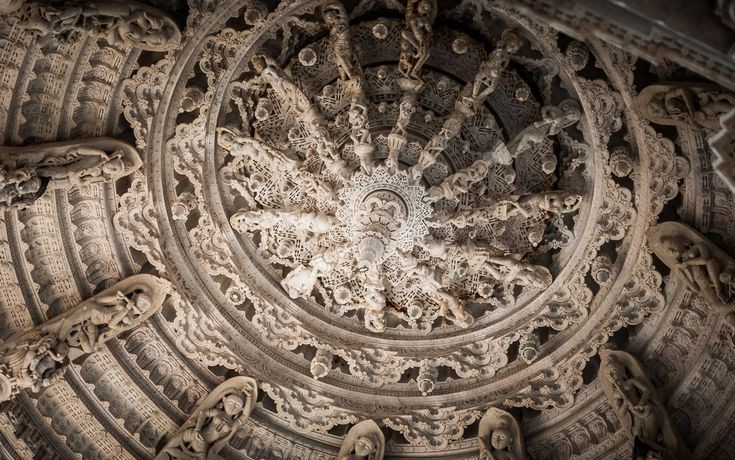 (Figure 1: Intricate roof patterns hold deeper cosmic meaning)
The Living Skies in Stone
Several temples exemplify this synthesis of astronomy and architecture:
Konark Sun Temple: A cosmic chariot with sundial wheels and solar alignments.
Modhera Sun Temple: Equinox sunrise hits the deity directly.
Brihadeshwara Temple: Noon shadows disappear; testament to zenith awareness.
Virupaksha Temple, Hampi: Features a pinhole-camera effect where the temple gopuram appears inverted on inner walls, proof of optical knowledge.
Chennakeshava Temple, Belur: Intricately carved star-shaped platform aligns with celestial events.
Martand Sun Temple, Kashmir: Though now in ruins, its orientation suggests solar alignment adapted to the latitude of the Himalayas.
Jantar Mantar, Jaipur and Delhi: Not temples in function, but deeply rooted in temple architectural principles, massive instruments designed to track celestial bodies with precision.
Even Angkor Wat in Cambodia, influenced by Indic thought, aligns with equinoxes and embeds cosmological narratives in its bas-reliefs and temple layout, proving that the Indian architectural vision transcended borders.
India and Beyond
Indian temple astronomy wasn’t an isolated tradition. Cultures across the world built sacred spaces that aligned with the heavens. The Mayans created temples aligned with Venus and solar events. Egyptians aligned pyramids and temples with stars and solstices. But what sets Indian temples apart is the integration of cosmic science into living religious practice. Astronomy was not just for royal scholars; it shaped the very heart of spiritual experience for communities.
Indian temples are more than places of worship. They are celestial instruments, architectural mantras, and cosmic diagrams in stone. They reflect an era when science and spirituality were not at odds but deeply entwined. Every beam of sunlight through a sanctum, every shadow cast by a gopuram, every carved wheel or patterned ceiling; each one speaks of a civilization that looked up to the stars and built its sacred spaces in their image.
In honouring the heavens, Indian temple architects created spaces where time, space, and the divine meet. Through them, the eternal rhythm of the cosmos finds its reflection here on earth.
Feature Image Credit: IStock
Disclaimer: The opinions expressed in this article belong to the author. Indic Today is neither responsible nor liable for the accuracy, completeness, suitability, or validity of any information in the article.