
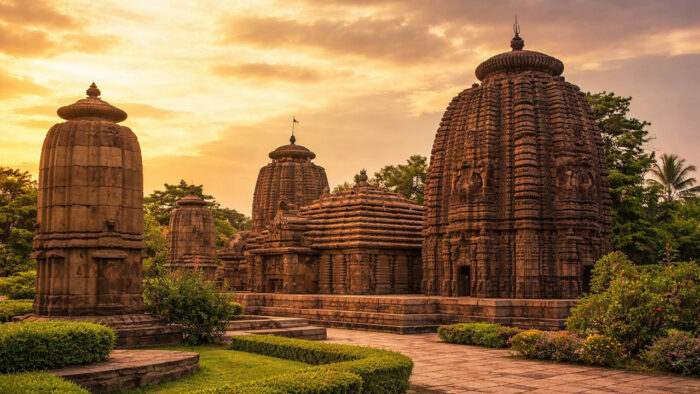
Utkal Divas, celebrated on 1st April, marks the formation of Oḍiśā as a separate state in 1936. It was the first state in India formed on a linguistic basis, making it a historic milestone not only for Oḍiśā but for the entire nation. Utkal Divas is more than a celebration. It is a Story of Identity, Resistance, and Truth
But this day is not just about administrative formation. It is about identity, struggle, cultural pride, and a long history of strength and resistance that often does not get the attention it deserves.
The creation of Oḍiśā was the result of sustained efforts by great leaders like Madhusudan Das, widely known as the architect of modern Oḍiśā, Gopabandhu Das, also called Utkalamani, and Fakir Mohan Senapati, along with many others. They worked tirelessly to unite Oḍiā-speaking regions, which were divided under different provinces and to protect the Oḍiā language, literature, and cultural identity. Because of their vision and efforts, Oḍiśā became a separate province in 1936, much before India gained independence in 1947.
Oḍiśā is not just a land of history; it continues to shape India even today through its people.
Oḍiśā’s history is not of submission but of resistance. Leaders like Buxi Jagabandhu led one of the earliest organised revolts against British rule. Veer Surendra Sai fought for decades against the British.
Jayee Rajaguru sacrificed his life resisting colonial control. Harekrushna Mahatab contributed both during the freedom struggle and in building the state after independence. This clearly shows Oḍiśā never accepted domination quietly.
Even in modern history, figures like Biju Patnaik stand out. He was a freedom fighter who participated in the Quit India Movement, a skilled pilot, an industrialist, served as Chief Minister of Oḍiśā twice, and also held positions as Union Minister for Steel, Mines and Coal.
If we go further back, ancient Kaliṅga was one of the most powerful regions in Indian history. It is mentioned in the Mahabharata as a strong warrior kingdom aligned with the Kauravas. Kaliṅga extended from the Godavari to the Subarnarekha and had important capitals like Dantapura and Rajapura. Its warriors fought bravely in the Kurukshetra war, and even before the war, many great warriors like Bhima and Karna had to engage with Kaliṅga forces, showing their strength.
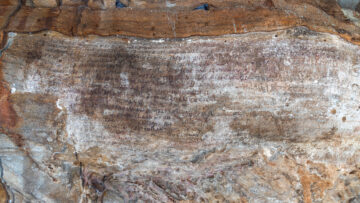
After that period, history continues to show Kaliṅga’s power. The Kalinga War of Ashoka in 261 BCE is one of the most significant events in Indian history, after which Ashoka changed his path. Later, Kharavela in the 2nd century BCE restored the glory of Kaliṅga. His Hathigumpha inscription clearly records his victories. He defeated the Satavahanas, advanced towards Magadha, capturing key cities like Rajagriha and Pataliputra, pushed back the Indo-Greek forces, and even challenged southern powers like the Tamil confederacy.
In medieval times, Kapilendra Deva built one of the largest empires in eastern India, expanding from the Ganga to the Kaveri. He defeated the Bengal Sultanate, Jaunpur Sultanate, and Malwa Sultanate in the north, and at the same time fought and dominated powers like Vijayanagara, Bahmani Sultanate, and Reddy kingdoms in the south.
Kings like Narasimhadeva I defeated Bengal Sultan Tughan Khan and built the Konark Sun Temple, while Purushottama Deva and Prataparudra Deva continued to resist multiple invading powers and maintained the strength of the kingdom for centuries.
This clearly breaks a common myth. Many people say Oḍiśā was safe because of geography. This is completely incorrect. Bengal and Andhra were all accessible, and Oḍiśā had a coastline and trade routes. Invaders could reach it easily. The real reason Oḍiśā remained strong was because of its rulers, its military power, and its people, who resisted continuously.
Oḍiśā was not isolated at all. Ancient Kaliṅga had strong maritime trade with Southeast Asia, Rome, and other parts of the world. Archaeological findings from places like Manikpatna show global trade links.
Oḍiśā’s cultural and architectural heritage is equally strong. The temples built in the Kaliṅga style are among the finest in the world. The Jagannātha Temple, Konark Sun Temple, and Lingaraj Temple are not just places of worship but engineering marvels built without cement and still standing strong after centuries.
Oḍiśā’s culture is still alive in its arts and daily life. Pattachitra paintings, silver filigree work from Cuttack, Sambalpuri textiles, applique work of Pipili, and tribal crafts reflect deep tradition. Its food, including Mahāprasāda from Jagannātha Temple and dishes like Chhena Poda, Rasabali, Pitha, Dahibara Aloodum, and Pakhala, shows both simplicity and richness.
In modern times, Oḍiśā continues to grow in sectors like industry, infrastructure, and IT, while also supporting Indian hockey at a national and global level.
Oḍiśā is also recognised as a leader in disaster management. During cyclones like Phailin and Fani, the state showed strong early warning systems, large-scale evacuations, and efficient coordination.
One of the most unique aspects of Oḍiśā is its cultural harmony. Different traditions like Buddhism, Jainism, Shaivism, Vaishnavism, Shaktism, and tribal beliefs have coexisted and merged over time. The Jagannātha tradition represents this unity, where different beliefs come together as one shared culture.
Utkal Divas is not just about remembering a date. It is about understanding that Oḍiśā’s identity was built through effort, struggle, and strength. It reminds us that Oḍiśā’s identity was earned, not given, its history is based on resistance, not isolation, and its culture is built on unity and continuity.
Oḍiśā was not protected by geography. It stood strong because of its culture, civilisation, tradition, people, rulers, and spirit.
Jai Jagannātha 🙏
Disclaimer: The opinions expressed in this article belong to the author. Indic Today is neither responsible nor liable for the accuracy, completeness, suitability, or validity of any information in the article.