
Within the enduring tradition of Nyāya darśana and Sanskrit vyākaraṇa, few names carry the quiet authority of Annambhaṭṭa, widely revered as Garikapati Annam Bhaṭṭu. He is the composer of the celebrated Tarka Saṅgraha and its illuminating companion, Dīpikā. These works have long opened the way into the systematic inquiry of Nyāya—the śāstra concerned with valid cognition and the means of accessing dependable knowledge. They have guided generations of students through the pathways of disciplined reasoning, inferential insight, and the discernment of reality. Yet the author of these treatises remains veiled in time, known more through the clarity of his compositions than through historical records or the colophons of manuscripts.
The 1918 Bombay Sanskrit Series preface to Tarka Saṅgraha catalogued such uncertainties. Was the author Annambhaṭṭa or Anantabhaṭṭa? Was he a scholar of the seventeenth century or of an earlier period? Echoes from oral tradition and scattered proverbs have long sustained such speculation, and even modern reprints continue to carry these questions forward.
A proverb from Andhra homes distils his stature into a single line: “Kāśī gamana mātrēṇa nānnam bhaṭṭāyate dvijaḥ” — “By merely going to Kāśī, a Brahmin does not become Annam Bhaṭṭu.” This saying reflects his enduring stature and the ideal that genuine learning rests upon disciplined study and inner refinement, not upon travel or reputation alone. To attain the stature of Annam Bhaṭṭu demands insight, ethical steadiness, and the capacity to preserve and transmit learning across generations.
History, patiently preserved through inscriptional evidence, clarifies much that earlier scholars could only conjecture. Among these records is the Garikapāḍu Dāna Śāsana—a copper-plate inscription recording the grant of Garikapāḍu—issued in 1560 CE by Sadāśiva Rāya, formally awarding the Garikapāḍu agrahāra to Annambhaṭṭa. The inscription opens with invocations to divine beings, defines boundaries, formally establishes the grant, and situates it within a cosmic and dhārmic order. Through it, Annam Bhaṭṭu emerges as a figure grounded in time, place, and paramparā—a scholar entrusted with the custodianship of land, knowledge, and community.
The earliest modern efforts to rediscover this revered scholar arose from within the Garikapati lineage itself. Śrī Garikapati Lakṣmī Kantaiah, former Head of the Department of Telugu at Nizam College, Hyderabad, devoted an essay to Garikapati Annam Bhaṭṭu in his 1976 collection Śārada Vyāsa Maṇihāram, tracing the philosopher’s intellectual and cultural milieu while affirming the legacy preserved in the Dāna Śāsana. Later, Śrī Garikapati Lakṣmī Narasiṃham deepened this effort through careful genealogical inquiry. In his Garikapati Vaṃśa Caritra (2007)—a historical account of the Garikapati lineage documenting ancestral figures and their contributions—he gathered oral histories from relatives and acquaintances. He also drew upon archival records such as the Tadipatri Kaifīyat, bringing together memory and documentation to reconstruct the family’s intellectual continuity.
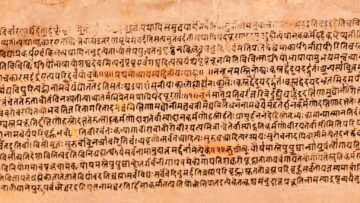
This essay draws upon those pioneering studies to examine the author’s life within the literary traditions of sixteenth-century India. It seeks to reconstruct, from the burnished copper of the Dāna Śāsana and the palm-leaf manuscripts of his commentaries, the journey of a scholar who rose from modest beginnings to become one of India’s most luminous exponents of reasoning and knowledge.
The agrahāra is entrusted to Annam Bhaṭṭu as both honour and responsibility. To understand its significance, one must consider the dhārmic vision of the Vijayanagara Empire—a worldview rooted in dharma.
The Vijayanagara Empire cultivated learning and dharma as central to statecraft and social cohesion. Within this context, the agrahāra was elevated from an administrative unit to a centre of intellectual responsibility. Under Sadāśiva Rāya and Aliya Rāmarāya, the rulers upheld an older dhārmic understanding—preserved across the Itihāsa and śāstric traditions—that enduring stability rests not only upon administrative oversight, but also upon the continuity of scholarly authority and learning.
Sadāśiva Rāyalu upheld this vision through brāhmaṇa pariṣats (scholarly assemblies). These gatherings engaged with Vedic, tārkika, and mīmāṃsaka themes, examining learning, reasoning, and dhārmic discernment. Distinguished adhyāpakas were entrusted with agrahāras—a royal mandate to preserve and transmit śāstra and dharma.
Pariṣats were held across the empire and typically spanned three days. Seats were arranged according to Veda, Śāstra, and Darśana, forming a living maṇḍala of discourse.
When the pariṣats concluded, the royal court conferred titles—śūrā cakravarti, śūrātiśūra, bahuśūra, and adhyayana śūra—marking degrees of mastery. The highest, śūrā cakravarti, received a vistāra agrahāra containing forty kucchelas of land (one kucchela ≈ 25 acres); śūrātiśūra, an agrahāra of twenty kucchelas; bahuśūra, a kundika of ten kucchelas; and adhyayana śūra, one kucchela each. Other participants were gifted gold to support their adhyayana and adhyāpana. These grants were dānas of responsibility, binding scholars to establish and sustain agrahāras where śāstra, yajña, and dharma could flourish.
Scholars of the Vijayanagara period were expected to embody a synthesis of śruti, yajña, tarka, and nīti. Excellence in disciplined inquiry was inseparable from ethical conduct and precision in yajña. Inscriptions and commentarial traditions consistently framed scholars as custodians of dharma, entrusted with its transmission across generations.
It was into this richly structured world that Garikapati Annam Bhaṭṭu emerged. His journey from the small village of Mamillapalli to the intellectual epicentre of Kāśī reflects both personal determination and the wider cultural emphasis on disciplined scholarship. The agrahāras he later inhabited and guided were vibrant ecosystems of learning.
Through this lens, one can appreciate the multidimensional role of the scholar—as an intellectual virtuoso, a role model, and a guru. The cultural framework of the Vijayanagara Empire provided the setting within which Annam Bhaṭṭu’s contributions and intellectual journey unfolded.
Garikapati Annam Bhaṭṭu was born into a Telaganya Brahmin family in Mamillapalli, in present-day Mahbubnagar district. His father, Kavarīśvara Bhaṭṭu, and grandfather, Sarva Deva Bhaṭṭu, traced their scholarly lineage to the mūla puruṣa Mamillapalli Rāghava Somayāji—a lineage rooted in learning and dhārmic conduct.
Family accounts portray Annam Bhaṭṭu, in his early years, as disinterested in formal learning. This indifference drew stern discipline from his father—an intervention that awakened deep resolve and set the course for his lifelong pursuit of knowledge. He soon began studying the Vedas and śāstras under local ācāryas in his region. His father and forefathers, revered as Advaita Ācāryas, personally guided him through the Brahma Sūtras and foundational texts of Vedānta. Under their guidance, Annam Bhaṭṭu displayed extraordinary aptitude and perseverance, swiftly advancing through intricate philosophical treatises and establishing himself as a committed student of śāstra and knowledge.
At this juncture in his intellectual journey, Annam Bhaṭṭu came to recognise the foundational importance of Nyāya and Vyākaraṇa—disciplined inquiry and analytical structuring of language—as indispensable limbs of śāstric inquiry. His early immersion in Vedānta had revealed the need for linguistic precision and analytical discipline, prompting him to seek a guru who could impart these disciplines with depth and authority. Local scholars informed him of Śrī Śeṣa Vīreśvara Paṇḍita, a towering figure in the Pāṇinian tradition, then teaching Vyākaraṇa in the style of Patañjali’s Mahābhāṣya. It was widely acknowledged that a journey to Kāśī offered the most rigorous training in these disciplines.
In the sixteenth century, Kāśī (Vārāṇasī) stood as a nucleus of Sanskrit scholarship, śāstric inquiry, and literary production. Within this ecosystem, Śeṣa Vīreśvara Paṇḍita anchored a Vyākaraṇa tradition centred on the Mahābhāṣya, mentoring a paramparā of eminent vaiyākaraṇas. The educational milieu of Kāśī was characterised by guru-śiṣya paramparā and public vāda—truth-seeking inquiry that brought structured language, philosophy, and disciplined inquiry into sustained engagement. As a centre of scholarly exchange, Kāśī drew students from across the subcontinent. The Śeṣa family’s method—marked by precision in analysis, syntactic exegesis, and vāda—flourished in this intellectual environment.
Resolute in his pursuit, Annam Bhaṭṭu prepared to travel northward, joining the stream of southern scholars—especially from Andhra—who journeyed to Kāśī seeking instruction and scholarly recognition. These scholars often returned with reputations grounded in mastery of Vyākaraṇa and its major commentarial traditions. Figures such as Jagannātha Paṇḍitarāja, Narasiṃha Bhaṭṭu—recipient of the Chaturvēdula agrahāra—and Annam Bhaṭṭu are emblematic of this cross-regional movement: they studied intensively within Kāśī’s grammatical traditions and carried their learning back to their home communities, extending the influence of the Kāśī tradition across the Sanskrit world. This fostered a broad arena of intellectual exchange in which the Śeṣa lineage and its contemporaries contributed to a dynamic pan-Indian scholarly culture that persisted into the early modern period.
Having returned from Kāśī as a scholar of distinction, Annam Bhaṭṭu stood transformed as a guru. His journey from village obscurity to śāstric eminence exemplified the interplay of lineage and intellectual pilgrimage that shaped sixteenth-century Indian scholarship. Rooted in the Advaita tradition of his forefathers and refined through rigorous training in Vyākaraṇa and Nyāya, his learning now carried the authority of Kāśī’s Vyākaraṇa traditions and the Śeṣa paramparā.
This trajectory culminated in the Garikapāḍu agrahāra, where his personal excellence became a communal legacy. The Vijayanagara court formally recognised his stature through the Garikapāḍu Dāna Śāsana. It enshrined his scholarly achievements, affirmed his role as a dhārmic anchor, and embedded his legacy within the empire’s dhārmic vision. The inscription formally recorded his gotra (Kauśika), sūtra (Āpastamba), and veda (Yajur Śākhā), and its praśasti hailed him as a mūlastambha—a stabilising pillar of dharma—echoing the cosmic order central to Vijayanagara statecraft and symbolic expression.
Through this recognition, Garikapati Annam Bhaṭṭu’s life became emblematic of a broader cultural pattern: the southern scholar who journeyed north for śāstric refinement, returned with distinction, and was woven into the fabric of imperial dharma. His legacy, preserved in copper and memory, continues to resonate as a testament to the enduring power of disciplined learning, ancestral guidance, and the civilisational geography of scholarship.
The inscription opens with a verse of invocation, composed in the tone of dhārmic offering:
नमस्तुङ्ग शिरश्चुम्बि चन्द्र चामरचारवे ।
त्रैलोक्य नगरारम्भ मूलस्तम्भाय शम्भवे ॥
namastuṅga śiraścumbi candra cāmara-cārave ।
trailokya-nagarārambha mūlastambhāya śambhave ॥
(Salutations to Śambhu, whose lofty head is caressed by the moon like a royal fly-whisk, who stands as the foundational pillar of the city of the three worlds.)
This is no ornamental flourish—it is a dhārmic declaration. Śiva, invoked as mūlastambha, embodies cosmic stability. The moon, acting as cāmara, signifies sovereignty. By beginning with this verse, the scribe aligns the act of dāna with cosmic order. The stabilising role of Śambhu is symbolically extended to the recipient: just as Śiva upholds the three worlds, Annam Bhaṭṭu is entrusted with sustaining the worlds of jñāna, śāstra, and dharma.
The scribe then records the moment of donation through detailed chronological markers:
नासत्यानेकपाब्धीन्दु गणिते शकवৎসरे ।
सिद्धार्थि नामके पक्षे मासे चाषाढनामानि ॥
वलपक्षे च प्रथम द्वादश्यां गुरुवासरे ।
तुंगभद्रानदीतीरे विठलेश्वर सन्निधौ ॥
nāsatyānekapābdhīndu gaṇite śakavatsare ।
siddhārthi nāmake pakṣe māse cāṣāḍha nāmāni ॥
valapakṣe ca prathama dvādaśyāṃ guruvāsare ।
tuṅgabhadrānadītīre viṭhaleśvara sannidhau ॥
(“Calculated according to the Śaka reckoning of years, in the cyclical year named Siddhārthi, in the month of Āṣāḍha, on the first Dvādaśī of the bright fortnight, on a Thursday, on the banks of the Tuṅgabhadrā river, in the presence of Viṭhaleśvara.”)
The donation is situated through layered chronological and geographical markers, locating the act within cosmic time, terrestrial space, and royal presence. The reference to the Tuṅgabhadrā and Viṭhaleśvara situates the grant within the ceremonial and political centre of the Vijayanagara realm.
The date of the inscription is expressed through a bhūta-saṅkhyā (word-numeral) chronogram: “nāsatyānekapābdhīndu gaṇite śakavatsare.” Here, Nāsatya (one of the Aśvinī deities, conventionally representing the pair of Aśvins) denotes 2, anekapa (elephant) denotes 8, abdhi (ocean) denotes 4, and indu (moon) denotes 1. The resulting sequence is 2-8-4-1. Applying the standard bhūta-saṅkhyā rule aṅkānāṃ vāmato gatiḥ (“digits are read from right to left”), the number becomes 1482, indicating Śaka 1482. Since the Śaka era begins in 78 CE, this corresponds to 1560 CE. The calendrical details preserved in the inscription—Siddhārthi year, Āṣāḍha month, Śukla Pakṣa, Prathama Dvādaśī, and Thursday—are consistent with this chronology. Calendar reconstruction further identifies the date as 14 July 1560, providing an independent confirmation of the inscription’s dating.
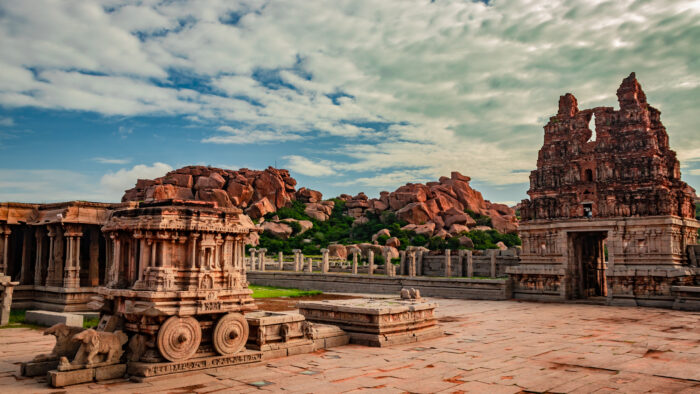
The setting unmistakably situates the event within the royal precincts of Vijayanagara, near the Vijaya Viṭṭhala temple at Hampi. It appears that Annam Bhaṭṭu was summoned to the capital by the trusted general Timma Nāyaka, son of Pemmasāni Timmanāyaka. The Dāna Śāsana was read aloud before the royal assembly, presided over by the Svayambhuvu sabhāpati at the Viṭhaleśvara sannidhi. This was no routine grant—it was a ceremonial proclamation, an agrahāra earned through rigorous intellectual engagement.
The grant entrusted Annam Bhaṭṭu with the responsibility of sustaining śāstric learning, upholding tarka, and guiding the continuity of dharma, with Garikapāḍu as its centre. The village thus became a living kṣetra of study, where knowledge circulated like breath and Veda ghoṣa—the resonant sound of Veda—shaped the rhythm of daily life.
Inscribed across three copper plates—each bearing writing on both faces—the Śāsana comprises six textual panels. This format ensures durability and reflects symbolic order: the three plates evoke triloka, trayī vidyā (Ṛg, Yajur, Sāma), and the triśūla of Śiva. Bound by a kadiyam clasp embossed with the Bhūvarāha mudrā, the plates are formally sealed. The Varāha symbol signifies cosmic protection—Viṣṇu raising Bhūmi from the depths—thereby safeguarding both land and learning.
Designated Mṛḍapadam, the grant is irrevocable and bound by dhārmic injunction. It is protected by injunctions prescribing consequences for violation, forming a śāstric kavaca—a protective enclosure around the act of giving. The agrahāra is declared putra pautra ādibhir bhogyam—to be enjoyed by sons, grandsons, and descendants—embedding generational continuity into the framework of dhārmic jurisprudence.
The inscription defines Garikapāḍu through directional ordering, mapping its boundaries across the eight quarters—prāgdiśa, āgneya, dakṣiṇa, nairṛti, paścima, vāyavya, uttara, and īśānya—each anchored by landmarks such as Bellamkonda hill, Kākarlavānipāḷeeya, Nāgavaram, Prattipāḍu, Tāḷḷūru, Guḍipāḍu, Nandipāḍu, and Nāgavaram. This eightfold mapping mirrors aṣṭadikpāla cosmology, transforming geographic space into a maṇḍala of dharma.
The village is described as resplendent with every kind of crop, its abundance marking it as a suitable site for yajña, adhyayana, and paramparā. The scribe emphasises its material and cultural wealth—hidden treasures, flowing waters, wells, ponds, and five designated gardens—where agriculture and dhārmic life converge. Prosperity here becomes śubhāśraya, the auspicious foundation of learning.
The agrahāra is framed as a śāstric saṃsthāna—a living institution where prosperity, order, and learning converge. The act of donation is elevated into a knowledge offering—jñāna yajña.
With the agrahāra established and the inscription interpreted, the narrative turns to its praśasti—a poetic eulogy that introduces Garikapati Annam Bhaṭṭu as a radiant embodiment of śāstra, his life shaped through śāstric discipline, disciplined inquiry, and paramparā.
The praśasti opens by situating Garikapati Annam Bhaṭṭu within the Kauśika lineage and as a follower of the Āpastamba Sūtra. It describes him as a sapling emerging from the wish-fulfilling tree of dharma.
He is hailed as Vādi Vāraṇasiṃha—a lion among elephants in philosophical deliberation. This title reflects his disciplined mastery of vāda, the art of structured philosophical engagement. Records and oral tradition describe his method with reverence: he would begin by listening with full attention, restating his opponent’s position with precision to confirm understanding—an act of intellectual courtesy and strategic clarity. Only then would he respond, calmly and without haste, revealing internal inconsistencies (doṣas) and identifying the nigrahasthāna—the point at which a position could no longer be sustained. His inquiry was anchored in śruti, smṛti, and darśana. His composure remained steady in both acclaim and contestation. Even when multiple scholars spoke at once, he engaged each sequentially, resolving every contention until the sabhā reached consensus. Only then would he turn to the next interlocutor. This rare synthesis of intellectual rigour and composure made him renowned across the Vijayanagara Empire as the true lion of philosophical contest.
The inscription then shifts to moral luminosity: yaśasvin—radiant and generous. His intellect is praised through the triad of pada, vākya, and pramāṇa, revealing a thinker whose clarity spanned Vyākaraṇa and Nyāya. Yet this prajñā was inseparable from contemplation upon Hari, as revealed through the Upaniṣads. Philosophy and contemplative discipline converged; Nyāya became a pathway toward ātma jñāna.
The closing verse presents him as puṇyamūrti—an embodiment of virtue perfected through service. The scholar appears not only as a master of inquiry, but also as one whose knowledge and dharma flowed outward into society.
With the bestowal of the Garikapāḍu agrahāra, Annam Bhaṭṭu received a trust of knowledge—a dhārmic mandate to sustain the continuity of śāstra and paramparā. The texts he composed thereafter—Tarka Saṅgraha, Tarka Saṅgraha Dīpikā, Brahmasūtra Vṛtti, Vyākaraṇa Vṛtti, among others—stand as enduring expressions of this responsibility fulfilled.
What sets Annam Bhaṭṭu apart is his commitment to sukhabodha—the resolve to make knowledge graspable. In his own words, his aim was bālānāṃ sukhabodhāya: to render profound systems intelligible even to beginners. For him, simplicity was not dilution but discipline; clarity was itself a mark of mastery.
In Tarka Saṅgraha, this vision takes structural form. Departing from convention, he begins with prameya (objects of knowledge) before pramāṇa (means of knowing), allowing beginners to first encounter what is known before examining how it is known. This ordering reflects his conviction that inquiry proceeds from the graspable toward the subtle. The result is a text of remarkable precision, within which complexity is carefully ordered rather than obscured.
His Tarka Saṅgraha Dīpikā extends this pedagogic method. Employing the framework of pūrvapakṣa, khaṇḍana and siddhānta, the work unfolds through layered clarification and disciplined exposition. Definitions are expanded, distinctions carefully maintained and inferential structures progressively illuminated. Though technically rigorous, the text retains the cadence of oral instruction.
Across disciplines—from Mīmāṃsā to Vedānta, Vyākaraṇa to Tarka—Annam Bhaṭṭu displayed unusual command over multiple śāstric traditions. His writings move confidently across these domains while preserving the technical discipline proper to each. In his Brahmasūtra Vṛtti, for instance, the interpretive discipline of Vedānta is articulated with structural precision and conceptual clarity.
His authorship extended far beyond Nyāya. In Mīmāṃsā, he wrote the Ranakaojjīvinī ṭīkā on Bhaṭṭa Somāntha’s Rānaka, and a ṭīkā on Tantravārttika. In Vedānta, he authored Mitākṣarā, Tattva Vivecana and a Brahmasūtra Vṛtti. In Vyākaraṇa, his Mitākṣarā on the Aṣṭādhyāyī and Pradīpodyotanaṃ on Kaiyaṭa’s Pradīpa remain enduring guides. In Tarka, beyond Saṅgraha and Dīpikā, he composed Tarka Bhāṣā Tattvaprabodhinī and Siddhāñjana, a detailed sub-commentary on Jayadeva Pakṣadhara Miśra’s Āloka commentary on Gaṅgeśa’s Tattvacintāmaṇi.
Across these works, a consistent method emerges: definitions are carefully ordered, distinctions precisely maintained and complex arguments unfolded step by step. Whether writing in Tarka, Vyākaraṇa, Mīmāṃsā or Vedānta, Annam Bhaṭṭu composed with the clarity of an ācārya concerned not merely with exposition, but with the successful transmission of knowledge.
Thus emerges the portrait of a teacher whose works were structured for continuity in learning. His sequencing of ideas, preference for the accessible before the abstract and commitment to sukhabodha transformed difficult śāstric material into teachable form without sacrificing precision or depth.
Annam Bhaṭṭu’s śāstra was not confined to manuscripts alone; it continued through the rhythm of paramparā. The Garikapati lineage preserved his works as living instruments of study. Even today, Tarka Saṅgraha is recited by students in Indian pāṭhaśālās, often serving as an early introduction to disciplined inquiry. Its compact definitions, ordered structure and pedagogic clarity continue to shape generations of learners.
Through Annam Bhaṭṭu, the agrahāra became a sustained centre of learning and transmission. His works circulated through paramparā, pāṭhaśālās and commentarial study, shaping generations of students in śāstric learning and disciplined inquiry. In him, scholarship, teaching and paramparā converged with unusual force and continuity.
From Mamillapalli to Kāśī and finally to Garikapāḍu, Annam Bhaṭṭu’s journey embodies the rhythm of śāstra and paramparā. What began as the resolve of a boy once inattentive to learning matured into the vision of an ācārya whose works—Tarka Saṅgraha, Dīpikā, Brahmasūtra Vṛtti, and numerous ṭīkās—continue to illuminate pathways of disciplined inquiry in service of dharma. The Dāna Śāsana that formally established Garikapāḍu stands as pramāṇa, situating his legacy within both cosmic and civic order.
This legacy did not end with Annam Bhaṭṭu. In 1952, his descendant, Śrī Garikapati Mahādeva Śāstrī, established a Veda Pāṭhaśālā in Achalapuram, Telangana—a living institution that continues to sustain the rhythm of śāstra, with more than fifty students engaged in daily recitation and study. Through such efforts, the Garikapati lineage has preserved the embodied transmission of knowledge, ensuring that the agrahāra remains a kṣetra of learning across generations.
The agrahāra, the śāstra, and the lineage together form a living continuity: that learning binds generations across time, that the scholar stands as a mūlastambha of knowledge, and that memory aligned with dharma continues to guide those yet to come.
Acknowledgements
I express my sincere gratitude to Prof. G. Narahari Sastry, IIT Hyderabad, for his guidance during the preparation of this essay. I am grateful to Mrs. G. Songeeta for her support and to Akanksha Garikapati (Master of Performing Arts) for her valuable assistance.
References
- Annambhaṭṭa. Brahma Sūtra with Mitākṣarā Gloss. Edited by Śrī P. S. Rāma Śāstrī, general editor T. Candraśekharan, Government of Madras, 1950. Internet Archive, https://archive.org/details/bsmitakshara/page/n13/mode/1up.
- Annambhaṭṭa. Tarka Saṅgraha. Bombay Sanskrit Series, 1918. Internet Archive, https://archive.org/details/TarkaSangrahaOfAnnambhatta1918BombaySanskritSeries.
- Annambhaṭṭa. Vyākaraṇa-Mītākṣarā: A Gloss on Pāṇini’s Grammatical Aphorisms. Edited by S. P. S. Jagannāthaswāmy Āryavaragu and Bhattanātha Swāmyvidyārāta, Vidyā Vilās Press, 1906. Internet Archive, https://archive.org/details/in.ernet.dli.2015.345309/page/n933/mode/2up
- Caturvedi, Amareśvara Śāstrī. Agrahārōpahāramu: Śrī Narasiṃha Bhaṭṭa Caritrātmakamu [The Endowment of an Agrahāra – A Biographical Account of Śrī Narasiṃha Bhaṭṭa]. Śāntisrī Mudranālayamu, 1974.
- Coward, H. G., and K. K. Raja, editors. The Philosophy of the Grammarians. Vol. 5 of Encyclopedia of Indian Philosophies, Princeton University Press, 1990. Internet Archive, https://dn721907.ca.archive.org/0/items/the-encyclopedia-of-indian-philosophies/5%20The%20Philosophy%20of%20the%20Grammarians.pdf.
- Garikapati, Lakṣmī Kaṇṭaiyaḥ. “Garikapati Annam Bhaṭṭu.” Śrī Śāradā Vyāsa Maṇiharamu [Garland of Śāradā Vyāsa]. Dakṣiṇa Bhārata Press, 1976.
- Garikapati, Lakṣmī Narasiṃham. Garikapati Vaṃśa Caritra [History of the Garikapati Lineage]. Uday Printers, 2007.
Feature Image Credit: Istock
Disclaimer: The opinions expressed in this article belong to the author. Indic Today is neither responsible nor liable for the accuracy, completeness, suitability, or validity of any information in the article.