
From Knowing to Being in Vedanta
Introduction
Conviction is the seed, but clarity is the life it grows into.
There is a quiet space within every seeker where questions rise like soft ripples. What is the truth of my life? How do I live what I know? In that silence, the mind may recall words of wisdom, but the heart still longs for experience. The journey of the Bhagavad Gītā begins in such a space. It begins with doubt, with trembling, with a human being standing at a threshold. And it unfolds not as abstract philosophy but as a gentle guidance: take what you know, hold it close, practice it, live it, and let it blossom into clarity.
The following reflections trace this unfolding. They invite the reader to walk with Arjun, to listen to Śhrī Kṛiṣhṇa, and to see how conviction of the mind can become the song of life itself.
Every seeker knows the difference between what the head understands and what the heart lives. Ideas, however noble, often remain in the realm of thought. The Bhagavad Gītā begins with Arjun standing in that gap. He knows his duty as a warrior, yet when faced with the battlefield, conviction in his dharm fades. Śhrī Kṛiṣhṇa steps in, not only to restore his courage but to show the universal path from knowing to being. This is the journey from intellectual conviction to lived clarity. It is the slow transformation of truth from an abstract idea into the living pulse of everyday life. The Gītā affirms that this is not reserved for saints or scholars. Every person can walk this path, beginning where they are.
The journey unfolds through steady steps. The mind first grasps an idea. Then practice deepens it. Action brings it into the body. Surrender softens resistance. Finally, qualities of the heart blossom, and clarity is lived without strain. This is the arc of the Gītā’s teaching, flowing across its eighteen chapters and crystallized in Bhakti Yoga (Chapter 12).
The Gītā’s Larger Context: Knowledge, Devotion, and Action
The Gītā is often described as a synthesis of three great paths: Jñāna Yoga, Karma Yoga, and Bhakti Yoga. Jñāna Yoga appeals to the intellect. It speaks of the eternal Self, untouched by birth and death (BG 2.20). It guides the seeker to think, to discriminate, and to hold on to truth with reason. Karma Yoga appeals to the will. It teaches that action done without selfish motive purifies the mind (BG 3.19). Bhakti Yoga appeals to the heart. It teaches that love and surrender bring the deepest union with the Divine (BG 12.20).
Conviction belongs to the first stage. It comes when the intellect hears truth and accepts it. Clarity belongs to the last stage when life itself breathes truth without effort. The Gītā holds these stages together. Kṛiṣhṇa does not dismiss intellectual conviction as shallow, nor does he leave the seeker trapped in thought. He gently leads from conviction to clarity by uniting knowledge, devotion, and action.
Intellectual Conviction: The First Step
In Chapter 2, Arjun hears that the soul cannot be slain, that it is eternal, unborn, and undying (2.19–21).
य एनं वेत्ति हन्तारं यश्चैनं मन्यते हतम् ।
उभौ तौ न विजानीतो नायं हन्ति न हन्यते ॥ BG २.१९ ॥
ya ēnaṁ vētti hantāraṁ yaścainaṁ manyatē hatam |
ubhau tau na vijānītō nāyaṁ hanti na hanyatē || 2.19 ||
(One who thinks that the soul kills or is killed does not understand. The soul neither slays nor can it be slain.)
न जायते म्रियते वा कदाचिन्नायं भूत्वाभविता वा न भूयः ।
अजो नित्यः शाश्वतोऽयं पुराणो न हन्यते हन्यमाने शरीरे ॥ BG २.२० ॥
na jāyatē mriyatē vā kadācinnāyaṁ bhūtvābhavitā vā na bhūyaḥ |
ajō nityaḥ śāśvatō:’yaṁ purāṇō na hanyatē hanyamānē śarīrē || 2.20 ||
(The soul is unborn, eternal, ever-existing, and ancient. It does not die when the body dies.)
वेदाविनाशिनं नित्यं य एनमजमव्ययम् ।
कथं स पुरुषः पार्थ कं घातयति हन्ति कम् ॥ BG २.२१ ॥
vēdāvināśinaṁ nityaṁ ya ēnamajamavyayam |
kathaṁ sa puruṣaḥ pārtha kaṁ ghātayati hanti kam || 2.21 ||
(One who truly understands the soul’s imperishable and eternal nature does not engage in killing or think that he causes anyone’s death.)
The intellect can grasp this. Conviction forms when the seeker recognizes truth in reasoned words. This stage is powerful. It steadies values and offers direction. One who knows that the Self is eternal will not be broken by temporary loss. One who knows the body is perishable will not cling too tightly.
Yet conviction of the intellect is fragile. The same Arjun who nods in Chapter 2 finds himself confused again in Chapter 3, asking why he must act if knowledge is higher (3.1).
अर्जुन उवाच —
ज्यायसी चेत्कर्मणस्ते मता बुद्धिर्जनार्दन ।
तत्किं कर्मणि घोरे मां नियोजयसि केशव ॥ BG ३.१ ॥
Arjuna uvāca —
jyāyasī cētkarmaṇastē matā buddhirjanārdana |
tatkiṁ karmaṇi ghōrē māṁ niyōjayasi kēśava || 3.1 ||
(Arjun said: O Janārdana (Shri Kṛiṣhṇa), if you consider knowledge (Jñāna) superior to action (Karm), then why are you urging me to engage in this dreadful battle, O Keśava?)
Conviction in the head does not always quiet the turbulence of the heart. Śhrī Kṛiṣhṇa recognizes this weakness. Śhrī Kṛiṣhṇa responds with patience, reminding Arjun that conviction is only the first step. Knowledge must be lived, not only thought.
Practice and Repetition: Moving Beyond the Head
Śhrī Kṛiṣhṇa then turns to practice. In Bhagavad Gītā Chapter 6, he declares that the yogi must rise by steady effort, not allowing the self to degrade itself (BG 6.5).
उद्धरेदात्मनात्मानं नात्मानमवसादयेत् ।
आत्मैव ह्यात्मनो बन्धुरात्मैव रिपुरात्मनः ॥ BG ६.५ ॥
uddharēdātmanātmānaṁ nātmānamavasādayēt |
ātmaiva hyātmanō bandhurātmaiva ripurātmanaḥ || 6.5 ||
(One must uplift oneself through self-effort and not degrade oneself. The self is both the friend and the enemy of an individual. A disciplined and enlightened mind becomes one’s greatest ally, while an uncontrolled mind becomes one’s greatest adversary.)
He emphasizes abhyāsa (practice) and vairāgya (detachment) as twin supports (BG 6.35).
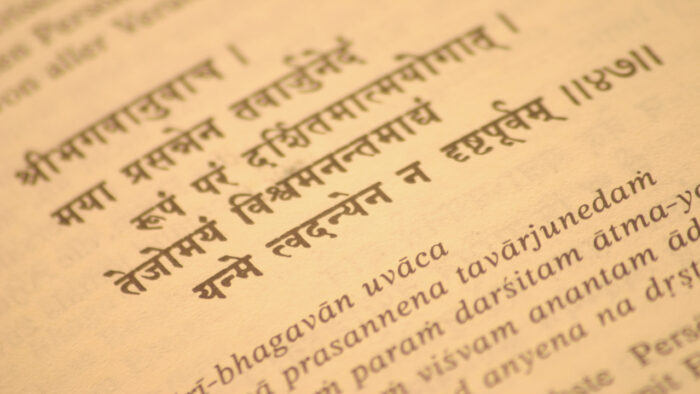
श्रीभगवानुवाच —
असंशयं महाबाहो मनो दुर्निग्रहं चलम् ।
अभ्यासेन तु कौन्तेय वैराग्येण च गृह्यते ॥ BG ६.३५ ॥
śrībhagavānuvāca —
asaṁśayaṁ mahābāhō manō durnigrahaṁ calam |
abhyāsēna tu kauntēya vairāgyēṇa ca gr̥hyatē || 6.35 ||
(Shri Krishna said: O mighty-armed Arjun, no doubt the mind is restless and difficult to control, but through practice and detachment, it can be mastered.)
Practice means repetition. It means returning again and again to remembrance. Detachment means loosening the hold of desires that scatter attention.
Here conviction begins to sink deeper. What was an idea is repeated until it becomes a natural pattern. Just as a musician must rehearse until notes flow without effort, the seeker must return to the Divine until remembrance becomes second nature.
Just as a musician must rehearse until notes flow without effort, the seeker must return to the Divine until remembrance becomes second nature.
Action as Devotion: Clarity through Karma Yoga
Śhrī Kṛiṣhṇa reminds Arjun that life cannot be lived without action (BG 3.5).
न हि कश्चित्क्षणमपि जातु तिष्ठत्यकर्मकृत् ।
कार्यते ह्यवशः कर्म सर्वः प्रकृतिजैर्गुणैः ॥ BG ३.५ ॥
na hi kaścitkṣaṇamapi jātu tiṣṭhatyakarmakr̥t |
kāryatē hyavaśaḥ karma sarvaḥ prakr̥tijairguṇaiḥ || 3.5 ||
(No one can remain inactive even for a moment. Every being is compelled to act according to their nature, which is influenced by the three guṇas; sattva, rajas, and tamas.)
The body itself compels activity. The real choice is not between acting and not acting but between selfish action and selfless action. Karma Yoga transforms every task into devotion. When work is offered to the Divine, action becomes a bridge between thought and clarity.
Chapter 3 insists that duty performed without attachment purifies the doer (BG 3.19). Chapter 5 shows that the wise one is free even while acting, because all actions are seen as belonging to nature, not to the Self (BG 5.8–9).
नैव किञ्चित्करोमीति युक्तो मन्येत तत्त्ववित् ।
पश्यञ्शृण्वन्स्पृशञ्जिघ्रन्नश्नन्गच्छन्स्वपञ्श्वसन् ॥ BG ५.८ ॥
naiva kiñcitkarōmīti yuktō manyēta tattvavit |
paśyañśr̥ṇvanspr̥śañjighrannaśnangacchansvapañśvasan || 5.8 ||
(The enlightened one, who knows the truth, thinks, “I do nothing at all,” even while seeing, hearing, touching, smelling, eating, walking, sleeping, and breathing.)
प्रलपन् विसृजन्गृह्णन्नुन्मिषन्निमिषन्नपि ।
इन्द्रियाणीन्द्रियार्थेषु वर्तन्त इति धारयन् ॥ BG ५.९ ॥
pralapan visr̥jangr̥hṇannunmiṣannimiṣannapi |
indriyāṇīndriyārthēṣu vartanta iti dhārayan || 5.9 ||
(While talking, giving up, grasping, opening, or closing the eyes, the wise person understands that it is only the senses interacting with their objects and does not associate the actions with the self.)
Karma Yoga highlights how clarity is discovered in the midst of action, where duty and service become living devotion.
Service to family, society, and strangers becomes sacred. A teacher imparting knowledge, a parent caring for children, a worker fulfilling duties all embody devotion when they act without selfish claim. Action then ceases to be a burden. It becomes worship.
Surrender of Results: The Gateway to Lived Clarity
In Bhagavad Gītā Chapter 12, verses 11–12, Śhrī Kṛiṣhṇa lowers the bar with compassion. If one cannot hold the mind steady, if practice falters, if service is not constant, then simply renounce the fruits of action. Do your work and release the outcome into My hands (BG 12.11).
This teaching is profound. It shows that clarity does not require heroic feats. It begins with trust. Here Śhrī Kṛiṣhṇa shows surrender as the heart of Bhakti Yoga, revealing that clarity rests not in achievement but in release. Surrender is the simplest and most practical way to live clarity. It cuts the knot of anxiety. It brings serenity in the midst of complexity.
The wisdom of surrender is echoed throughout the Gītā. In Chapter 18, Śhrī Kṛiṣhṇa calls it the highest wisdom: to renounce the fruits of action is true renunciation (BG 18.11).
न हि देहभृता शक्यं त्यक्तुं कर्माण्यशेषतः ।
यस्तु कर्मफलत्यागी स त्यागीत्यभिधीयते ॥ BG १८.११ ॥
na hi dēhabhr̥tā śakyaṁ tyaktuṁ karmāṇyaśēṣataḥ |
yastu karmaphalatyāgī sa tyāgītyabhidhīyatē || 18.11 ||
(It is not possible for a person living in the body to completely stop all action. But the one who gives up the attachment and desire for outcomes is considered a true renunciate.)
Finally, in the last verse of his teaching, he asks Arjun to abandon all dharmas and take refuge in Him alone (18.66). This is the flowering of lived clarity.
The Inner Qualities that Support the Journey
Conviction matures only when supported by inner qualities. In Bhagavad Gītā Chapter 12, verses 13 to 20, Śhrī Kṛiṣhṇa lists the marks of a true devotee. Compassion, humility, freedom from hatred, equanimity, and patience are named. These qualities show that clarity is not an intellectual glow but a transformation of the heart.
Chapter 16 gives another perspective. It contrasts divine qualities with demonic tendencies. Fearlessness, purity of heart, self-control, and nonviolence belong to the divine (BG 16.1–3). Hypocrisy, arrogance, anger, and greed belong to the demonic (BG 16.4). The seeker must choose. Without cultivating divine qualities, conviction remains brittle. With them, it grows firm.
These qualities are nurtured not by sudden effort but by daily living. Choosing honesty over falsehood, kindness over harshness, patience over anger; these small choices shape the soil where conviction blossoms into clarity. In this way, the Gītā shows that qualities such as compassion, humility, and equanimity are not side virtues but the very supports that carry conviction into lived clarity, making it steady, resilient, and real.
From Conviction to Clarity in Bhakti Yoga
The ladder of verses BG 12.8–12.12 is one of the most compassionate sections of the Gītā. Fix the mind on Me (BG 12.8). If not, practice steady remembrance (BG 12.9). If not, act in My service (BG 12.10). If not, at least renounce the fruits of your work (BG 12.11). At every level, a step is open. No seeker is excluded.
This ladder reflects the larger spirit of the Gītā. Śhrī Kṛiṣhṇa calls devotion the royal secret (9.2). Even a leaf, a flower, or a drop of water offered with love is accepted by Him (9.26). No act is too small when done with devotion. Intellectual conviction finds its final home in this tenderness. Devotion makes clarity lived in the smallest details of life.
Vedantic Insight: Knowledge Transformed into Being
Vedanta speaks of three stages: śravaṇa (hearing), manana (reflection), and nididhyāsana (deep meditation). Hearing builds conviction. Reflection clears doubts. Meditation dissolves the gap between knower and known. The Gītā reflects this triad. Arjun hears Kṛiṣhṇa’s words. He reflects by asking questions. He finally lives the teaching through surrender.
Conviction belongs to śravaṇa and manana. It is shaped by reasoning. But clarity belongs to nididhyāsana. Knowing about the Self is different from resting as the Self. Realization begins when thought dissolves into being. The Gītā bridges this path by weaving Vedantic insight into daily action. It insists that realization is not for the cave alone but for the battlefield of life.
Modern Resonances
We live in a time when knowledge is everywhere. Talks, books, and online resources make ideas easy to reach. Conviction can form quickly. A person may hear a truth, agree with it, and feel inspired. Yet when life brings pressure, that conviction often fades. The question remains: why is it so hard to live what we know?
Psychology offers one answer. Human behavior is shaped by habits. These habits are built through repetition. Once a pattern sets in, it tends to take over. Even when the mind holds a clear idea, the pull of old habits can be strong. Neuroscience has shown that practice reshapes the brain. Each repeated act strengthens new pathways and weakens old ones. In this way, practice makes the idea more natural. Research confirms this. Studies show that habits are not formed in a day. Regular effort over many weeks helps a new habit take root (PMC article).
Another area of study looks at surrender. Research such as the Clements study (Clements study) shows that when people release control and let go of outcomes, stress reduces and resilience increases. This provides a psychological confirmation of Śhrī Kṛiṣhṇa’s assurance that surrender of results (BG 12.11, BG 18.11) leads to peace.
Modern research on mindfulness also shows the value of steady practice. Programs like Mindfulness Based Stress Reduction (MBSR) demonstrate how repetition of simple, structured practices reshapes attention, reduces anxiety, and improves emotional balance (MBSR overview). This mirrors the Gītā’s call to abhyāsa, where conviction ripens into clarity through steady repetition.
For seekers today, this has clear meaning. Neuroscience confirms that repeated practice rewires neural pathways, and psychology shows that surrender reduces stress and fosters resilience ; creating the inner conditions where clarity can take root. Each repetition plants a seed. Each act of release quiets the heart. Over time conviction ripens into clarity. This truth is as relevant in the modern age as it was on the battlefield of Kurukshetra.
Living the Teaching Today
What does conviction turning into clarity look like in ordinary life? How can these teachings shape life now? At work, one can act with full sincerity while surrendering outcomes. In family life, one can express love without constant demand. In personal life, one can pause for small moments of remembrance. These practices are steady and simple, woven quietly into daily life.
A student can study with focus, yet surrender grades. A parent can guide children, yet release expectations. A leader can make decisions with care, yet trust the larger flow. In each case, conviction moves into clarity through surrender. The mind is freed from constant grasping. Life becomes more spacious.
Śhrī Kṛiṣhṇa assures that no effort is lost. Even a little practice protects from great fear (2.40). Every small act of devotion matters. Clarity does not arrive all at once. It grows like dawn. Each day lived with remembrance, service, and surrender brings the light closer.
Conclusion
The journey from intellectual conviction to lived clarity is the core of the Bhagavad Gītā. It begins with thought and ends in transformation. It passes through practice, action, surrender, and the blossoming of divine qualities. The Gītā is patient. It accepts every seeker at their level. Whether through knowledge, practice, service, or surrender, clarity is possible.
For Arjun, the journey ended with a simple statement: “My delusion is destroyed. I am firm. I will act according to Your word” (BG 18.73). Conviction had become clarity. Thought had become being. The battlefield remained, but Arjun was no longer confused. He had moved from knowing to living. Śhrī Kṛiṣhṇa Himself affirms this in Bhakti Yog: ‘Such devotees are exceedingly dear to Me’ (BG 12.20). Clarity finds its fulfillment not in thought alone but in devotion lived through love, steadiness, and surrender.
The same journey is open to us. Each moment is an invitation to let conviction breathe through action, through remembrance, through surrender. Then clarity is not a distant dream. It becomes the rhythm of life, quiet, steady, and real.
The journey never asks for perfection. It asks only for sincerity. Each step, however small, is honored. Each moment of remembrance is received. In the end, clarity is not an achievement but a return. It is the soul remembering what it always knew. To walk this path is to live in quiet freedom, where life itself becomes an offering and the Self shines as the hidden light within all things.
Key Terms
Here are the key terms glossary in alphabetical order
- Abhyāsa: Steady practice that shapes the mind through repetition. It turns knowledge into habit and supports the growth of clarity.
- Ahaṅkāra: The sense of “I” that claims ownership. As surrender grows, ahaṅkāra softens and loses its grip.
- Ātman: The eternal Self, untouched by birth and death. Realization of Ātman is the highest clarity.
- Bhakti: Devotion expressed as love, service, and remembrance of the Divine. It warms intellectual conviction with the heart’s trust.
- Bodha: Awareness that arises from deep reflection. It steadies conviction and prepares for clarity.
- Buddhi: The intellect that reasons and discerns. It provides the first step of conviction by recognizing truth.
- Clarity: The state where truth is lived without strain. Thought, feeling, and action move in harmony.
- Conviction: The settled inner agreement with truth. It begins with the intellect and is made real through practice.
- Dharm: Right action aligned with inner duty and universal order. It anchors conviction in daily living.
- Dhyāna: Meditation that quiets the mind and opens deeper presence. It helps conviction ripen into lived clarity.
- Emotion: The energy of feeling that shapes memory and action. When purified, it supports devotion and clarity.
- Faith: Lived trust that sustains effort even in uncertainty. In the Gītā it is śhraddhā, the inner compass of the seeker.
- Guṇas: The three qualities of nature. Sattva brings clarity, rajas drives restlessness, and tamas covers with dullness.
- Habit: Automatic patterns built through repetition. Helpful habits carry conviction forward into steady clarity.
- Humility: The openness to learn and receive guidance. It protects against pride and keeps conviction soft.
- Insight: A fresh seeing that reshapes priorities. It often follows deep practice or surrender.
- Integration: The joining of thought, feeling, and action. It is the sign that conviction has matured.
- Intellect: The reasoning function of the mind. It shines when used as a servant of higher truth.
- Jñāna: Knowledge that reveals the Self. In the Gītā, it becomes real when lived through karma and bhakti.
- Karma Yog: The path of action done without selfish aim. It transforms duty into devotion and brings clarity in life.
- Limbic System: Brain structures that process emotion and motivation. They anchor the link between conviction and feeling.
- Manas: The lower mind that wavers and reacts. It is steadied through abhyāsa and vairāgya.
- Meditation: Quiet sitting with awareness of breath, sound, or mantra. It grounds conviction in lived presence.
- Mindfulness: Simple awareness of the present moment. It helps bridge thought and lived clarity.
- Nididhyāsana: Deep contemplation where truth sinks beyond thought. It is the final stage of Vedantic practice.
- Neuroplasticity: The brain’s ability to change with practice. It explains why repetition gradually turns conviction into habit.
- Practice: Steady effort repeated over time. It is the bridge from knowing to being.
- Prayer: Heartful turning to the Divine. It nurtures surrender and softens the hold of the ego.
- Prefrontal Cortex: The brain’s center for focus and planning. It helps sustain conviction against distraction.
- Resilience: The ability to rise after difficulty. Practice and faith together strengthen resilience.
- Sādhana: A chosen path of practice such as meditation, chanting, or service. It gives structure to the journey.
- Saṃskāra: Subtle impressions left by repeated acts. They shape tendencies and can be refined through awareness.
- Sāttva: The quality of clarity, harmony, and light. It nurtures both conviction and lived wisdom.
- Selfless Service: Action done as offering without demand for return. It is a practical doorway to clarity.
- Silence: Inner quiet that allows deeper listening. It creates space for conviction to mature.
- Śhraddhā: Reverent trust in truth, teacher, and path. It is the heart of the Gītā’s teaching on faith.
- Surrender: Release of control and outcomes. It opens the way for peace and lived clarity.
- Svadharm: One’s own duty in a given role or stage of life. Living it sincerely supports conviction.
- Vairāgya: Detachment from the pull of desires. It balances practice and steadies the seeker.
- Vedantic Insight: The recognition of the Self through scripture, reason, and contemplation. It shows the unity of knowledge and life.
- Viveka: The power of discernment. It helps the seeker distinguish between what is lasting and what is fleeting.
- Yoga: Union of body, mind, and Self. It is both the path and the fruit of lived clarity.
Further Reading
For deeper insight into the themes explored in “A Journey from Intellectual Conviction to Lived Clarity”
1. Bhagavad Gītā – Chapter 12: Bhakti Yoga
This chapter presents the progressive steps from fixing the mind on God to surrendering the fruits of action. It forms the scriptural backbone of the article, showing how conviction is gently guided into lived clarity through practice, service, and surrender.
2. Bhagavad Gītā – Chapter 2: Sānkhya Yoga
Here Śhrī Kṛiṣhṇa teaches the eternal nature of the Self and the steadiness of wisdom. It provides the starting point of intellectual conviction, making it a foundational text for understanding the first stage of the journey.
3. The Principal Upanishads – Translated by Swami Nikhilananda
These texts explore the methods of śravaṇa, manana, and nididhyāsana. They show how conviction in truth matures into realization, giving deeper Vedantic context to the movement from thought to clarity.
4. Bhagavad Gītā – Swami Dayananda Saraswati
A detailed commentary that highlights clarity of thinking and practical application. It emphasizes how conviction formed through right understanding matures into a life of dharm, devotion, and surrender.
5. Bhagavad Gītā Bhāṣhya – Śaṅkarāchārya
The classical Vedantic commentary that grounds the Gītā in non-dual insight. It shows how conviction in the intellect, when deepened through meditation, dissolves into direct realization of the Self.
6. The Neuroscience of Meditation – Edited by Yi-Yuan Tang and Britta Hölzel
A collection of research studies that explain how meditation, mindfulness, and repetition alter the brain. It enriches the article’s exploration of how abhyāsa and surrender are reflected in modern science.
7. The Power of Habit – Charles Duhigg
A modern study of how habits form and change. It connects with the Gītā’s teaching that repeated practice and surrender reshape patterns of thought and action, leading conviction toward clarity.
Note on Sources: This article draws primarily on the Bhagavad Gītā. Key references include 2.19–21 on the immortality of the Self, 3.5 and 3.19 on the necessity and purity of action, 6.35 and 6.40 on practice and effort, 12.8–12.12 on the progressive ladder of devotion, 12.13–20 on the qualities of a true devotee, and 18.11 and 18.66 on surrender as the highest wisdom. These verses together frame the journey from intellectual conviction to lived clarity.
The scriptural themes are situated within the Vedantic framework of the Prasthāna-Traya: the Upanishads, the Bhagavad Gītā, and the Brahma Sutras. The Upanishadic emphasis on śravaṇa, manana, and nididhyāsana provides the background context for understanding how conviction matures into realization. Standard English translations of these texts were consulted for clarity and consistency.
The neuroscience perspective integrates peer-reviewed research that links practice, repetition, and surrender to lasting inner change: Immordino-Yang, M. H., & Damasio, A. (2007). Mind, Brain, and Education, 1(1), 3–10. https://doi.org/10.1111/j.1751-228X.2007.00004.x; Schjoedt, U., Stødkilde-Jørgensen, H., Geertz, A. W., & Roepstorff, A. (2009). Social Cognitive and Affective Neuroscience, 4(2), 199–207. https://doi.org/10.1093/scan/nsn050; Brewer, J. A., et al. (2011). Proceedings of the National Academy of Sciences, 108(50), 20254–20259. https://doi.org/10.1073/pnas.1112029108. These studies highlight why conviction must move beyond thought, showing how practices of remembrance, service, and surrender reshape the mind and ground clarity in lived experience.
Feature image credit: istockphoto.com
Disclaimer: The opinions expressed in this article belong to the author. Indic Today is neither responsible nor liable for the accuracy, completeness, suitability, or validity of any information in the article.