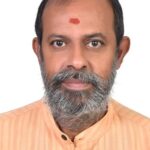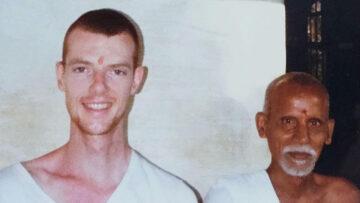

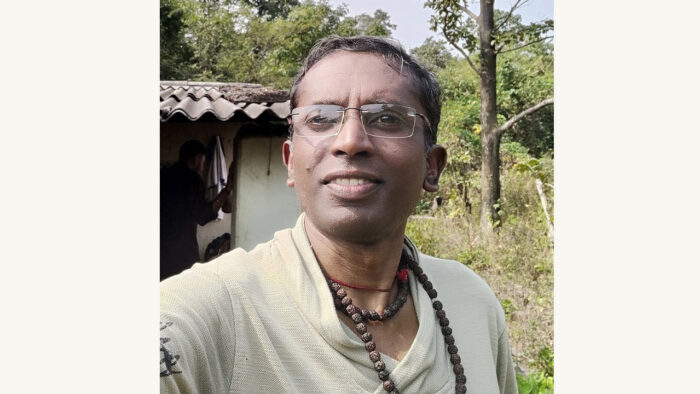
Jacob Shivanand, affectionately known to his followers as Jake Light, is a contemporary spiritual master whose life bridges the sacred and the everyday — grounded in deep meditative awareness while fully engaged with the complexities of modern life. Born with an innate spiritual yearning, Jake’s journey took him across India in search of truth, learning from saints, mystics, and living Avadhutas.
Over the decades, his path has been anything but easy. Profound emotional upheavals, intimate brushes with death, and deep personal losses became turning points in his inner evolution. Rather than breaking him, these experiences forged his central insight — that suffering, when rightly understood, is not a curse but Anugraha Shakti, divine grace guiding the soul toward awakening.
Known for his quiet humility, sharp insight, and fearless dismantling of spiritual pretensions, Jake speaks not from borrowed philosophy but from the authority of direct experience. His satsangs and writings possess a rare alchemy — they challenge the ego even as they heal the heart, urging seekers to look beyond material pursuits toward the luminous goal of self-realization.
In my experience, especially during my conversation with Jake Light, I felt that in his presence, spirituality ceases to be an escape from the world; it becomes a way of seeing life itself — radiant, immediate, and whole.
You were born as Jacob Thomas in a Roman Catholic family from Kerala and are now known as Jacob Shivanand — or Jake Light, as your followers call you. Could you describe that journey? How did it unfold, and what were your early mystical experiences?
I was born in Belgaum, Karnataka, into a Roman Catholic family from Kerala. From childhood, my bond with Jesus was intimate and personal — not ritualistic. I would slip into the church at odd hours, sit alone, and commune with Him in silence. Growing up in an Army environment, surrounded by people of many faiths, I instinctively felt all religions were equal, though I didn’t yet understand that mystics across traditions point to the same Truth. My father himself was drawn toward Hinduism and joyfully volunteered during Ganesh Chaturthi and Ayyappa festivals — perhaps the fruit of past-life merit.
A small childhood incident strengthened my faith: a kitten in our house suddenly went blind. I prayed earnestly for two days, saw no result, and, in despair, told my mother that a God who couldn’t help a helpless animal was useless. The very next day, miraculously, the kitten’s eyesight returned. Overwhelmed with guilt and gratitude, I lit candles and thanked Mother Mary and Jesus for what felt like a miracle.
Another early experience still stands out. When a teacher once asked a classmate to shut the classroom doors, a sudden, intense fear seized me — as though a mob would storm in and kill us. The fear vanished only when the doors were reopened. Much later, in meditation, I understood it as a flash from a past life marked by persecution and violent death.
In my teens, I felt a deep pull toward Islam through my Muslim friends. I loved Urdu, qawwalis, dargahs, and even observed Roza during Ramzan. At 22, while walking home one evening, the Gayatri Mantra arose within me spontaneously, filling me with peace. Soon I was learning and singing many mantras and slokas, often performing them on stage.
Years later, while serving at my Guru Avdhoot Shivanand’s ashram in Delhi, I fell seriously ill. Guruji instructed me to visit certain Maulvis in Alwar, Rajasthan. Reluctantly, I went. Sitting in a mosque during namaz, I felt a surge of powerful energy — like an electric current — and a deep connection to the formless, attribute-less God worshipped there. By evening, my illness had vanished. When Guruji called, he said he already knew of both the healing and the mystical experience, which, he explained, were linked to past-life impressions.
Through such experiences — in Christianity, Hinduism, Islam, and Sikhism — I came to understand that the soul journeys through many lives, learning through diverse faiths and forms of worship. The essence remains universal. This lifetime has revealed one clear truth to me: all religions and all paths are one, and God is one.
What was the turning point in your life?
When my first love failed, I fell into deep depression, slipped into bad company, and became addicted to tobacco, smoking, and alcohol — spending 5–7 hours a day in bars. Even after marriage, though I quit these habits, my family life remained troubled. My world revolved around my little daughter, and when the marriage ended in divorce, the separation shattered me. Life without the babe was unbearable. I withdrew from everyone, sank into depression, and even contemplated ending my life.
In that helpless state, I confided in a friend and asked for spiritual books. He gave me Ashtanga Yoga and Paramartha Katha Prasang by Swami Muktananda. The second book soothed my broken heart, and I felt a strong urge to meet Swami Muktananda. Reaching Ganeshpuri, I learned he had already taken samadhi. Disappointed, we stood unsure until an auto driver suggested visiting the Nityananda Ashram nearby.
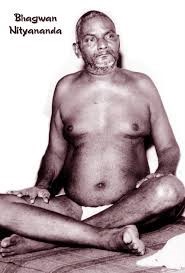
The moment I entered Kailash Nivas, where Bhagwan Nityananda had lived, a profound peace enveloped me. As I meditated before his chair, my mind was filled with thoughts of custody battles and revenge. Suddenly, I heard a voice within: “Forgive. Everything happens for a reason.” Still confused, I prayed for guidance in finding a Guru. The same voice repeated: “I am with you. Forgive. Everything happens for a reason.”
I returned home calmer, but after a month the sadness resurfaced. By then I was watching spiritual programmes and attended a session by Avadhoot Shivanand ji, a master in the Nityananda lineage. I instantly felt drawn to him and eventually joined him. Living with a realised master purified me and revealed the deeper mysteries of Guru Datta. That phase transformed me into Jacob Shivanand, a spiritual identity that felt completely natural.
How did you come out of your vices after the divorce and relapse?
Although I had quit drinking and smoking after marriage, the divorce and separation from my daughter pushed me back into addiction, worse than before. It was sheer grace that took me to Ganeshpuri and set my life on a new path. From then on, spirituality absorbed me completely. I travelled extensively across India, especially the South, meditating in ashrams, caves, forests, hills, and meeting yogis, saints, and avadhutas.
Gradually, alcohol began to nauseate me and smoke suffocated me — the addictions simply dropped away. Later, working full-time at my Master’s ashram left no space for distractions. Even my family and friends were stunned by the transformation.
Looking back, the trauma of divorce proved to be a disguised blessing. With no family opposition, I could freely travel to spiritual places and immerse myself in sadhana. People around me, understanding my depression, were relieved that I had chosen the spiritual path instead of destructive habits.
Yet the emotional wound persisted, and I harboured deep anger toward my ex-wife. One day, during sadhana, I received a powerful insight into the link between my present and past lives. I saw that she had been my spouse in a previous birth too, and at the peak of my spiritual evolution, something she did had caused my fall. The guilt she carried from that lifetime made her subconsciously feel responsible to bring me back to the spiritual path in this life — leading to the dramatic events of this lifetime. She herself was unaware of this.
That realisation dissolved all my pain. My anger turned into respect and gratitude. I finally understood the earlier inner message from Ganeshpuri: “I am with you. Forgive! Everything happens for a reason.”
Since then, my entire perspective on life and karma has changed, and I am able to guide others through the hidden dramas created by past impressions and soul-level intentions.
Please tell about the holy places you have visited and the memorable experiences you had there.
Since 2008, I have travelled across India visiting Jeeva Samadhis and sacred sites to deepen my sadhana. In Kerala, I visited Kanhangad, Koyilandi, Thalassery (places in Kerala connected with Bhagwan Nityananda), and Omallur near Pathanamthitta, the Jeeva Samadhi of Shivaprabhakara Siddhayogi. I also visited the Jeeva Samadhis of all 18 Siddhars of Tamil Nadu, along with many Samadhi sites in Karnataka and Maharashtra.
One place that profoundly touched me was Chamunda Hill in Dewas, Madhya Pradesh — where Raja Bhartrihari, Shrinath Maharaj of the Navnath tradition, and Ma Lalleshwari of Kashmir Shaivism performed penance. There I had the rare fortune of meeting a saint from Ma Lalleshwari’s lineage.
During a stay at the Ganeshpuri Ashram, I came across a rare book, The Last Composition, about Ma Lalleshwari by Vishnu Tirth Maharaj. Reading it at Thane bus stand, her life’s pain and depth overwhelmed me; I sat absorbed for an hour, oblivious to the surroundings.
Soon after, a sudden inner shift occurred — I began witnessing my actions from a deeper awareness. This transformed my life. Within months, I created the website Shifting Into Awareness and began spontaneous live sessions that often lasted five to six hours. Even I was surprised listening to my own talks, and people said they were deeply helped.
A few days later, I visited the ashram of Swami Satchidananda, a disciple of Vishnu Tirth Maharaj, in Dewas. Though guests aren’t usually allowed, Swamiji, after meditating, said, “Sometimes rules have to be broken — stay for three days.” I had profound mystical experiences there, meditated in Vishnu Tirth Maharaj’s room, and watched rare videos of his Guru, Shivam Tirth Maharaj. Seeing Bhagwan Nityananda’s photo there, I realised Vishnu Tirth Maharaj had regularly visited Ganeshpuri — completing a mysterious inner link in my own journey. I feel the present “shifting into awareness” work flows from the blessings of these great masters.
Could you please share your connection with the Shiva Sutras and the Vijnanabhairava Tantra?
Months later, while conducting a retreat in Tiruvannamalai, a participant gifted me Swami Lakshman Joo’s book on the Shiva Sutras — the very text I had been searching for online the previous week. Ma Lalleshwari herself followed the Shiva Sutras. Three months later, I travelled to Kashmir, visited places connected with her, and went to Swami Lakshman Joo’s abode. I felt a deep karmic link with the Shiva Sutra lineage.
For the past several months, I have been receiving inner “downloads” and teaching Vijnan Bhairava Tantra and the Shiva Sutras. Interestingly, when I began formally learning Vijnan Bhairava Tantra, I realised I had already been teaching its methods unknowingly for three years — they would arise directly from within.
Vijnan Bhairava Tantra contains the 112 techniques Shiva gave to Parvati. Everyone is naturally attuned to one of them; finding that single method leads to self-realisation. All the practices centre on awareness, because ultimately everything is awareness.
What have been your explorations in Advaita Vedanta and Kashmir Shaivism?
Advaita Vedanta and Kashmir Shaivism teach the same truth with different terminology. Advaita speaks of Brahman — “Aham Brahmasmi.” Kashmir Shaivism speaks of Parashiva — “Shivoham.” The essence is identical; only the vocabulary differs, though followers sometimes debate.
I have been helping seekers see that all these traditions point to the same Reality. I now focus more on Kashmir Shaivism because of its profound clarity. Interestingly, Swami Lakshman Joo — the reviver of Kashmir Shaivism — once had darshan of Bhagwan Ramana Maharshi at Tiruvannamalai, beautifully connecting these traditions in my own journey.
What does “Unlocking the Real You” / shifting into awareness mean?
In a world of constant stress and distraction, shifting into awareness helps you move from your surface identity to your deeper, real self. The journey begins by turning inward—awakening the sthula sharira (gross body) and energizing the prana shakti. As awareness deepens, you naturally move into the sookshma sharira (subtle body), sensing the chakras, nadis, and koshas.
A pivotal inner shift eventually occurs: you move from ego-consciousness to soul-consciousness. You begin to witness the body acting while knowing you are the presence behind it. This leads toward Jeevan Mukti—freedom while living. Attachments lose their grip, relationships are seen as body-bound, and even death becomes simply stepping out of the physical form.
Initially, people come to this path for stress relief, better sleep, improved relationships, and a calmer mind. These benefits slowly open the doorway to deeper self-realization.
How can one truly approach the practice of ‘Who am I?
Ramana Maharshi’s Atma Vichara is not an intellectual question but a direct turning inward. I guide seekers through a preparatory path that makes this deeper inquiry accessible.
Instead of jumping directly into the question, the practice begins with shifting into awareness—first stabilizing attention in the body and pranic field. This foundation steadies the mind and allows thoughts to be observed without entanglement. Over time, it becomes clear that the separate “mind–ego” never truly existed.
The process unfolds in three stages:
Awareness of the Body – cultivating presence and awakening prana.
Shift to Self-Inquiry – asking, “Where does this presence arise from?”
Realization – discovering the Self beyond body, mind, and ego. With this grounding, “Who am I?” becomes a living experience, not a concept.
How does shifting into awareness help stressed people?
Shifting into awareness is much more than stress relief—it is living life from higher consciousness. As the Gita says, “Yogastha Kuru Karmani”—acting while rooted in awareness. Life stops feeling ego-driven and begins to feel guided.
The practical benefits are immediate: reduced stress, better sleep, improved digestion, and a relaxed body. Relationships improve as reactions drop and ego softens. Awareness slowly becomes continuous, even entering the dream state, as described in the Ashtavakra Gita.
Eventually, one realizes: “I am not the body—I am the divine presence within it.” Life then becomes purposeful, peaceful, and free.
How did meeting your Diksha Guru, Avadhoot Shivananda, shape and transform your spiritual journey?
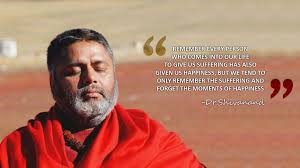
My spiritual life changed when Avadhoot Shivananda—my Diksha Guru—awakened my Kundalini. In the midst of a painful divorce, separated from my daughter and battling suicidal thoughts, I first experienced Shaktipata simply by reading a book. That moment was my lifeline.
My journey toward my Guru began unexpectedly in Ganeshpuri. I had gone there seeking legal help, but a pull took me to Nithyananda Baba’s ashram. Sitting on a chair once used for Shaktipata, I clearly heard within: “It is all meant to be forgiven.” I resisted, yet the message softened something inside me. I prayed for a Guru.
Three months later, a friend took me—unwillingly—to a gathering in Pune. The moment I heard “karmic healing,” I stayed. There, I received Shaktipad Deeksha from Avadhoot Shivananda. Only later did I learn he was Nithyananda’s disciple—the very answer to my prayer in Ganeshpuri.
I devoted myself completely. As a Christian singing Hindu bhajans, I stood out, yet my Guru embraced me and eventually invited me to serve at his ashram. I spent eight years learning through his presence, practicing Sri Vidya, and later naturally shifting into awareness-based practices rooted in the Shiva Sutras. When he entered Vanaprastha and I returned home, he blessed my path.
During COVID, jobless and unsure, he offered financial help from the US, which I humbly declined. Even in distance, his foundation continued to guide my inner journey.
How, in your understanding, did suffering transform into a pathway to divine grace?
Today’s rise in divorce, suicide, and moral confusion comes from one root cause: forgetting Who we truly are. Without realizing “I am not the body,” suffering keeps repeating itself.
My own separation and despair became my greatest teacher. Pain revealed the truth of Maya—everything we cling to is temporary. Even if I had regained custody of my daughter, time would eventually separate us. Life uses suffering to break down moha, blind attachment.
Over the years, I came to see all hardship as Anugra Shakti—grace in disguise. Ego is what suffers; when it is strong, life hits harder. What we call depression is often the ego’s final resistance before surrender. Even suicide doesn’t end the lesson—the journey simply continues in another birth.
Real transformation happens when the ego dies while we are alive. That is the true “rebirth” spoken of in scriptures—a shift into a freer, more conscious self.
How have your interactions with avadhootas like Anna Maharaj, Thalassery Amma, and Achar Baba influenced and transformed your life journey?
When life collapsed, I surrendered completely and spent a year drifting between Kanjangad and Arunachala, living quietly in ashrams. During this period, I met several avadhootas who changed my life’s course.
Anna Maharaj was the first—a towering figure in a langot, fierce in speech yet overflowing with compassion. When friends took me to meet him in Kudal, I went without resistance. Sitting before him, I felt an unexpected mix of love, pain, and surrender. Seeing a photo of Nithyananda in his room brought tears; something deep aligned within me.
When my turn came, he grabbed my hair, called me “Kaala Vittoba,” blessed me with vibhuti—and everything shifted. Within weeks, long-standing problems dissolved and my work in awareness began effortlessly from my present home.
Later encounters with Thalassery Amma and Achar Baba were equally transformative. They answered thoughts I never spoke aloud, revealed hidden truths, and predicted events that unfolded exactly. These experiences convinced me that in the presence of true avadhootas, karmas melt in ways the mind cannot explain.
Which living avadhootas have you encountered, and in what ways have they impacted you?
I personally know three living avadhootas, each shaping my life in profound ways:
- Siddhapaji (Yadur, near Tumkur): A powerful recluse who keeps himself hidden behind closed gates. His unseen grace has protected and guided me for years. Once he gave me a papaya; eating it made me sick for a month—an experience whose meaning became clear only later.
- Topiyama: An unpredictable wandering avadhoota who lives in a shed beside the retreat space I use. She may smile, scold, bless, or ignore—no pattern, pure divinity. My groups see her almost daily.
- Prakashananda Swami (Kumbakonam, near Swami Malai): More accessible and easier to meet, yet equally powerful in presence.
In total, I have met around eleven avadhootas in this lifetime. Most have left their bodies, but these three continue to guide, protect, and transform me in their own mysterious ways.
What ought to be Our Attitude Toward Jeeva Samadhis and Avadhutas?
Jeeva Samadhis and Avadhutas are two rare blessings capable of transforming a seeker’s inner life. Avadhutas are living embodiments of pure consciousness — beings in whom the formless, attributeless Absolute expresses through a human form. Unlike ordinary saints, their awareness never slips; they are permanently established in Shivoham. In their presence, we experience a state beyond the mind — a living taste of divinity. But their grace touches us only when we approach with humility, silence, and ego-free awareness. Then an inner exchange happens — subtle bodies are cleansed, karmic impressions dissolve, and shifts occur that would normally take lifetimes.
Jeeva Samadhis radiate a similar grace. These are resting places of Siddhas who retain the pranamaya kosha even after shedding the body. Their physical form remains intact for centuries, and the Samadhi becomes a powerful energy field that purifies all who meditate there. Tamil Nadu alone has hundreds of such sacred vortexes.
Both Avadhutas and Jeeva Samadhis can accelerate spiritual evolution dramatically. As Ramana Maharshi said, “Grace does the work, saints take the credit.”
Approach them with sincerity and a longing for truth — not for worldly gains. Masters instantly sense intention; the insincere are pushed away, while genuine seekers receive blessings without even asking.
Message to Readers
Life becomes effortless when you understand its real purpose. Ask yourself:
“Why am I here? What am I seeking? Where am I headed?”
Worldly goals — career, service, success — are only surface purposes. Beneath them lies a deeper calling: the purpose for which you truly took birth. Once this is known, everything changes. You can live fully as a householder, fulfill duties, work in the world — yet remain untouched, like the lotus on water.
This awareness gives beauty, depth, and meaning to life. It uplifts you, and through you, countless others.
Bhagavan Nityananda said: “With one lamp, light another.” First awaken your own inner light; then let that light naturally illuminate the world. This is living spirituality.
Even this interview, I feel, is a satsang — a sharing filled with energy and grace. My writings may sometimes sound sharp, but they aim to cut through rigid ideas and reveal the essence of real spirituality. When that essence is understood, life becomes a journey of light, purpose, and divine grace.
Disclaimer: The opinions expressed in this article belong to the author. Indic Today is neither responsible nor liable for the accuracy, completeness, suitability, or validity of any information in the article.