
The Saktipitha Cartography of Consciousness
As Navaratri invokes Śakti in her many forms, this paper by Author re-reads the 51 Śaktipīṭhas as an inner map rather than sacred geography.
March 20, 2026 Swapan Samanta

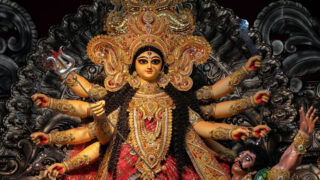
As Navaratri invokes Śakti in her many forms, this paper by Author re-reads the 51 Śaktipīṭhas as an inner map rather than sacred geography.
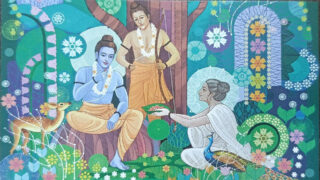
The question of whether Rāma, the warrior-prince of the Rāmāyaṇa, can be considered a practitioner of ahimsa appears paradoxical at first glance
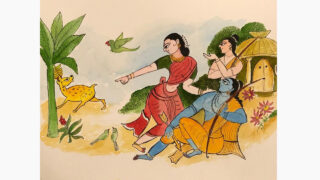
Vālmīki Rāmāyaṇa as philosophy, this essay presents Sītā as non-objectifiable liberation, Rāma as aligned agency and Rāvaṇa as partial consciousness – vast power without inner integration

Dr. Swapān Samanta is an independent author and researcher working primarily in contemporary Sanskrit literature, philosophical fiction, and Indic metaphysical inquiry. His body of work spans original Sanskrit epics, novels, poetry, and non-fiction, engaging themes of liberation, consciousness, time, symbolism, and inner transformation. His major Sanskrit creative works include Muktiyātrā (epic), Daśārakṣikācaritam (novel), Daśapuruṣaḥ (a Sanskrit epic on spirituality), The Jātismara Fly of the Rāmāyaṇa (epic), Ajñāta–Rāmāyaṇam (The Unknown Rāmāyaṇa), Harīścandra–Viśvāmitrayoḥ Muktitantram (novel), Muktibhrāntikathā (liberation-themed story and poems), and Svatantratāntaram, a philosophical Sanskrit work engaging the ideas of Sri Aurobindo. Several of his Sanskrit manuscripts are currently under consideration with academic and Indic publishers. In parallel, his non-fiction writings explore Viśvarūpa and time dilation, Kundalinī dynamics, Tantra as symbolic cartography, the Divine Matrix, and the metaphysical and cultural mapping of the 51 Śakti Pīṭhas, approached through interdisciplinary lenses that include philosophy, psychology, and classical Indic thought. Across both fiction and non-fiction, his work deliberately moves away from devotional literalism toward tattva-based interpretation, treating avatāras, devatās, and sacred narratives as cognitive, symbolic, and experiential frameworks rather than fixed theological entities. His writing seeks to establish Sanskrit as a living medium for rigorous inner inquiry in the modern world.